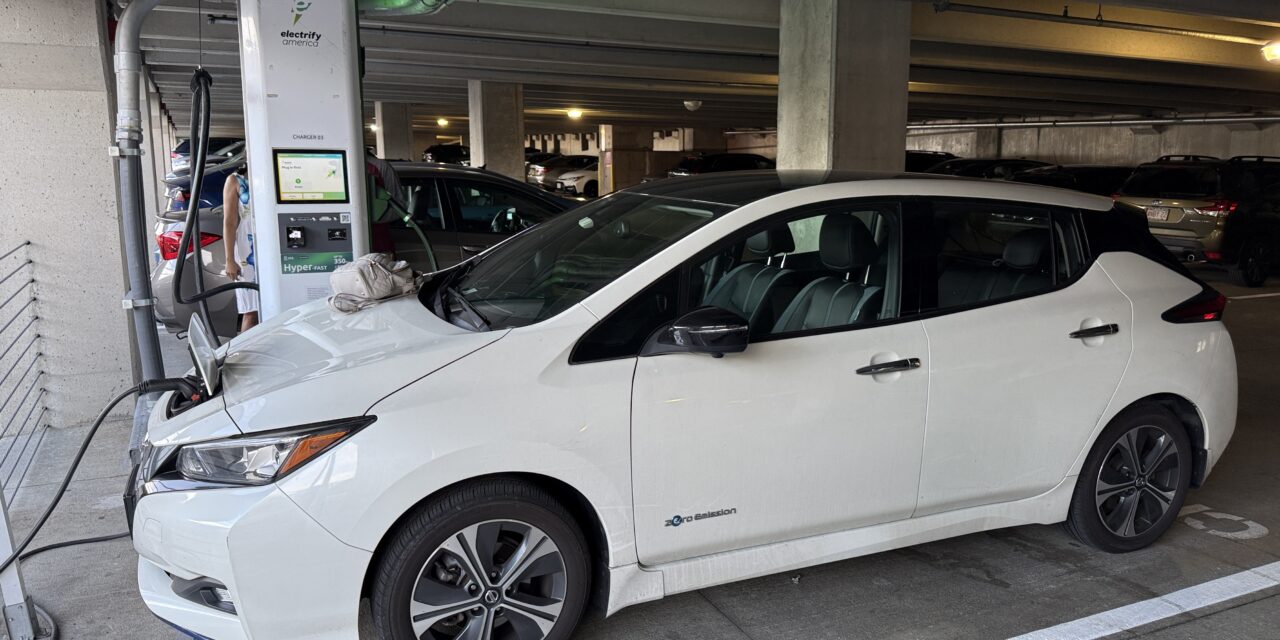
Yes, you can normally charge an electric car in the rain. Properly installed home chargepoints, public chargers, EV charge ports and approved cables are made for outdoor use. The connection is not energised in the same casual way as a bare domestic plug: the vehicle and chargepoint communicate before charging starts, and charging should not begin if the connection is not right.
That is not a licence to ignore what is in front of you. Rain itself is usually not the deciding factor. Damaged cable insulation, a cracked connector, a loose socket, a flooded chargepoint or an improvised extension lead are. If any of those are present, do not plug in.
The short answer: normal rain is fine, damage is not
It is reasonable to use a purpose-built public charger or a correctly installed home chargepoint in ordinary wet weather, following the instructions for that charger and your car. You do not need to dry a normal charge port every time a shower passes through.
What you should not do is assume every electrical setup is equivalent. A proper chargepoint is designed for EV charging outdoors. A domestic socket, trailing lead and portable charger arranged across a wet driveway are a different proposition entirely. The long, heavy electrical load of EV charging makes the condition of every part of that setup important.
How the connector stays safe
The plug and inlet are designed to make the electrical connection only once the connector is properly engaged. The chargepoint and car perform checks and manage the supply while charging. The important practical point is simple: use the correct, undamaged equipment and let it do its job. Do not try to defeat a cover, jam a connector into place or tape a damaged lead together.
A wet exterior of the cable is not the same as water inside a connector or damaged insulation. If the connector is visibly dirty, has water sitting inside it, is cracked, or will not latch positively, stop and use another charger or seek help from the operator.
Before you plug in: a 30-second rain check
- Look at the cable first. Do not use it if the outer sheath is split, crushed, badly kinked, taped, or showing exposed wiring. Electrical Safety First advises drivers to check charging cables regularly and stop using them if damaged.
- Check the connector and charge port. A few raindrops around the flap are normal. A connector filled with debris, a broken latch, obvious corrosion or standing water where it should not be is not.
- Keep clear of flooding. Do not stand in floodwater to connect or disconnect a car, and do not use a chargepoint that has been submerged or visibly damaged in flooding. Report it to the network or property owner.
- Use the equipment intended for the job. At home, that means a dedicated chargepoint where possible. On the road, use the cable and instructions specified by the charger and vehicle.
- Do not improvise a route. Keep cables away from places where they can be crushed, run over, trapped in a door or become a trip hazard. A cable across a public pavement is not a rainy-day workaround.
At a public charger
Public charging networks expect their equipment to be used outside, including in British weather. Follow the on-screen steps, make sure the plug locks into the car, and start the session in the usual way. A charge session that will not begin is more likely to need a different bay, a re-seat of the connector, an app or payment check, or a call to the operator than a heroic attempt to force the cable.
Walk away and report the unit if you see exposed wires, a smashed casing, a connector that is hot, scorch marks, loose components, or water inside an enclosure. Do not continue because the screen still appears to work. If the car displays a charging fault, disconnect only if it is safe to do so and follow the car’s handbook or the chargepoint operator’s support instructions.
At home: where the real caution belongs
A professionally installed home chargepoint is the sensible answer for regular charging. Electrical Safety First says the safest home arrangement is a dedicated EV chargepoint installed by a registered, competent electrician. It also recommends using the cable supplied by the vehicle manufacturer or bought from a reputable retailer.
Portable charging from a 3-pin socket is a separate question from charging in the rain. Some cars support it with an approved in-cable control device, but it is slow and puts a sustained load on the socket and circuit. Never add an extension lead, multi-way adaptor or cable reel simply to make a wet-weather setup reach. If you use an approved portable cable at all, use a sound fixed socket as directed by the car manufacturer and keep the control box and connections out of standing water.
If a plug, socket or cable becomes unusually warm, smells hot, buzzes, discolours, trips the supply or shows any damage, stop charging. Do not repeat the experiment on the next wet evening. Have the installation and equipment checked by an appropriately qualified electrician.
What about charging overnight in heavy rain?
Heavy rain alone does not mean a sound, installed chargepoint must be unplugged. The same inspection rule applies, but take a more cautious view after severe weather. Check that the charger has not been struck, loosened or flooded, that the cable has not been damaged, and that the area is safe to access. If floodwater has reached the chargepoint or cable connections, leave it alone and get advice from the installer, operator or a qualified electrician before using it again.
Do not use a portable generator, a household extension lead through an open window, or a makeshift cover as an alternative. Those are attempts to solve a charging problem by creating an electrical and trip hazard.
Common myths worth ignoring
- Rain will electrocute me when I touch the connector. Proper EV charging equipment is designed with safety controls for normal outdoor use. The risk comes from faulty, damaged or unsuitable equipment, not from a routine shower.
- I should wrap the plug in a bag or tape before charging. Do not alter the connector or interfere with its fit. If a connection needs a homemade waterproofing solution, do not use it.
- Any outdoor socket will do. Regular EV charging needs an appropriate installation and equipment. A dedicated chargepoint is the robust option.
- A charger that looks wet is broken. External rain on an outdoor charger is expected. Visible physical damage, water ingress where it should not be, overheating or flood exposure are the red flags.
The bottom line
You can charge an electric car in ordinary rain with an intact, approved cable and a proper home or public chargepoint. Make the decision on the condition of the equipment and the site, not on whether the pavement is wet. If there is damage, flooding, overheating or any doubt about a domestic installation, do not charge until the problem is checked.
For further home-charging safety guidance, see Electrical Safety First’s advice on charging electric vehicles safely. For regular home charging, the government’s smart chargepoint guidance is also a useful starting point when choosing equipment and an installer.