Your car’s air conditioning should do more than make summer traffic bearable. It helps clear mist from the windscreen in damp weather and can keep the cabin comfortable all year. So when the air from the vents is merely cool, or properly warm, it is tempting to book the cheapest regas advertised. That is not always the sensible first move.
A regas can restore performance when refrigerant has escaped, but it cannot repair the reason it escaped. It also will not cure every fault that stops an air-con system working. Start with a few safe checks, then use the symptoms to decide whether the car needs a proper diagnosis.
First, make sure the system is being asked to cool
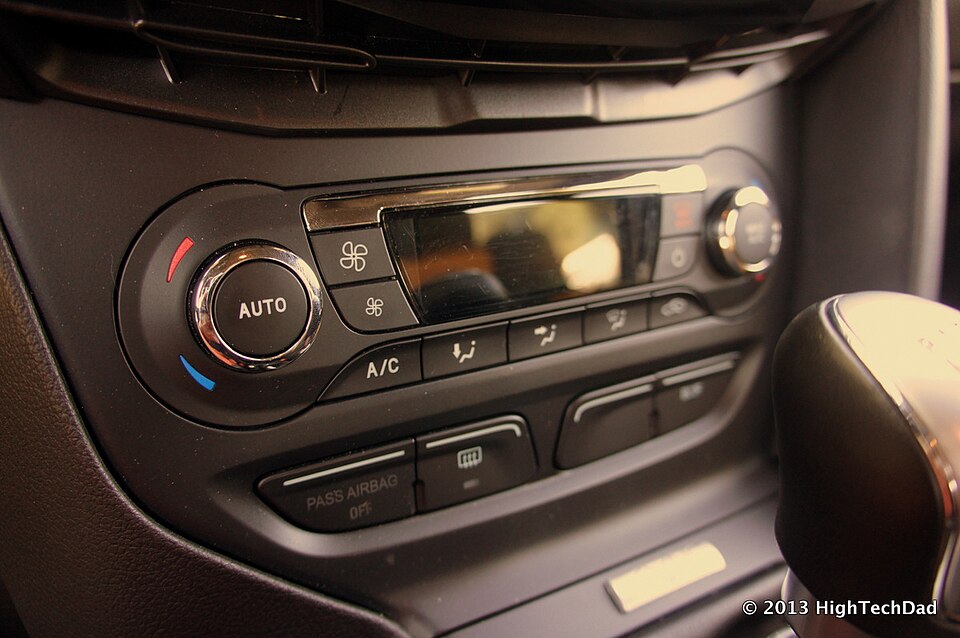
Park safely, start the engine and let it idle. Set the temperature to its lowest setting, switch the A/C or snowflake button on, choose a face-level vent and set the fan to medium or high. If the car has climate control, do not assume that AUTO has selected cooling: look for the A/C indicator. Turn off an economy or ECO mode if your handbook says it limits the compressor.
With the windows closed, give the system a few minutes. A hot cabin, strong sunshine and a car that has just been parked can make it seem as if the air-con is failing when it is simply working through a lot of heat. Compare both centre vents. The air should become clearly colder than the cabin air, not just feel less warm.
If the car has a recirculation button, use it briefly once the cabin starts cooling. Recirculation reuses already-cooled cabin air, so it can improve cooling in heavy traffic. Do not leave it selected indefinitely in wet or cold conditions if the windows begin to mist.
Check the easy things before spending money
These checks do not involve opening any part of the refrigerant system.
- Look at the controls. A surprising number of problems are an A/C button that is off, a temperature dial set too warm, or an ECO mode that has been forgotten.
- Check the cabin pollen filter history. A blocked cabin filter usually reduces airflow rather than making the air genuinely warm, but weak airflow makes the system feel ineffective. If the fan is noisy yet little air reaches the vents, put the filter on the garage’s inspection list.
- Notice the fan speed. No air, air only at one speed, or air that cuts in and out points to a blower, resistor, fuse, wiring or control problem. A refrigerant refill will not fix that.
- Listen, but do not poke around. Clicking, squealing or a rough noise when A/C is selected is useful information for a technician. Do not put hands near belts, fans or the compressor with the engine running.
- Look for water under the car. On a humid day, a small clear puddle beneath the passenger side after using A/C can simply be condensate draining from the evaporator. Coloured coolant, an oily residue or a continuing leak is different and deserves attention.
What the symptoms can tell you
It was cold last summer, then gradually became weak
A gradual loss of cooling is consistent with low refrigerant charge, often because of a small leak. The system is sealed, so refrigerant is not a routine consumable like screenwash. A competent service should recover and measure what is present, check for leakage where appropriate, and then recharge it with the correct refrigerant and quantity for that exact car.
Treat a very cheap top-up as a short-term gamble if nobody is prepared to discuss why the gas level was low. Repeated regassing can turn a small repair into repeated bills and releases refrigerant unnecessarily.
It stopped cooling suddenly
A sudden change may be a fuse, pressure sensor, electrical connection, compressor control issue, auxiliary belt problem or a larger leak. The car may still blow plenty of air because the cabin blower and the refrigeration system are separate jobs. This is a case for diagnosis, not a blind refill.
It is cold while moving but warm in traffic
This pattern can point to poor airflow through the condenser at the front of the car. The cooling fan, its control circuit, a blocked or damaged condenser, or an overheating engine can all be relevant. Watch the engine temperature gauge and do not ignore an overheating warning just because the original complaint was warm air.
One side is cold and the other is warm
On a dual-zone car, begin by checking that both temperature settings match. If they do, the fault may be a blend flap, actuator, control calibration issue or, on some systems, an uneven refrigerant charge. Mention the left-versus-right symptom when booking the car in because it narrows the diagnostic work.
The air smells musty
A stale smell is commonly linked to moisture and microbial growth around the evaporator or a neglected cabin filter. An antibacterial clean and a new filter may help, but neither is proof that a loss of cooling has been cured. If there is also poor cooling, ask the garage to assess both issues rather than selling one as the fix for the other.
Regas, leak test or repair: what should you ask for?
When calling a UK garage or air-con specialist, describe the symptom rather than requesting a specific job. Ask whether the price includes recovery of the old refrigerant, a vacuum test, the correct oil where required and a measured recharge to the manufacturer’s specification. Ask what happens if the system will not hold charge.
It is also worth confirming the refrigerant type before comparing quotes. Many newer cars use R1234yf, while many older systems use R134a. They are not interchangeable and the equipment and price can differ. The label under the bonnet or the handbook may identify the correct gas, but the garage should verify it from the vehicle data.
Refrigerant handling is not a DIY job. It needs the right recovery equipment and trained, appropriately certified personnel. Avoid aerosol top-up kits and sealants: they can create safety, contamination and repair problems, especially when a professional later has to recover the system.
When not to keep driving
Warm air alone is usually an inconvenience, not a reason to stop immediately. But do not treat it as an isolated air-con problem if the engine is overheating, there is smoke or a burning-rubber smell, an auxiliary belt is damaged, a warning light appears, or you can see a significant fluid leak. Stop somewhere safe and seek advice.
For ordinary weak cooling, book a diagnosis before the next warm spell rather than waiting until every air-con bay is full. Taking a note of when it works, when it fails and whether the problem changes with road speed gives the technician far more to work with than simply saying it needs a regas.
The useful bottom line
If the controls are set correctly and the system still blows warm air, a regas may be part of the answer, but it is not a diagnosis. A gradual loss of cold air deserves a check for the cause; sudden failure, poor airflow or a traffic-only problem needs a garage to look beyond the gas level. Paying for the right test first is usually better value than paying twice for the same refill.