A warning light comes on, the car feels different, or it has failed an MOT. The usual next step is a car diagnostic check. It sounds decisive, but it is important to know what you are buying: a diagnostic machine can report what the car’s control units have noticed. It does not always identify the worn part that caused the problem.
That distinction can save money. A fault code is a clue that starts an investigation, not necessarily a shopping list for parts. A good garage will use it alongside a road test, visual inspection, live data and, where needed, electrical or mechanical tests before recommending a repair.
What happens in a car diagnostic check?
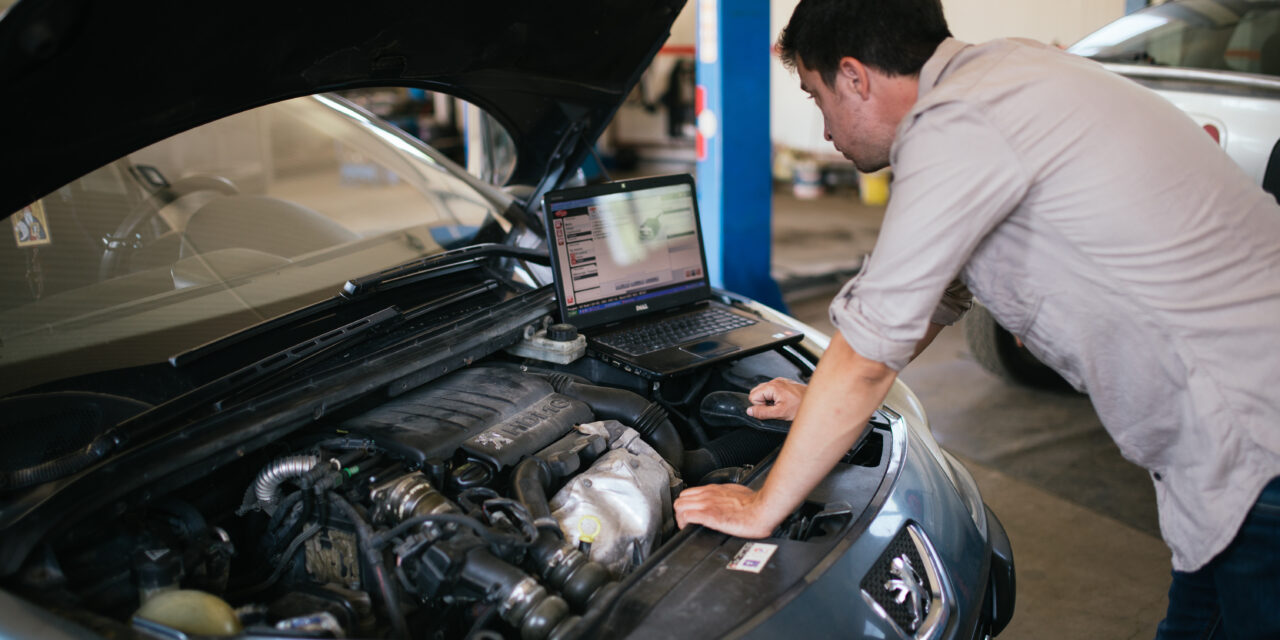
Most modern cars have an on-board diagnostic socket, usually called the OBD port. A technician connects a scan tool and reads information stored by the vehicle’s electronic control units. Depending on the car and the equipment, that can include the engine, gearbox, ABS, airbag, parking sensors, climate control and body-control systems.
The report may show:
- current fault codes and whether a warning light is active
- stored or pending codes that have not yet turned on a light
- freeze-frame information, which records some operating conditions when a fault was detected
- live readings such as coolant temperature, battery voltage, wheel-speed signals or sensor values
- readiness-monitor status, which can matter after fault codes have been cleared
A basic code read can be quick. Finding the cause may take much longer. Intermittent faults, wiring issues and faults that only appear under load are especially likely to need further testing.
A code names a system, not always the failed component
This is the point most worth remembering. If a scanner reports an oxygen-sensor code, it does not prove the sensor itself has failed. An air leak, exhaust leak, damaged wiring, poor connection, fuel-delivery issue or an engine problem can sometimes lead to the same sort of code.
The same principle applies elsewhere. A low-voltage code may be caused by an ageing battery, an alternator problem, a poor earth connection or a car that has simply not been driven enough. A misfire code identifies the cylinder in which the engine detected the problem, but the cause could be an ignition coil, spark plug, injector, compression issue or wiring fault.
Ask the garage to explain the evidence that links the proposed part to the fault. A clear answer might be: the code pointed to a circuit, the wiring was tested, the live readings were compared and the component failed a specified test. That is much more useful than being told only that the computer says a part needs replacing.
When a diagnostic check is worth booking
A diagnostic appointment is a sensible first move when an engine-management, ABS, airbag, battery, gearbox or other warning light remains on. It is also worthwhile when the car has an intermittent loss of power, poor starting, repeated limp-home mode, unexplained battery drain, erratic sensors or a fault that has returned after a repair.
Do not treat it as permission to keep driving a car that has a serious warning, obvious safety problem or worrying symptoms. A red brake warning light, overheating, a strong fuel smell, serious loss of braking performance or a flashing engine-management light needs a more cautious response. Stop somewhere safe when you can and use the handbook, breakdown provider or a garage to decide whether recovery is safer than driving on.
For MOT purposes, a scan is useful but it is not a substitute for an inspection. The official MOT test covers the items the tester must assess on the day. The GOV.UK MOT guidance is a useful reminder that an MOT is a minimum roadworthiness test, rather than proof that every system in the car is fault-free.
The questions to ask before you leave the keys
A few questions make the scope clearer and reduce the risk of a surprise bill:
- Is this a code read or a proper diagnostic investigation? Ask what is included in the quoted fee and whether it covers a road test, live-data checks or electrical testing.
- Will you contact me before any repair work starts? Give an approval limit, ideally in writing, and ask for a revised estimate if the investigation points to further work.
- What fault codes were found? Request the codes and a short explanation in plain English. They are useful if the fault returns or you seek a second opinion.
- What test confirms the proposed repair? A reputable answer should describe the test or observations, not just repeat the code description.
- Could the repair be covered? If the car is under manufacturer warranty, an extended warranty, a service plan or has recently had related work, check before authorising a paid repair.
- What happens if the first repair does not cure it? Fault-finding can be iterative. Agree how further diagnostic time will be approved and charged.
Can you use your own OBD scanner?
A modest reader can be handy for checking a warning light and recording a code before it disappears. It can help you have a more informed conversation with a garage. But do not use it to clear codes simply to see whether a light stays off. Clearing codes can erase useful freeze-frame data and reset readiness monitors, making the underlying problem harder to trace.
Consumer scanners also vary widely in what they can access. A generic reader may only reach engine-related information, while a specialist tool can access more of a particular make’s systems and run guided tests. Neither replaces safe mechanical inspection or professional electrical diagnosis.
Your rights when a garage investigates a fault
A diagnostic fee does not remove the normal standards that apply to paid repair work. Under section 49 of the Consumer Rights Act 2015, a trader supplying a service must use reasonable care and skill. Keep the estimate, authorisation messages, diagnostic report and invoice. If the work does not address the agreed issue, those records make it easier to discuss what was promised and what was actually done.
That does not mean every difficult fault comes with a guaranteed one-visit fix. Some intermittent problems genuinely need more investigation. The fair approach is transparency: the garage should explain the next test, likely cost and uncertainty before adding work.
The practical bottom line
Book a diagnostic check when a warning or persistent fault needs evidence, but buy the investigation rather than blindly buying the first part named by a code. Get the codes in writing, ask what confirmed the diagnosis, set a spending limit and approve any repair separately. That gives a good technician room to find the real cause while keeping you in control of the bill.