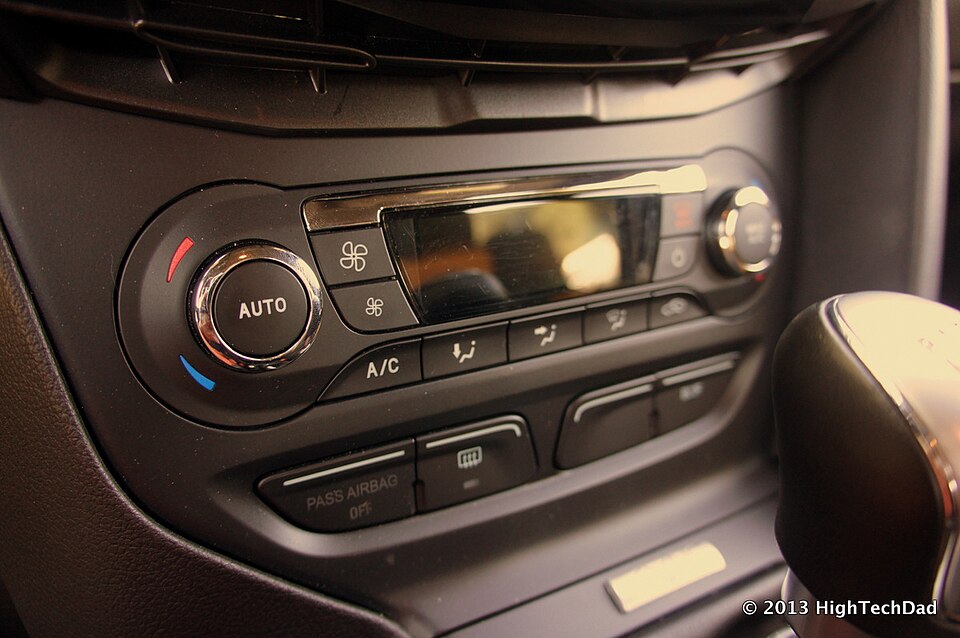
A car heater that blows cold air is more than an unpleasant winter commute. If the fan is working but the cabin never warms up, the problem can be as small as a climate-control setting or as significant as low coolant, a thermostat fault or a blocked heater matrix. The useful question is not simply whether the air is cold, but when it is cold and what the engine temperature is doing at the same time.
Do not keep driving to see whether it sorts itself out if the temperature warning light appears, the gauge climbs unusually high, there is steam, or you can smell coolant. Stop somewhere safe, switch off and let the engine cool. Never remove a coolant-cap from a hot engine.
First, separate a lack of heat from a lack of airflow
These two faults point in different directions.
- Little or no air from the vents: start with the fan speed, air-distribution setting and, where accessible, the cabin filter. A blocked cabin filter can reduce airflow, but it does not normally make a healthy heater produce cold air.
- A good blast of air that stays cold: the blower is doing its job, but heat is not reaching the cabin. On most petrol, diesel and hybrid cars this usually brings the engine cooling system and heater controls into focus.
- One side warm, one side cold: on cars with dual-zone climate control, an air-mix flap or its actuator may be at fault. A garage can usually diagnose this without assuming the whole heater system needs replacing.
How a conventional car heater makes heat
Once the engine has warmed up, hot coolant passes through a small radiator-like component called the heater matrix. The cabin fan pushes air through it, and the climate controls mix that warm air with cooler air to reach the chosen temperature. This is why a heater problem and an engine-cooling problem can be related.
Battery-electric cars work differently: they may use an electric heater or heat pump rather than engine heat. Their handbook and warning messages matter more than the checks below, especially if a high-voltage or thermal-management warning is displayed.
Five likely reasons a car heater blows cold
1. The engine has not warmed up, or the thermostat is stuck open
On a cold day, many cars will not deliver much heat in the first few minutes. If the temperature gauge takes a very long time to reach its normal position, then falls on a faster road, a thermostat stuck open is a plausible cause. Coolant is being sent around the main radiator too early, so the engine and heater take longer to warm.
This is a repair to arrange rather than ignore. A consistently cool-running engine can use more fuel and may not provide reliable demisting.
2. Coolant is low
Low coolant can leave the heater matrix short of hot coolant, sometimes making the heater go warm and cold as engine speed changes. It can also be a sign of a leak. Check the expansion tank only when the engine is fully cold, on level ground, and use the coolant specification in the handbook if a top-up is genuinely needed. Do not treat repeated top-ups as a fix.
Pink, blue, green or orange residue, a sweet smell, damp patches under the car, or misting that leaves a greasy film on the inside of the windscreen are all reasons to book an inspection. Coolant colours are not a reliable way to identify the correct type, so do not mix products on guesswork.
3. Air trapped in the cooling system
After coolant work, a repair or a leak, an airlock can stop hot coolant circulating properly through the heater matrix. Heat that comes and goes, gurgling behind the dashboard and an unstable temperature gauge can fit this pattern. The system may need bleeding using the manufacturer procedure. That is a sensible job for a garage unless the handbook gives a clear, model-specific method.
4. A restricted heater matrix
Old coolant, contamination or corrosion can restrict the narrow channels in the heater matrix. A typical clue is a fully warmed engine with weak heat, sometimes worse at idle than at higher revs. A workshop can compare hose temperatures and diagnose the circulation problem before recommending a flush or matrix replacement. Avoid pouring sealant or improvised cleaners into the cooling system: they can create more trouble than they solve.
5. A climate-control flap, valve or actuator fault
Modern dashboards use small motors and flaps to route and mix air. Clicking behind the dashboard, a temperature change that ignores the controls, or hot air on only one side can point here. This fault can feel like a cooling-system issue, but it may be entirely within the ventilation controls.
A safe five-minute check before you book in
- Set the temperature to maximum, turn off any separate passenger-zone setting or use the sync function, and select a face-level vent.
- With the engine running from cold, note whether the gauge reaches its usual normal position after a normal journey. Do not leave the car idling for a long time merely to warm it up.
- Check whether airflow is strong. If it is weak at every fan speed, investigate the blower, fuse or cabin filter rather than the heater first.
- When the engine is completely cold, check the coolant level against the reservoir markings. Do not open the cap when hot.
- Look for warning lights, overheating, coolant loss, sweet smells or wet front carpets. Give those details to the garage because they make diagnosis quicker.
When not to drive it
A cold heater alone does not automatically mean the car is unsafe to move a short distance to a garage. It becomes a stop-and-assess issue when it comes with an overheating warning, a rising temperature gauge, steam, a serious coolant leak or poor windscreen clearing. Clear visibility is essential before moving off. If the screen will not demist properly, do not set off until it can be cleared safely.
Do not rely on the heater as proof that the cooling system is healthy either. A car can still overheat with a warm cabin. The temperature gauge, warning messages and coolant level are the signals that matter.
What to tell the garage
Describe the fault precisely: whether the fan works, whether the engine reaches normal temperature, whether the problem is constant or intermittent, whether one side of the cabin differs from the other, and whether coolant has needed topping up. Ask the garage to diagnose the cause before authorising a heater matrix or dashboard work. A pressure test, fault-code scan and cooling-system inspection can distinguish a leak, thermostat, actuator and circulation problem.
For drivers who mainly notice the issue in the morning, it is worth fixing before the next cold spell. Reliable heat is not just comfort. It helps keep the windscreen clear and makes it easier to spot a developing cooling-system fault before it becomes an overheating bill.