

A Channel crossing is easy to book. The paperwork is the part that can turn into a problem at the port, at a hire desk or during a roadside check. If you are taking your own car from the UK to Europe, do not assume that a valid licence alone covers the job.
Start with the four things that identify you, the car and your right to use it: your driving licence, the V5C log book, insurance evidence and, where relevant, permission from the owner or finance company. Then check the rules of every country on the route, not only the final destination.
The short answer on an international driving permit
Most holidaymakers with a UK photocard driving licence do not need an International Driving Permit, or IDP, for the EU, Switzerland, Norway, Iceland or Liechtenstein. That is the current position in the GOV.UK IDP guidance.
That does not make an IDP irrelevant. You may need one in some countries outside that group, and the answer can change with the type of licence and the length of stay. A paper licence, or a licence issued in Gibraltar, Guernsey, Jersey or the Isle of Man, can mean different rules even within Europe. If a journey crosses several borders, check each country separately and check with its embassy if the official table does not give a clear answer.
An IDP is not a replacement for your licence. You must carry the licence with it. GOV.UK says an IDP costs £5.50 and is available in person from selected PayPoint outlets. You must be at least 18, live in Great Britain or Northern Ireland and hold a full UK driving licence. A 1926 or 1949 permit lasts 12 months, while a 1968 permit lasts up to three years or until the UK licence expires, whichever is sooner.
Pack these documents before you leave
- Your physical driving licence. Check the expiry date rather than discovering it at a collection desk. A digital photo or a licence-check code is useful backup, but is not a substitute where the original is required.
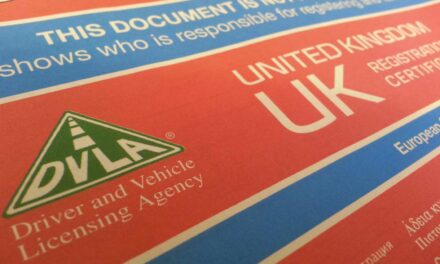
- The original V5C log book. If you own the car, GOV.UK says to take it when driving abroad. It is the document that links you to the vehicle.
- Your motor-insurance certificate and insurer contact details. Check that the policy covers every country you will drive through, the dates of the trip and any trailer or caravan. Ask the insurer what evidence it wants you to carry. Do not rely on an old green-card rule or a forum post.
- Breakdown-cover details. European cover is not always included in a UK policy. Confirm the vehicle, people covered, countries, recovery limits and what happens if the car cannot be repaired abroad.
- Passport, booking confirmations and vehicle keys. Obvious, but keep the vehicle papers together in a waterproof folder that stays with you, not buried in luggage.
Hired, leased and company cars need an extra check
If the vehicle is hired or leased in the UK, you will normally need a VE103 certificate to show that you have the owner’s permission to take it abroad. GOV.UK specifically flags this for hired or leased vehicles. Ask for it early, as it is not something to assume will be waiting in the glovebox.
For a company car, finance car or a vehicle registered to somebody else, get written authority from the registered keeper or provider and ask whether its own overseas policy applies. A border official, insurer or breakdown provider needs clear evidence, not a story about why the V5C is in another name.
Hiring once you arrive is different. The hire firm may ask to see your driving-record information. You can create a DVLA licence check code up to 21 days before the trip, but check the firm’s own requirements. Insurance may be included with a hire car, yet the excess, damage exclusions and cross-border permission still need reading before you drive away.
Country rules are not a box-ticking exercise
Once your documents are sorted, the car itself must meet local rules. The official GOV.UK driving-abroad checklist highlights items that can be required depending on the destination: a reflective jacket, warning triangle, headlamp converters, a UK identifier and emissions permits for some European cities.
Do not buy a one-size-fits-all kit and call it done. Rules on what must be carried, where a high-visibility jacket must be stored, winter equipment, motorway tolls and low-emission zones vary by country and can change. A city emissions sticker may need arranging well before departure. Check official travel advice and the relevant national road authority for every country you enter, including a short transit leg.
For example, the question is not simply whether your number plate is British. It is whether the country you are visiting requires an additional UK identifier for the plate format you have. Check the official destination guidance close to travel, rather than applying a rule remembered from a previous trip.
Five checks for the car itself
- Tyres: inspect tread, sidewalls, pressures and the spare wheel or repair kit. Check destination rules on winter tyres, snow chains or studded tyres before a winter route.
- Lights: test every exterior light. If your car needs beam adjustment for driving on the right, find out whether it has a travel setting or needs approved converters. Do not guess from the dashboard menu.
- Warning equipment: put any legally required triangle, jacket and first-aid or other kit where you can reach it safely. The equipment list is country-specific.
- Service and fluids: check oil, coolant, screenwash and brake fluid against the handbook, and make sure the service interval will not fall during a long trip.
- Charging or fuel plan: for an EV, confirm that your charging apps, cards and cables work on the route, and build in time for alternatives. For any car, do not let the first unfamiliar toll road or rural filling station become the point at which you discover a payment problem.
Do not confuse a holiday with moving the car abroad
This checklist is for a temporary trip. If you are taking a vehicle out of the UK for 12 months or more, it is treated as a permanent export and you must tell DVLA. The process involves the permanent-export section of the V5C and is different from taking a car across for a holiday. Read the DVLA guidance on taking a vehicle abroad before making plans.
A calm pre-ferry routine
Two weeks before travel, check the IDP position, insurer and country equipment rules. One week before, gather the physical documents and request any VE103 or company permission. The day before, check the car, route and charging or fuel plan, then put the folder somewhere you can reach at the port.
The useful mindset is simple: your route is only as compliant as the least-checked country on it. A current photocard licence may mean no IDP for a straightforward EU holiday, but it does not remove the need for the right vehicle papers, cover and local equipment.
Featured photo: EuroTripPhotos, CC BY-SA 3.0, via Wikimedia Commons.




Trackbacks/Pingbacks