Getting an EV charger at a rented house or flat is possible, but the wallbox is usually the easy bit. The decision starts with the parking space, the lease or tenancy agreement and whoever owns the fabric of the building. Get those wrong and a tempting installer quote can become a dead end.
There is useful financial help for eligible renters: the EV chargepoint grant can cover 75% of the cost of buying and installing a socket, up to £500. It is not a blanket home-charger subsidy, though. It is designed for renters and flat owners who can demonstrate the right to use a suitable private parking space.
The first question is where the car actually parks
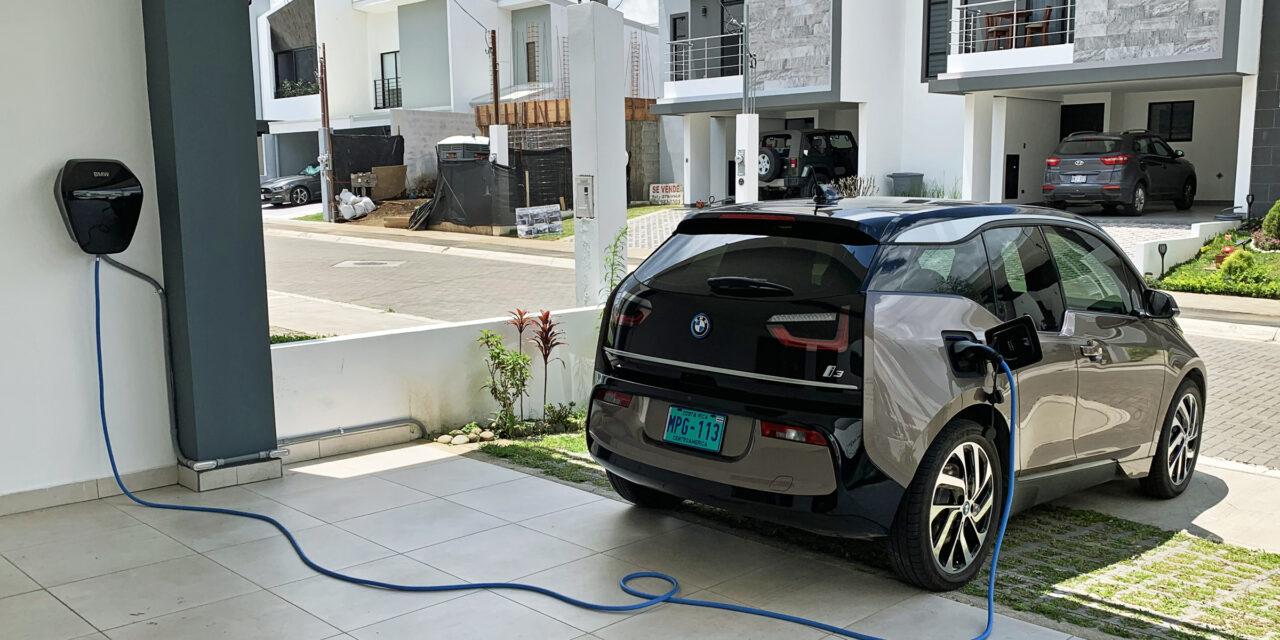
A private driveway attached to a rented house is the straightforward case, provided the cable can reach without crossing a public pavement. A numbered bay in a residents’ car park can also work, but it brings more paperwork. Street parking outside the property is a different problem altogether.
For the renters and flat owners grant, the official eligibility rules say the space must be off-street, private and clearly defined. It does not have to sit inside the property boundary, but it must be accessible to the applicant at all times and they must own it or have the legal right to use it.
That is why a space that is merely usually available is not enough. A communal first-come, first-served car park, a public bay, or a neighbour’s drive borrowed informally is unlikely to give the installer and grant process the certainty they need.
Ask for permission before collecting wallbox quotes
A charger normally involves drilling, a new cable run and equipment fixed to a wall or post. A tenant should not assume that a standard right to occupy a property includes the right to make that alteration. Read the tenancy agreement, then ask the landlord or managing agent for written consent.
For a flat, the landlord may not be the only person who matters. The freeholder, management company or residents’ management company may control an exterior wall, cable route or parking area. A lease may also set out a formal alterations process. If a parking bay is separately leased, check what that document says too.
Make the request easy to approve. Send a short description of the proposed location, the installer details, a sketch or photographs of the cable route, and confirmation that the work will be carried out by a competent installer. Ask whether the owner wants to approve the make and position of the unit, and agree what happens when the tenancy ends. Do not book the installation until consent is in writing.
Check grant eligibility before you pay a deposit
The current scheme is for people who rent a residential property or own and live in a flat. You must also own or use an eligible electric vehicle, including an EV on a qualifying lease, work arrangement or order. GOV.UK says applicants will need evidence, such as a rental agreement, and proof of the legal rights and permissions for the parking space.
- It is not available to a lodger living with the landlord or homeowner.
- It is not for a property that is unoccupied, under construction or one you are about to leave.
- It cannot be used if a chargepoint or charging infrastructure is already legally required, for example at some new developments.
- Previous claimants under this grant or its predecessor home-charge schemes cannot claim again.
The grant is a contribution, not a promise that every installation will cost £500 or less. Long cable runs, a detached garage, a difficult wall route, groundworks, load management or electrical upgrades can all affect the final price. Compare written quotations on the same scope of work, including VAT, rather than comparing a headline wallbox price.
Use the installer as a technical check, not just a salesperson
Tell every installer that the property is rented and that a grant may be involved. They need to assess whether charging can be done safely from that space, whether the proposed route is practical, and what evidence they require before proceeding. The government guidance also makes clear that the parking space has to support safe charging.
Ask each installer to state in writing:
- the exact charger model and warranty;
- where the unit, consumer-unit protection and cable will go;
- whether any extra electrical work is included or excluded;
- who will handle the grant paperwork and when the discount is applied;
- what information they need from the landlord, freeholder or managing agent; and
- how the installation will be made good if it is removed later.
This is also a good time to think beyond charging speed. If the car will sit overnight, a sensible smart charger and an electricity tariff that suits the household may matter more to running costs than chasing the biggest possible unit.
No driveway does not mean there is no route, but it is a separate route
Running a trailing cable across the pavement is not a substitute for a charger. It creates a hazard and can put the resident at odds with the local highway authority. Do not buy a cable protector and assume that makes it acceptable.
Households with only on-street parking should look at the separate grant for households with on-street parking. It can provide up to £500 where a cross-pavement solution, such as a charging gully, is being installed. The practical catch is local: permission for any pavement work and the availability of a suitable approved solution depend on the council and the site.
That is not a reason to give up on an EV, but it is a reason to do the charging maths honestly. If home charging is uncertain, price the public chargers you would genuinely use before committing to a car or a finance agreement.
A sensible order of jobs
- Confirm that the parking space is private, off-street, clearly defined and yours to use.
- Read the tenancy and, for a flat, the lease or parking agreement.
- Get written approval from every party that controls the wall, route or bay.
- Check the current grant eligibility and gather the supporting documents.
- Get like-for-like quotes from suitable installers and ask how the grant is processed.
- Agree in writing who owns the charger and what happens at the end of the tenancy.
A cooperative landlord may see a charger as a useful improvement to the property, particularly where the tenant pays for it and the installation is tidy. But it is still an alteration, not something to spring on them after a deposit has been paid. Deal with the rights first and the actual install is far more likely to be quick, safe and worth the money.
Quick answers
Can a renter claim the EV chargepoint grant?
Potentially, yes. Eligible renters can receive 75% of buying and installation costs up to £500 per socket, but need a private off-street parking space, an eligible EV and the necessary legal rights and permissions.
Do I need my landlord’s permission for an EV charger?
In most cases, yes. A wallbox installation changes the property and may affect areas controlled by a landlord, freeholder or management company. Obtain written consent before work starts.
Can I run the charging cable over the pavement?
Do not assume that you can. A cable on a public pavement creates safety and permission issues. Drivers without off-street parking should investigate their council’s approach and the separate cross-pavement grant route instead.