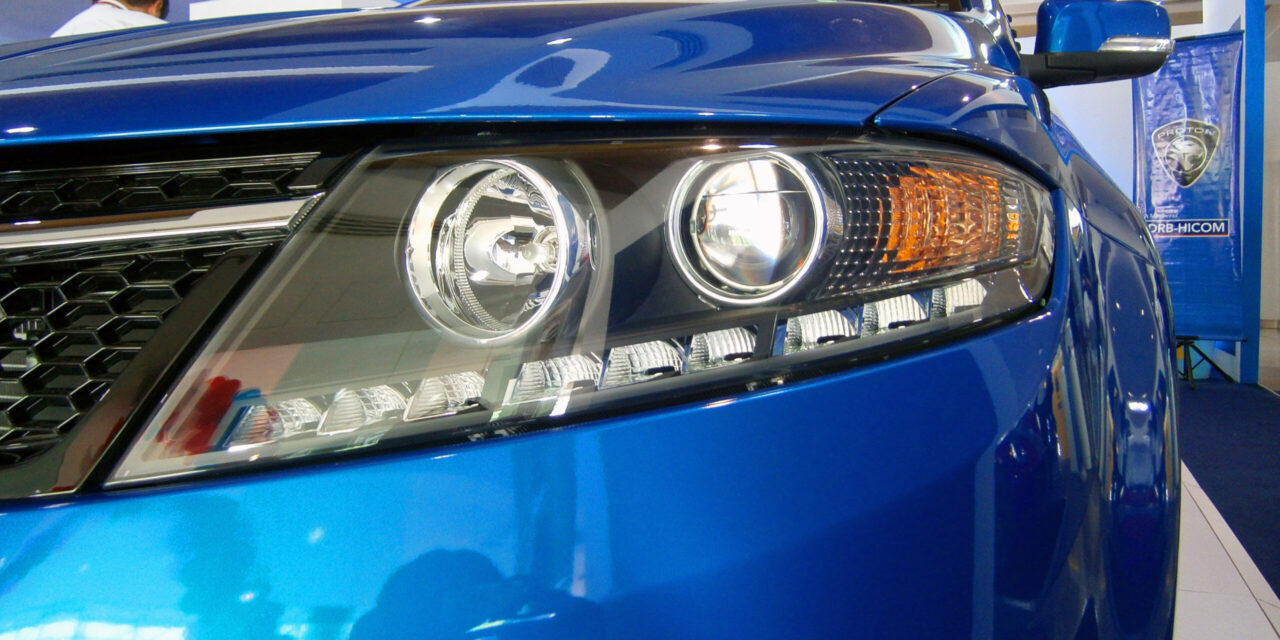
A ferry booking and a valid passport are not the whole preparation for taking a UK car to mainland Europe. Your headlights are set up for left-hand traffic, where dipped beams are shaped to light the left verge without dazzling oncoming drivers. In countries where traffic keeps right, that pattern can put extra light into the path of approaching traffic.
The practical answer is to check your car’s handbook before you leave. Many newer cars have a dedicated tourist, travel or continental mode. Some older halogen systems need approved beam deflectors, while other cars need an adjustment by a dealer or competent workshop. Do not buy a packet of stickers on the assumption that every headlamp accepts them.
Why a UK beam pattern needs attention
A dipped headlamp does more than point straight ahead. Its beam has a cut-off and a kick-up that helps illuminate the kerbside without throwing unnecessary glare at drivers coming the other way. A right-hand-drive UK car is normally designed around driving on the left.
Cross the Channel and the kerbside is on the other side. The required solution depends on the headlamp design, not simply the age of the car. LED, xenon and adaptive systems can behave very differently from a conventional reflector headlamp. That is why the handbook and the manufacturer’s instructions matter more than a universal online recommendation.
Start with the handbook, not a set of deflectors
Look in the lighting section for terms such as tourist mode, travel mode, driving abroad, continental mode or headlamp conversion. The answer generally falls into one of these groups:
- Selectable travel mode: many cars let the driver change the dipped-beam pattern through the vehicle settings, sometimes only when stationary. Follow the handbook exactly and switch it back after returning to the UK.
- Manual adjustment: some headlamps have a procedure or adjustment intended for temporary overseas use. If it involves headlamp aim, a garage is the safer choice unless the handbook specifically describes a simple owner setting.
- Beam deflectors: some conventional headlamps use a correctly positioned external mask or converter to block or reshape the part of the beam that would otherwise cause glare. The kit must match the headlamp and be fitted exactly as instructed.
- No sticker solution: a number of modern projector, LED and adaptive systems are not suitable for generic stick-on deflectors. They may have an electronic setting, require professional configuration, or be designed with a flat beam that needs no physical mask. The handbook should say.
Do not confuse the levelling control with travel mode. The dashboard headlamp-level switch is generally there to compensate for passengers or luggage by lowering the beam. It does not normally swap the left-to-right asymmetry of the dipped beam.
How to check what your car needs
Do this a few days before travel, not in the queue for the ferry:
- Find the handbook for the exact car and headlamp type. The electronic manual in the infotainment system may be enough, but a manufacturer app or dealer can confirm if it is unclear.
- Search the lighting section for overseas-driving instructions. Do not rely on a forum post about a different trim level or model year.
- If the car uses a menu setting, test that you can find it with the ignition on and note how to reverse it on the way home.
- If the handbook specifies deflectors, buy the type it names or one explicitly listed as compatible with your lamps. Clean and dry the lens before fitting them.
- If the instructions say the lights need adjustment, arrange it before departure. Do not turn the headlamp aim screws at random.
- With the car on level ground, check that both dipped beams, main beams, indicators and sidelights work. A foreign trip is a poor time to discover a weak battery, failed bulb or misaligned lamp.
A useful final check is to park facing a wall or garage door at dusk and compare the left and right dipped-beam patterns before and after enabling travel mode. This is only a sense check, not a substitute for the manufacturer’s procedure or professional beam alignment.
Are beam deflectors compulsory?
The important point is that you must avoid dazzling other road users and comply with the rules of the country you are visiting. The exact equipment requirements can vary by country and can change, so check the official travel advice for every country on the route. Start with the UK’s driving abroad guidance and the destination-specific pages, including the France safety and security advice and Spain safety and security advice.
Do not treat a pack of beam converters as a substitute for the rest of the overseas kit. Documents, insurance arrangements, a UK identifier where required, environmental-zone rules and compulsory items vary across Europe. Our UK paperwork checklist for taking a car to Europe covers the documents to settle before travelling.
Common mistakes that cause trouble
Assuming every modern car uses stickers
Many contemporary cars have LED or adaptive lamps and a menu-based solution. A generic deflector can be ineffective or unsuitable. Check the exact vehicle guidance.
Leaving a converter on after returning to the UK
A mask fitted for right-hand traffic can compromise your view of the left verge back home. Remove it or restore the normal setting when the car is back in the UK, following the product and vehicle instructions.
Adjusting the wrong thing
It is tempting to alter a visible screw behind the lamp. That can leave the beam wrongly aimed for both countries and can create an MOT problem. Use the specified travel function or have the lamps checked professionally.
Forgetting the load setting
A car packed for a holiday can sit lower at the rear and point its lamps higher. If your car has manual beam levelling, set it for the load as the handbook instructs. This is separate from the left-to-right travel conversion.
Fitting deflectors over dirty or damaged lenses
Dirt, haze and loose tape can make the result unreliable. Clean the lens gently and make sure anything applied to it is secure and approved for that lens type. If a lamp is cloudy, cracked or holding water, address that before a night drive abroad.
If you hire a car abroad
A locally hired car should already be configured for local traffic, so a UK-style deflector is not normally relevant. Still check the car’s lights before leaving the hire location and ask the desk about the required equipment for any cross-border journey. Taking a French or Spanish hire car into a neighbouring country can introduce separate paperwork and equipment rules.
The sensible pre-ferry checklist
Before setting off, confirm:
- the exact headlamp solution for your car
- that travel mode is enabled, or the correct deflectors are fitted, if required
- that all exterior lights work
- that headlamp levelling reflects the holiday load, where fitted
- that you have checked official requirements for every country you will enter
- that you know how to return the lights to their UK setting
Headlight preparation is a small job, but it is one that rewards doing properly. The best approach is vehicle-specific: follow the handbook, use a compatible solution and make the change before the journey rather than improvising at the port.