If the steering has started to feel vague, the car is nibbling at the edge of the lane or one front tyre is wearing faster than the other, many drivers assume the fix is just a tracking adjustment. Sometimes it is. Sometimes the real problem is a worn track rod end.
That matters because a track rod end is not a cosmetic wear item. It is part of the steering linkage, so when it wears badly enough it can affect control, tyre wear and MOT results.
Quick answer: based on current UK public pricing guides checked today, a track rod end replacement usually lands around £70 to £160 per side, and you should normally budget another £40 to £70 for wheel alignment afterwards. The Driver and Vehicle Standards Agency MOT manual also makes clear that excessive wear in a steering ball joint is a major defect, and if wear is severe enough to risk detachment it becomes dangerous.
What a track rod end actually does
The track rod end links the steering rack to the wheel hub assembly and allows the steering to turn while the suspension still moves up and down. In plain English, it is one of the joints that helps translate your steering input into the car actually changing direction.
Because it sits low down and deals with road shock, potholes, kerb strikes and constant movement, it is a part that does eventually wear. When it does, the first signs are often subtle enough to be confused with alignment, balancing or tyre issues.
The symptoms most drivers notice first
| What you notice | Why a track rod end could be involved | Could it be something else? |
|---|---|---|
| Loose, vague or slightly wandering steering | Wear in the joint can introduce play into the steering linkage | Yes. Alignment, tyres or other steering wear can feel similar |
| Uneven wear on a front tyre | A worn joint can let the wheel angle shift and upset tracking | Yes. Simple misalignment can do this too |
| Clonk or knock from the front over rough surfaces | Play in the joint can show up when the suspension moves | Yes. Drop links, ball joints or suspension bushes can also knock |
| Steering wheel no longer feels precise around the straight-ahead position | Some drivers describe this as a small dead zone or slackness | Yes. Steering rack or column issues are also possible |
| The car still feels wrong soon after alignment | If the joint is worn, the geometry may not hold properly | Yes. Bent components or tyre issues can also undo alignment |
This is why a good garage should inspect the steering and suspension before selling you alignment on its own. If a worn joint is the real cause, alignment is only part of the answer.
How much a track rod end replacement usually costs in the UK
The sensible way to price this job is to split it into the part itself, the labour and the alignment that usually follows.
- Bumper currently says track rod ends typically cost £70 to £160 per side to replace and notes that tracking afterwards often costs £40 to £70.
- Fixter currently says UK replacement cost usually ranges between £70 and £135, with an average around £80 including parts and labour.
That leaves most mainstream cars in a fairly believable real-world band:
| Job | Typical UK guide price | What pushes it up |
|---|---|---|
| One outer track rod end | About £70 to £160 | Hard access, seized parts, premium-brand parts, larger or more complex cars |
| Pair of outer track rod ends | Often roughly double the parts cost, but not always double the labour | Corrosion, extra setup time, further steering wear found during the job |
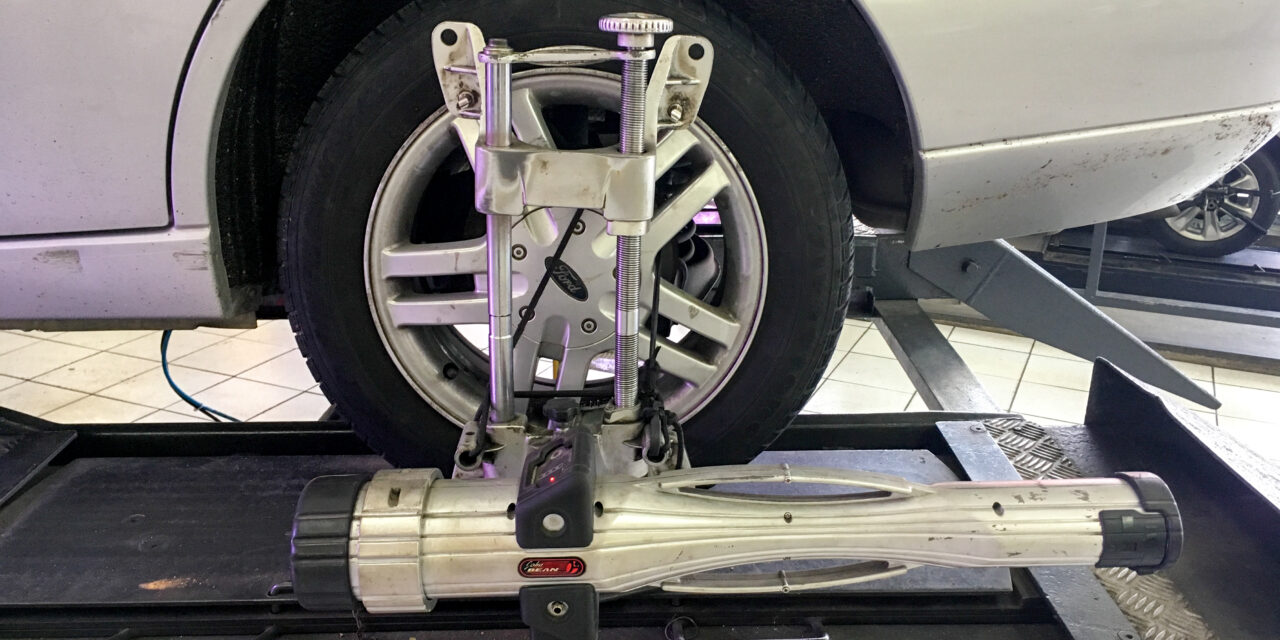
| Wheel alignment afterwards | About £40 to £70 for a basic front-end adjustment, sometimes more for a fuller geometry check | Four-wheel alignment, specialist setup, local labour rates |
If the joint has been left too long, the final bill can rise because the garage may also find tyre wear, seized adjusters or other worn steering and suspension parts that need dealing with before the geometry can be set properly.
Why garages often mention alignment at the same time
A worn track rod end and poor wheel alignment are closely linked, but they are not the same thing.
If you replace a track rod end, the steering geometry usually needs resetting afterwards. Bumper explicitly advises getting the tracking done after suspension work, and that fits real workshop practice. It is also why a car can feel better for a short while after a quick tracking adjustment but soon drift back out if the worn joint underneath was never fixed.
If you want the wider picture on geometry issues, Motoring Mojo already has a guide on wheel alignment versus wheel balancing and a separate breakdown of typical wheel alignment costs in the UK.
Can a worn track rod end fail an MOT?
Yes, absolutely.
The current DVSA MOT inspection manual section on steering treats the condition of steering linkage components seriously. In the steering section, excessive wear or free play in a steering ball joint is listed as a major defect. If the wear is bad enough that there is a serious risk of detachment, it becomes a dangerous defect. The manual also lists a missing or ineffective retaining or locking device as a major defect, and a missing ball joint dust cover that no longer prevents dirt getting in as a major defect.
That is not just theory. A DVSA Matters of Testing case study on track rod ends showed an attempted repair involving the wrong fastener and a loose nut with no split pin. The post notes that the joints could have separated and may have caused a serious accident if the fault had not been found at MOT.
When should you stop driving and get it checked?
If the car just feels slightly off, you may still be able to drive it carefully to a booked inspection. But you should not shrug off steering symptoms for weeks and hope the next alignment sorts it.
Book it in promptly if you notice:
- vague steering that is getting worse
- a fresh knock from the front end over bumps
- the car wandering or needing repeated small corrections
- uneven front tyre wear you cannot explain
- an MOT advisory mentioning play in a steering joint
Stop driving and get advice urgently if:
- the steering suddenly feels very loose
- the car feels unstable or unpredictable in corners
- a garage has already warned that the joint is badly worn
- you have been told the defect is dangerous
This is one of those faults where the risk is not just the repair bill. It is the possibility of compromised steering control if the joint deteriorates further.
Is it worth replacing both sides together?
Not always, but it is a fair question to ask.
If one side has worn out because of age and mileage, the other side may not be far behind. Some garages will recommend replacing both outer track rod ends together, especially if the second side is already showing early play. Others will replace only the failed side if the opposite joint is still tight. There is no universal rule, so the best answer is to ask what the other side looks like right now, not what might happen eventually.
The smart way to handle the quote
When a garage tells you that you need a track rod end, ask four simple questions:
- Is it definitely the outer track rod end, or is there play elsewhere in the steering or suspension?
- Is the price for one side or both?
- Does the quote include alignment afterwards?
- Has the tyre already worn unevenly enough to need replacing soon?
That stops the classic budget trap where the headline repair sounds manageable but the real bill grows once alignment and tyre wear are added.
Bottom line
A track rod end fault is easy to underestimate because the early signs overlap with ordinary tracking problems. But if the steering feels loose, the front tyres are wearing oddly or an MOT tester has flagged play in the joint, do not treat it as a routine alignment-only job.
For most UK cars, £70 to £160 per side plus alignment is a sensible starting expectation. The bigger point is that it is a steering safety issue, not just a tyre-wear annoyance, and the MOT rules reflect that clearly.
If you catch it before it chews through a tyre or turns into a failed test, this is usually a manageable fix. Leave it too long and it becomes a more expensive, and potentially more serious, problem.