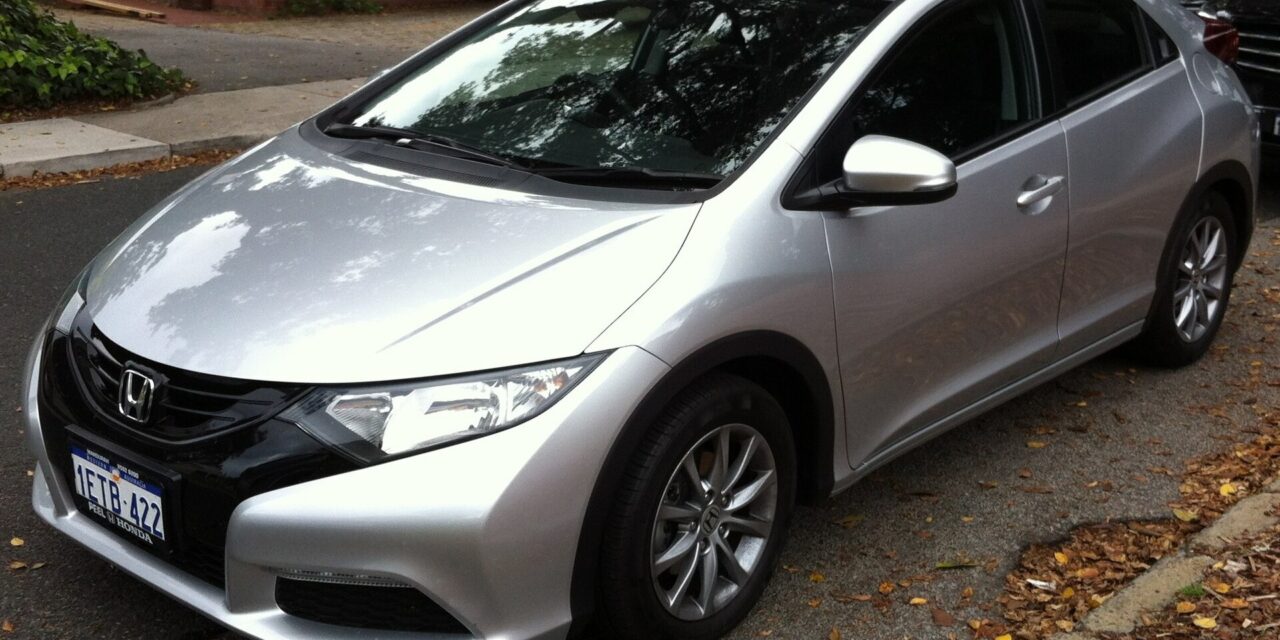
There are flashier used family hatchbacks than the 2012 to 2017 Honda Civic, and there are cheaper ones. But a good Civic is still worth a serious look for a buyer who wants a low-slung driving position, a properly useful cabin and a car that does not pretend a hatchback needs to be an SUV.
The key is to shop by engine, history and condition, rather than by the badge on the boot. The ninth-generation Civic came as a five-door hatch, a Tourer estate and a Type R. This guide is about the mainstream hatchback, not the specialist Type R.
Start with the 1.8 petrol if your mileage is ordinary
For many UK buyers, the 1.8 i-VTEC petrol is the simple place to begin. It is naturally aspirated, sold with a manual or automatic gearbox, and avoids the diesel-specific questions around short trips and emissions equipment. It will not make the Civic feel hot-hatch quick, but it is generally a better fit for mixed driving, school runs and modest annual mileage than a diesel bought purely for its advertised economy.
The 1.6 i-DTEC diesel makes more sense for frequent motorway use. A regular long run helps it reach operating temperature and gives its emissions system the sort of use it was designed for. A diesel that has spent its life on very short journeys deserves extra caution, not an automatic rejection. Ask how it has been used, then check the service record and MOT history for a pattern of emissions-related warnings or repeat repairs.
Do not assume a diesel is always cheaper to own. Compare insurance, fuel, servicing and the likely type of journeys you will actually make. A lower purchase price is not a saving if the car is wrong for your routine.
The Civic’s biggest selling point is the cabin
This generation is longer and lower than many family hatchbacks of its era. That gives it a distinctive driving position and a big boot, while the rear seats fold to create a useful flat load area. Sit in the back yourself if rear-seat space matters: the roofline and the high window line will not suit every passenger, even though legroom is respectable.
Try the boot mechanism and rear-seat folding arrangement rather than assuming everything works because the car looks tidy. On any used hatchback, a damp boot, worn seals or a tailgate that needs a hard slam are clues to investigate before money changes hands.
Five checks that matter on a viewing
- Cold start and warning lights: arrive before the seller has warmed the engine. It should start cleanly, settle to an even idle and complete its dashboard self-check. Any warning lamp that stays on needs a proper diagnosis, not a promise that it is only a sensor.
- Clutch, gearbox and test drive: on a manual, check that the clutch engages cleanly and that every gear selects without graunching or resistance. On an automatic, move smoothly through its positions with the foot on the brake and make sure the road test does not reveal hesitation, jolts or warning messages.
- Tyres, steering and suspension: look for matching tyres across each axle, even tread wear and kerb damage. On the drive, listen over rough surfaces and make sure the Civic tracks straight on a level road. Uneven tyre wear can mean an alignment issue, but it can also signal neglected suspension work.
- Air conditioning and electrics: test the climate control, windows, mirrors, central locking, infotainment and reversing camera if fitted. A quick press of each button is far cheaper than discovering an electrical fault after collection.
- Bodywork and underside: check panel gaps, paint texture and the inside edges of doors and tailgate. A paint-depth gauge is useful if you have one, but mismatched paint, overspray and incomplete repair invoices are enough reason to pause and ask questions.
A clean MOT record is not the same as a clean bill of health
Use the registration number to read the vehicle’s MOT history before you travel. Look for repeat advisories, not just one isolated line. Tyres, brakes, suspension components, corrosion and lights can all appear more than once if an owner has deferred maintenance.
Then match the mileage shown in the history with the dashboard, service invoices and adverts. A pass certificate only tells you the car met the test standard on that date. It does not replace a road test, a visual inspection or a check of the work done since the last test.
If the Civic is close to its MOT date, a new test can be useful, but do not let a fresh pass rush the decision. Our guide to reading MOT advisories on a dealer car explains how to distinguish a negotiable job from a reason to walk away.
Paperwork is where a promising Civic becomes a safe buy
Ask for invoices, not merely a stamped service book. You want the registration number, dates, mileage, garage details and a description of what was done. Confirm the VIN on the car matches the V5C, and use the government recall service to see whether any outstanding safety work applies to the exact vehicle.
Pay particular attention to the evidence around routine servicing and any larger jobs the seller says have been completed. If a claim cannot be supported by a dated invoice, budget as if it has not been done. That approach is more useful than arguing over whether the car has a so-called full history.
Before leaving a deposit, obtain an insurance quote for the exact registration. This catches surprises involving trim, modifications or the area where you live. A sensible buyer should also run the usual finance, stolen and write-off checks. The V5C names the registered keeper, not proof that the person selling has clear title.
Which Civic should you shortlist?
A cared-for 1.8 petrol five-door with routine servicing, sound tyres and a calm test drive is the sensible default. A 1.6 diesel can be an excellent long-distance tool when its history and use support it. Choose the Tourer only if its extra carrying capacity genuinely earns its space on the driveway, and treat the Type R as a separate performance-car purchase with a separate budget.
There is no prize for buying the cheapest Civic in the search results. The better deal is usually the car with credible paperwork, no unexplained warning lights, matching tyres and an owner or dealer who lets you inspect it without pressure.
Bottom line
The 2012 to 2017 Honda Civic is not the obvious choice in a used-car search, which is part of its appeal. It is practical, distinctive and often more family-friendly than its sporty shape suggests. Buy the 1.8 petrol for ordinary use, be honest about whether a diesel suits your mileage, and let the condition and history decide between two similar cars.