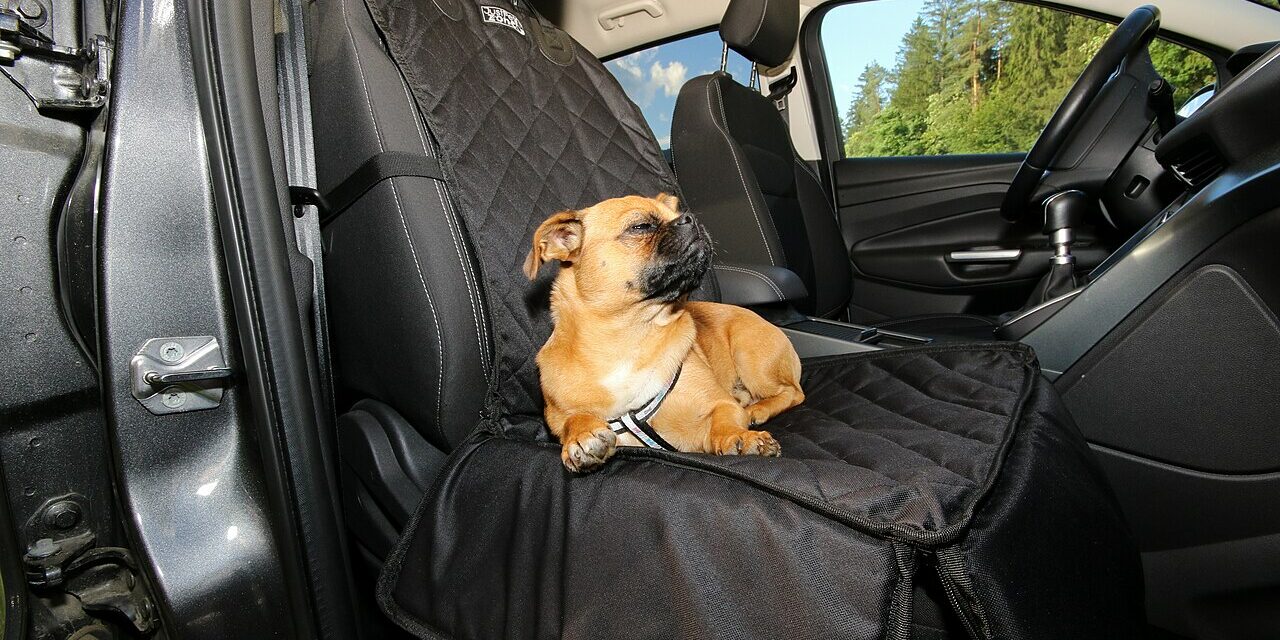
Taking a dog in the car is not just a case of letting it settle where it likes. The Highway Code says dogs and other animals must be suitably restrained so they cannot distract the driver or injure themselves, the driver or passengers if the vehicle stops quickly. A seat-belt harness, pet carrier, dog cage and dog guard are all named as possible ways to do it.
That does not mean there is one best product for every dog or every car. The right answer depends on the dog’s size and temperament, where it will travel, and whether the kit fits both the dog and the vehicle properly. The useful question is: will this setup keep the dog contained and avoid it becoming a distraction or a loose object in an emergency stop?
What the Highway Code actually says
Rule 57 of the Highway Code says that, when in a vehicle, dogs or other animals should be suitably restrained so they cannot distract the driver or injure anyone if the car stops quickly. It specifically lists a seat-belt harness, pet carrier, dog cage and dog guard as ways of restraining animals in cars.
Rule 57 is not written as a MUST or MUST NOT rule. That matters: the Highway Code introduction explains that non-MUST rules do not, by themselves, create a prosecution. However, the Code can be used in court proceedings under the Traffic Acts to help establish liability. In plain English, it is a poor idea to treat an unrestrained dog as harmless, especially if its movement contributes to a collision or loss of control.
Choose the restraint before buying it
Seat-belt harness
A purpose-made travel harness connects the dog to the car’s seat-belt system, usually on the rear seat. It can suit a calm dog that is used to travelling on a seat, but it needs to be a proper car harness, not an ordinary walking harness. Check the maker’s fitting instructions, the recommended dog size and how the tether connects to the vehicle. A loose tether gives the dog room to climb into the front; a poorly fitted harness can be uncomfortable or ineffective.
Use it with a suitable rear-seat cover if you want to protect the upholstery, but do not mistake the cover for the restraint. The restraint is the harness and its properly fitted vehicle attachment.
Carrier or crate
A carrier can make most sense for a small dog that is already comfortable resting in one. A larger travel crate or cage can work well in an estate car, SUV or hatchback when it is the correct size and secured so it cannot slide or tip. The dog should be able to stand, turn around and lie down comfortably, without having enough spare room to be thrown around.
Measure the car as well as the dog. A crate that fits through the tailgate may still prevent the boot closing, obstruct a load cover or sit awkwardly over a folded seat. Never improvise with a crate that is unsecured or positioned where it can become a projectile.
Dog guard
A properly fitted guard separates the luggage area from the passenger compartment. It can be a sensible solution for a larger dog travelling in the boot of a suitable estate or SUV, particularly when paired with a stable, non-slip surface. Look for a vehicle-specific design or one that is securely braced to the car’s structure. A lightweight pressure-fit guard that moves when pushed is not much reassurance in a sudden stop.
A guard is not a shortcut for loading the dog among loose shopping, tools or luggage. Keep the travel area clear and secure other items separately.
A quick setup check before you leave
- Keep the dog out of the front footwell and off the driver’s lap. Either position can interfere with safe control of the vehicle.
- Put the dog in the intended travelling position before fastening the restraint. Check that it cannot reach the driver, the gear selector or the front seats.
- Check the attachment every trip. Seat-belt buckles, tethers, crate catches and guard fittings can be knocked loose or left unlatched.
- Secure the rest of the load. A dog can be restrained and still be injured by a suitcase, shopping bag or tool box moving through the cabin.
- Build up gradually. Let an anxious dog become familiar with the carrier, crate or harness at home, then take short journeys before attempting a long trip.
- Plan breaks for longer drives. Offer water and suitable comfort stops. Do not leave a dog alone in a hot car, even for a short errand.
Common mistakes that defeat a good restraint
The most obvious mistake is allowing a dog to roam loose between the rear seats, front seats and boot. Less obvious is using a walking lead clipped to a collar, which can put force on the dog’s neck and still allow too much movement. Another is buying a large crate because it looks generous, then leaving it loose in the boot.
Do not attach a dog to an airbag-equipped front passenger position just because it seems easier to supervise. Keeping the animal in the rear or a separated luggage space, as appropriate for the vehicle and restraint, avoids an unnecessary distraction and reduces that risk.
Windows are not a restraint either. A dog with its head out of a moving car can be distracted, struck by debris or hurt if the window mechanism moves. Fresh air is useful, but it is better provided through normal ventilation with the dog safely contained.
Harness, carrier, cage or guard: the practical choice
| Option | Often suits | What to check |
|---|---|---|
| Seat-belt harness | A calm dog travelling on a rear seat | Car-rated design, close fit, correct tether and no access to the front |
| Carrier | A small dog used to a contained space | Ventilation, secure door and a stable, secured position |
| Crate or cage | Medium or large dog in a hatchback, estate or SUV | Correct internal size, secure installation and clear luggage space |
| Dog guard | A larger dog in a suitable luggage area | Robust fitting, no movement and a non-slip, uncluttered space behind it |
The bottom line
There is no prize for the cheapest or most elaborate dog-travel setup. Choose a restraint that is designed for the job, fits your dog and your car, and stops the dog distracting you or moving freely in a sudden stop. That is the sensible reading of Highway Code Rule 57, and it makes every journey calmer for the dog as well as the people in the car.