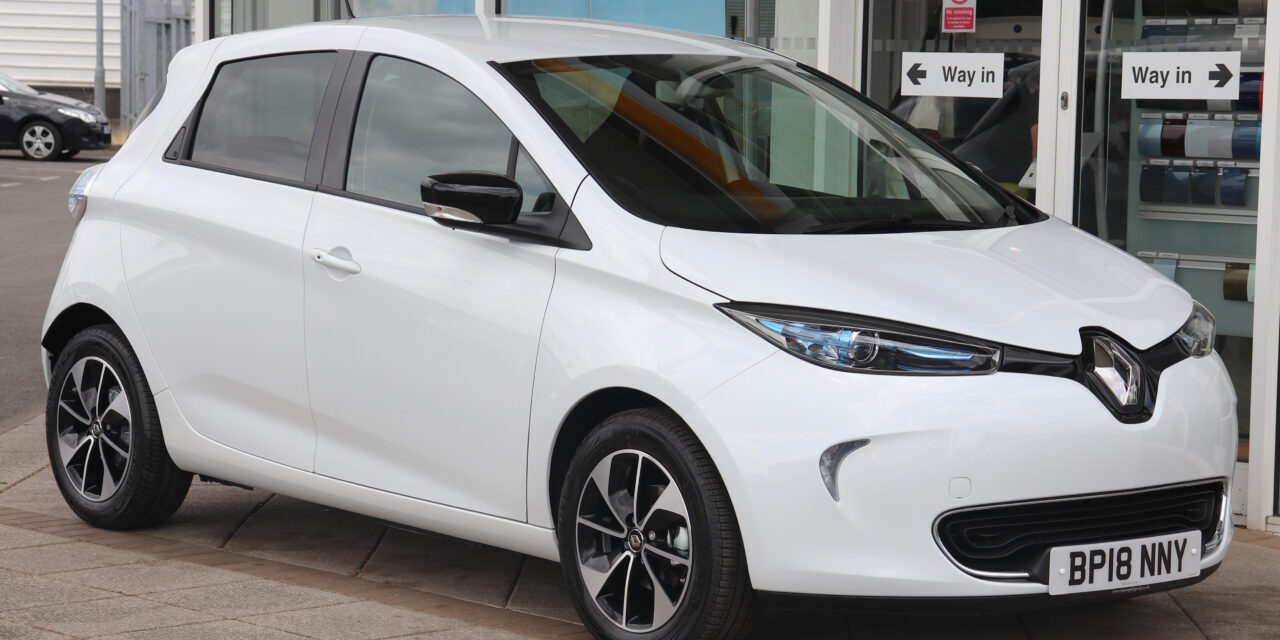
A used Renault Zoe can make a compelling first electric car. It is compact, easy to place in town and there are plenty on the market. The low asking price is only the beginning, though. Two cars that look alike in an advert can have very different batteries, charging equipment, cables and ongoing costs.
Do the ordinary used-car checks, but make the following EV checks before you agree a price. They will tell you far more than the quoted range figure.
1. Identify the battery size before comparing prices
The earliest Zoes used a 22kWh battery. Later cars arrived with a 41kWh pack, while the final generation brought a 52kWh battery. Those figures are the useful starting point, not a promise of the distance you will cover. Cabin heating, temperature, speed, route and wheel size all affect real-world range.
Ask the seller for the exact version and registration number, then check the vehicle details through the DVLA vehicle-information service. Match the result, the advert and the car. Do not assume a newer registration always means the larger battery.
2. Establish whether the battery is owned or rented
This is the Zoe question that can change the deal completely. Some early UK cars were sold with the traction battery on a separate rental agreement, rather than included in the car. Others have a battery that is owned outright. The seller should be able to show written confirmation of the arrangement and, where relevant, how it will be transferred or settled.
Do not accept “it is all included” as an answer. Ask for the agreement, the current monthly cost and the contact details for the finance provider. If the paperwork is unclear, pause the purchase until it is. A cheap car with a continuing battery payment is not directly comparable with an owned-battery Zoe.
3. Get a battery-health report, then put it in context
A state-of-health reading is useful because it shows an estimate of usable battery capacity, but it is not a complete verdict on the car. Ask who produced it, when it was taken and whether the reading relates to the traction battery rather than the 12V battery. A recent report from an EV-capable workshop is more helpful than a number typed into an advert.
Use it alongside the dashboard range estimate, a proper drive and the car’s service history. Be wary of a seller who will not allow a diagnostic check on an expensive electric-car purchase.
4. Check the 12V battery too
The small 12V battery runs the Zoe’s low-voltage systems and helps the car wake up correctly. A weak one can create a confusing collection of warning messages and starting problems. Ask its age, look for evidence of replacement and make sure the car starts, powers up and shuts down cleanly more than once.
5. Find out exactly how this Zoe can charge
Charging capability differs by version and options. Many Zoes are particularly useful on AC public charging, but not every car has the same rapid-charging hardware. Some later cars were specified with a CCS DC rapid-charge option, while others were not. It is an option worth verifying on the actual car, not by relying on a generic model description.
Open the charge flap, inspect the socket and ask the seller to demonstrate a charge if possible. A dealer should be able to confirm the car’s original specification from its VIN. If rapid charging matters to your journeys, make it a condition of purchase.
6. Check which charging cables come with the car
Ask to see every cable rather than accepting “charging lead included”. A Type 2 cable is usually the useful lead for public AC charge points. A portable domestic lead may be supplied too, but should be treated as an occasional, correctly installed solution rather than an automatic substitute for a home charge point.
Inspect the plugs, cable sheath and pins for damage, overheating or improvised repairs. Replacement cables are not a trivial extra, so include their absence in your budget. Confirm the cable is compatible with the socket and charge points you expect to use.
7. Test the charge port and charge-flap mechanism
The Zoe’s nose-mounted charge flap should open and latch smoothly. Look closely at the socket for corrosion, bent pins, water ingress or damage around the flap. During a charging demonstration, watch for warning messages, a failed handshake or a charge that stops unexpectedly.
One successful session is not a lifetime guarantee, but it is much better evidence than a seller’s assurance. If a public charger is nearby, a short supervised test is worthwhile.
8. Take a proper test drive, not a lap of the forecourt
Start with the car cold if you can. Check that it selects drive and reverse cleanly, accelerates without unexpected warnings and regenerates smoothly when you lift off. Listen for knocks over rough ground and pay attention to steering-centre feel, braking and tyre noise. EVs are quiet enough that suspension and wheel-bearing noises are easier to hear.
Try the heater, air conditioning, screen demist, lights, infotainment, parking sensors and reversing camera where fitted. A small cabin-control fault is not necessarily a deal-breaker, but it is legitimate negotiating evidence.
9. Look carefully at tyres, wheels and brakes
Instant torque and kerb contact can be hard on front tyres. Check all four for matching size, sensible tread depth, cracks, sidewall damage and uneven wear. Examine alloys for kerbing and, if possible, look behind them at brake discs. Cars that cover many short journeys can have surface corrosion or sticky brakes because regenerative braking reduces conventional brake use.
The legal minimum tread depth for most cars is 1.6mm across the central three-quarters of the tread and around the whole circumference, but replacement before the legal limit can make sense in wet weather. The DVSA MOT inspection manual explains that the test considers tyre condition as well as tread.
10. Read the MOT history for patterns, not just a pass
Use the free government MOT-history service before viewing. Repeated tyre, brake, suspension or lighting advisories deserve questions. A clean history does not prove a perfect car, but a pattern can reveal deferred maintenance or frequent short-term fixes.
Match the mileage shown in the history with the instrument display and invoices. For a dealer car, ask what has been rectified since the most recent test and get agreed work recorded on the order form.
11. Check service records and outstanding recalls
Ask for invoices as well as a stamped service book. An invoice shows what was actually done and can document brake-fluid work, tyres, 12V battery replacement and repairs. Digital history is fine if the dealer can demonstrate it clearly.
Use the registration number to check whether the vehicle has an outstanding safety recall through the official recall service. A recall remedy is normally completed free of charge, but confirm it has been carried out before collection.
12. Price the whole ownership package
Before leaving a deposit, get an insurance quote on the exact registration, price a replacement Type 2 cable if one is missing and check whether your home or regular destination charging suits the car. If you rely on public charging, make sure the Zoe’s actual connector and charging capability fit the networks you will use.
Then compare like with like: battery capacity, ownership arrangement, rapid-charging option, condition, service evidence and included cables. The right used Zoe can be an inexpensive and genuinely practical EV. The wrong one can look cheap because a costly detail has been left out of the advert.
The sensible buying rule
Walk away from uncertainty around battery ownership, charging operation or documentation. There are enough used Renault Zoes in the UK that patience is usually cheaper than trying to solve another owner’s paperwork after you have paid.