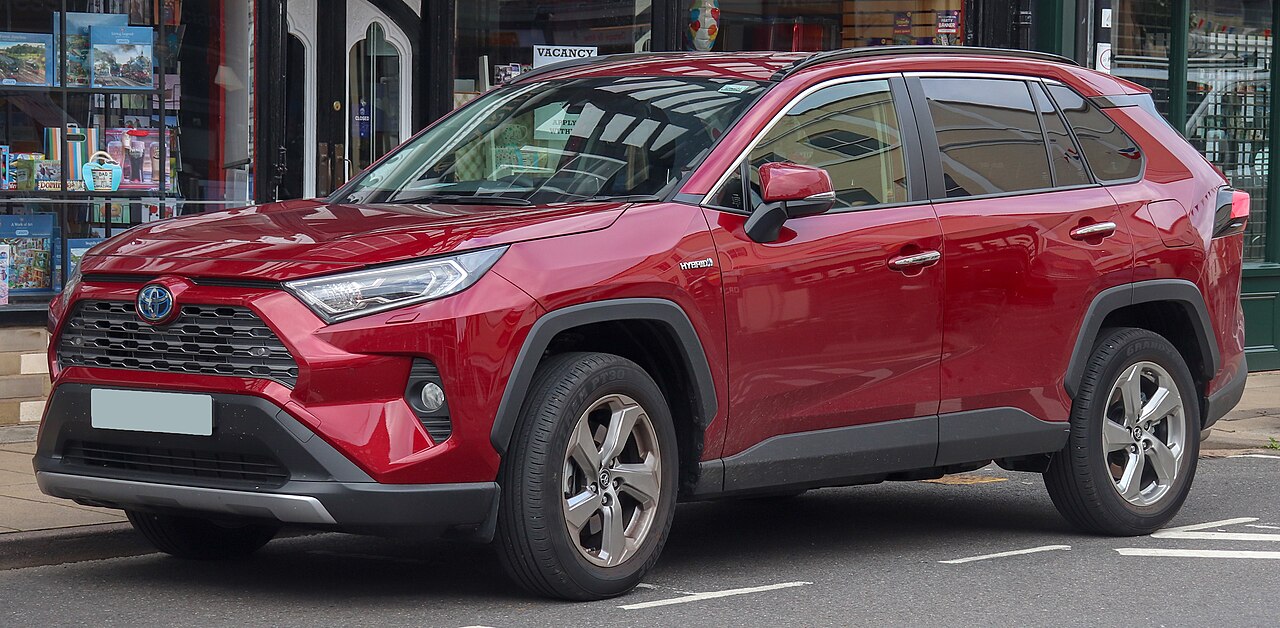
The fifth-generation Toyota RAV4 has become a very familiar choice for families who want SUV space without committing to a diesel or a plug-in. Most UK cars are the 2.5-litre petrol-electric hybrid, and the package is appealing: a roomy cabin, an automatic gearbox, generous safety kit and Toyota’s reputation for dependable hybrid hardware.
That does not make every example an automatic yes. A used RAV4 can have spent its life on school runs, towing, motorway miles or short urban hops. It is also a relatively expensive used purchase, so a proper inspection and a little homework matter more than a glossy dealer forecourt.
This guide is for the fifth-generation RAV4 sold in the UK from 2019. It focuses mainly on the regular hybrid, then flags the extra points for the later RAV4 Plug-in Hybrid.
Start with the car’s identity, not the advert
Before travelling, ask for the registration number and VIN. Use the free DVLA vehicle enquiry service to make sure the fuel type, first-registration date, colour and tax details make sense alongside the advert. The registration should also let you read the MOT history before you see the car.
An MOT pass is not a clean bill of health. Look for repeated advisories, especially tyres, brakes, suspension and corrosion. Compare the recorded mileages with the dashboard and service invoices. A one-off advisory that has clearly been repaired is different from the same warning appearing year after year.
If the seller will not provide the registration before a viewing, treat that as a reason to slow down rather than a challenge to overcome.
1. Make the service record add up
The RAV4’s hybrid system is not a reason to skip routine servicing. Ask for invoices or a clear digital service record, rather than accepting a verbal promise that it has been looked after. Check the dates as well as the mileage: a low-mileage car still needs servicing on time.
A Toyota dealer can explain whether any manufacturer-backed warranty or service-linked cover is still applicable to that specific car. Do not assume that an advert saying ‘Toyota warranty’ settles the point. Ask what cover remains, what the excess is, whether it transfers and whether the servicing conditions have been met.
2. Let the hybrid system prove itself on a cold start and road test
With the car ready to drive, it may pull away silently on electric power or start the petrol engine. Both can be normal. What matters is that the transitions are smooth, no warning messages remain on the dash and the car accelerates cleanly when asked.
The RAV4 uses an e-CVT transmission. It does not change gears in the way a conventional automatic does, so the engine can hold higher revs during firm acceleration. That is not, by itself, a fault. Walk away from persistent warnings, shuddering, harsh noises, a burning smell or a car that will not select Drive or Reverse cleanly.
On the test drive, include stop-start traffic and a faster road. Check that the battery-charge display behaves normally and that the engine is not racing when the car is gently cruising without an obvious reason. If anything feels wrong, a Toyota hybrid health check or independent hybrid specialist inspection is money well spent before purchase.
3. Check the 12V battery as well as the hybrid battery
Like other hybrids, the RAV4 has a conventional 12V battery for the vehicle’s electrical systems. A tired one can cause odd warning lights, slow starting behaviour or a car that has been reluctant to wake up after sitting.
Ask how old it is and inspect for corrosion or a loose clamp. If the car has been standing at a dealer for a while, ask for it to be started from cold rather than accepting a car that has already been prepared and running.
4. Inspect the tyres as a set
Tyres tell a useful story on a heavy family SUV. Check all four for matching sizes, suitable load and speed ratings, uneven wear, cuts and age. A RAV4 with one premium tyre and three very cheap replacements has not necessarily been neglected, but it is a useful negotiating point and a prompt to inspect more carefully.
Uneven inner-edge wear can suggest alignment or suspension work is needed. If it is an AWD-i model, do not treat tyre matching as an optional nicety. Keep the rolling radius consistent and follow Toyota’s recommendations when replacing tyres.
5. Look closely at the brakes, even if the pedal feels fine
Hybrid regenerative braking can mean the friction brakes work less hard in gentle driving. That can be good for pad life, but it also means discs may corrode on cars that mainly do short journeys.
Look through the wheels for a heavy outer lip, deep pitting or a disc surface that looks patchy rather than clean. During the drive, the car should brake straight, without a steering-wheel shake or grinding. An MOT advisory for brake corrosion is not always disastrous, but price the repair before agreeing a deal.
6. Test every camera, sensor and driver-assistance function
The RAV4 can have a reversing camera, parking sensors, adaptive cruise control, lane functions, blind-spot monitoring and a powered tailgate, depending on year and trim. These are useful features, but they are not free to diagnose or repair.
Take time to test the camera image, front and rear sensors, electric mirrors, air conditioning, heated seats where fitted and every window. A warning light for a safety system may be something simple, but it could also follow a poor repair or a damaged sensor.
Do not test adaptive cruise or lane assistance for the first time on a busy road. Instead, confirm that the systems initialise without warnings and ask the seller about any alerts.
7. Work the tailgate and inspect the boot properly
The boot is a major RAV4 selling point, so use it rather than merely looking at it. Open and close the tailgate several times, including from the key and button where fitted. It should move smoothly, latch securely and not make strained or clicking noises.
Lift the boot floor and check for dampness, water staining, a musty smell or improvised wiring. Inspect the load lip and bumper corners for signs that the car has been used hard or has had a clumsy parking impact. Fold the rear seats and make sure they release and return securely.
8. Check for accident-repair clues in daylight
A clean history check is valuable, but it is not a substitute for looking. Examine the panel gaps, paint finish and wheel-arch liners in daylight. Overspray on rubbers, mismatched paint texture, a headlamp that sits differently from the other one or new bolts on one front wing all deserve a question.
Open the bonnet and look for fluid leaks, broken clips and uneven sealant. If the car has a panoramic roof, inspect the headlining and the roof edges for water marks. For a car in this price bracket, an independent pre-purchase inspection is sensible if the paperwork or condition leaves any doubt.
9. Pair your phone and use the infotainment system
An infotainment screen that lights up is not the same as one that works properly. Pair a phone, check Bluetooth calls and audio, try the navigation if fitted, and make sure the reversing camera and steering-wheel controls respond.
Ask whether the car has received any software updates and whether all keys are present. Replacing a modern key, sorting a persistent screen fault or investigating a non-working camera can quickly spoil the apparent saving on a cheap example.
10. Check recalls and ask about towing
Ask the seller to confirm that outstanding safety recalls have been completed. A franchised Toyota dealer can check the VIN, and it is worth asking the dealer to print or email the result if you are buying privately.
If the car has a towbar, find out what it has towed and inspect the electrical socket, mounting and rear bumper closely. Towing is not automatically a problem, but it adds useful context for the condition of the brakes, tyres, rear suspension and transmission. Confirm the exact car’s permitted towing weight from its handbook or VIN-specific documentation rather than relying on a figure in an advert.
What changes with the RAV4 Plug-in Hybrid?
The Plug-in Hybrid adds a larger battery and the ability to charge from a socket, so it needs a few extra checks. Confirm that the supplied charging cable is present and undamaged, test that the charge flap and connector lock work, and ask to see the car charge if possible.
A plug-in that has rarely been charged is not necessarily faulty, but it is fair to ask why it was bought and how it was used. Check the service record, charging equipment and the battery-related warranty terms for that exact car. Do not judge the battery from the dashboard’s estimated electric range alone: temperature, route and driving style all affect it.
Which used RAV4 Hybrid should you target?
Prioritise condition, history and the right specification over a small saving on age. A well-documented two-wheel-drive car with good tyres, clean brakes and all its keys is usually a safer bet than a higher-spec AWD-i example with vague paperwork. If you need four-wheel drive, towing ability or a particular driver-assistance feature, verify that the individual car has it.
The sensible buying sequence is simple: run the DVLA and MOT checks, inspect the paperwork, examine the car in daylight, take a proper road test, then pay for an inspection if anything does not stack up. Do that, and the RAV4 Hybrid’s combination of practicality and low-stress motoring can make a lot of sense.
For more used-car groundwork, read our guide to checking a car’s MOT history before you buy and our checklist for spotting outstanding finance.