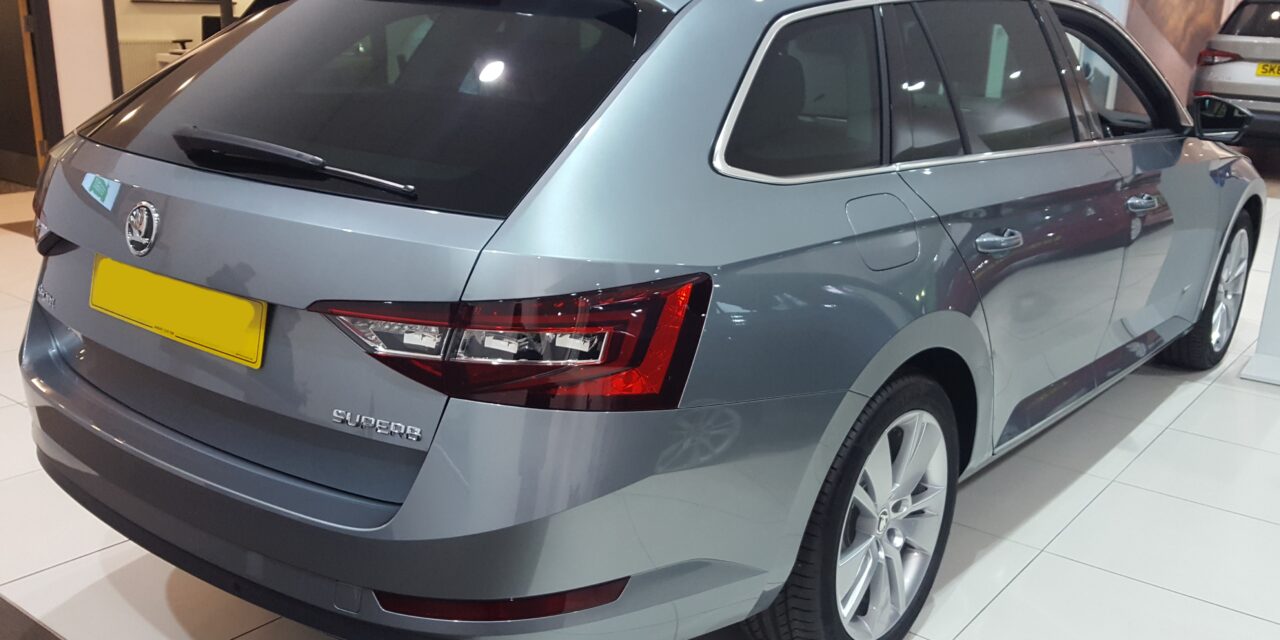
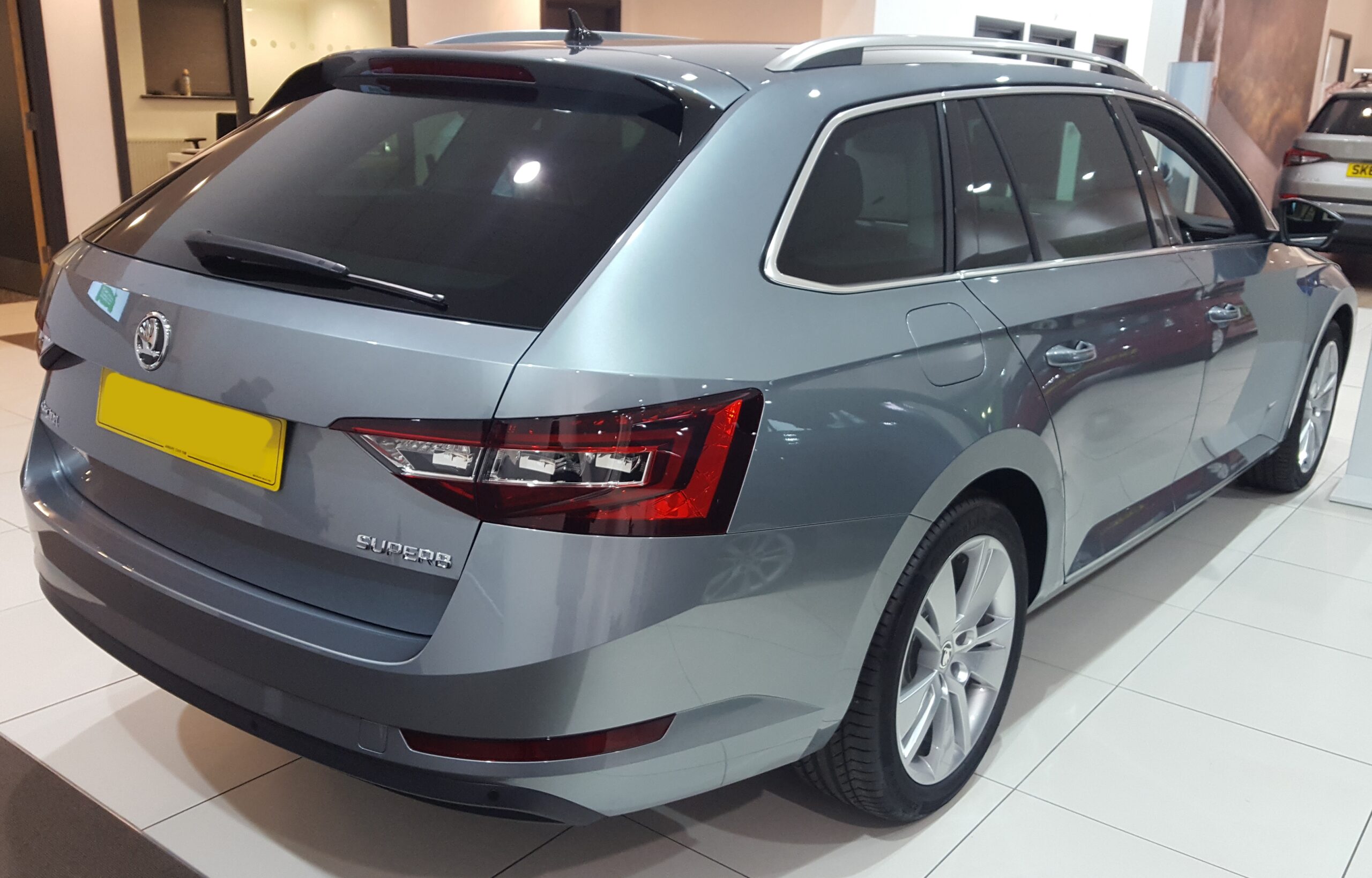
If you need huge space, long-distance comfort and running costs that still make sense in the UK, a used Skoda Superb Estate deserves a much harder look than its badge snob critics usually give it. It is one of those rare family cars that can swallow pushchairs, bikes, airport cases and awkward DIY loads without forcing you into a thirsty seven-seat SUV.
That is why the Superb Estate keeps turning up on shortlists for motorway families, company-car refugees and high-mileage drivers who want room without the bulk of a van-based MPV. The trick is buying the right one. Engine choice matters, gearbox history matters, and the tidy, comfy example on the forecourt is not always the best bet if it has spent its whole life as a taxi or airport shuttle.
Why this car still makes sense in the UK
The strongest case for the Superb Estate is simple: space and ease. For the long-running third-generation car launched in 2015, Skoda said the estate offered 660 litres of boot space with the rear seats up and up to 1,950 litres with them folded. That is proper estate-car usefulness, not brochure nonsense. It also means many UK buyers can get the practicality they want without stepping up to a larger SUV that costs more to buy, fuel and insure.
It is not just a boot-on-wheels, either. Rear legroom is one of the car’s biggest selling points, so adults can sit in the back without complaint on a long run. That matters if you do family holidays, regular airport runs or work travel with colleagues. It is also one reason these cars are popular with chauffeurs and taxi operators, which is helpful for proving the car’s real-world usefulness but less helpful when you are inspecting a hard-used example.
The other reason it still stands out is value. A Superb Estate often gives you more cabin and luggage room for the money than an equivalent SUV, while still feeling more settled on the motorway. If your driving is mostly A-roads and dual carriageways, that can be a smarter place to spend your budget.
Which used Superb Estate is the sweet spot?
For most UK buyers, the sweet spot is a facelifted 2019 onwards car with a clear service record and a sensible engine. You get the later infotainment, a fresher cabin and, in many cases, the kind of age where finance, tyres, brakes and suspension should still be manageable if the previous owner kept on top of maintenance.
If you mainly do longer trips, the 2.0 TDI is usually the version to investigate first. Parkers highlights the 150hp 2.0-litre TDI as the pick of the diesel range, and that makes sense in the UK because it balances performance, motorway refinement and economy better than the weakest diesel options. It is also a common engine, which helps when you are shopping around rather than chasing a rare spec.
If your mileage is lower, or your driving is more urban and suburban, a petrol Superb Estate will usually be the easier ownership proposition. The 1.5 TSI suits a lot of buyers because it is strong enough for family work without pushing you into diesel ownership you do not really need. For plenty of households, that matters more than chasing the best motorway mpg figure on paper.
The plug-in hybrid iV can make sense, but only for a narrow type of used buyer. If you can charge regularly and most of your weekday driving is short, it may fit. If you cannot plug in often, the case weakens fast. In used form, complexity only feels worth it when the car’s daily routine really suits the powertrain.
Manual or DSG automatic?
The Superb Estate is an easy car to like with either gearbox, but the buying rule is straightforward: do not get seduced by a DSG automatic unless the history is convincing. On a car like this, buyers often want the automatic because it suits motorway driving and family life. That is fair enough. Just make sure the paperwork shows the car has been maintained properly and that the transmission feels smooth when cold, warm and at parking speeds.
Any hesitation, thump, flare in revs or awkward low-speed shunt is a reason to slow down and ask harder questions. A clean test drive matters here. So does the service record. If a seller is vague about gearbox maintenance, treat that as a warning rather than a small detail.
A manual can be the lower-risk choice if you are buying on a tighter budget and you have found a car with obvious owner care. It will not suit every driver, but it can simplify the decision.
The checks that matter before you buy
1. Look for signs of a hard commercial life
A Superb Estate’s strengths make it attractive to taxi drivers, private-hire operators and high-mileage business users. That does not automatically make one a bad buy, but it does mean you should inspect wear much more carefully than the odometer alone suggests. Check the outer bolsters of the driver’s seat, steering wheel shine, rear door cards, boot floor, load lip and rear seat condition. If the car has done lots of airport or family-hauling duty, the luggage area usually tells the truth.
2. Take infotainment glitches seriously
What Car? reliability reporting on the 2015 to 2024 Superb Estate points to minor faults often being related to infotainment rather than catastrophic mechanical failure. That does not mean you should shrug off a freezing screen, broken Bluetooth connection or camera that works only when it feels like it. Electrical irritations are easier to live with in a cheap runabout than in a large family car you expect to use every day.
On the test drive, pair your phone, try the nav, test the reversing camera if fitted and check that every steering-wheel control works.
3. Check recall work, not just MOT history
Do the free MOT history check, but do not stop there. The GOV.UK recall service shows multiple Superb recalls across different years, including a 2015 campaign covering electronic functions that in the worst case could lead to an engine cut-out, a 2017 recall over rear wheel bearing housings and 2018 recalls including an engine software issue and an airbag concern. That does not mean the car is bad. It means you should verify that any outstanding recall work has actually been completed.
A seller saying it was probably done is not enough. Ask for proof or check with a Skoda retailer using the VIN.
4. Listen for suspension and wheel-end noises
Because these cars often cover serious miles, you want to be alert to knocks, hums and droning noises that suggest suspension wear, tired wheel bearings or neglected tyres. A Superb Estate should feel composed. If it feels loose, clonky or oddly unsettled over rough surfaces, budget accordingly or walk away.
5. Be picky about tyres
Tyres tell you how the car has been treated. A good example will usually wear a matching set from a decent brand. Mismatched cheap rubber on a big family estate does not prove neglect on its own, but it often travels with other corner-cutting. Uneven wear can also point to alignment problems, suspension wear or simply an owner who has delayed spending money. None of those are ideal signs when you are about to buy.
6. Make the boot earn its reputation
Open and close the tailgate several times. Check the parcel shelf, load cover, folding seats, floor sections and any rails or hooks. The car’s practicality is a major part of the reason to buy one, so do not assume those details will be fine. If the luggage area has taken repeated abuse, it usually shows up in trim damage, rattles or missing fittings.
Diesel, petrol or plug-in hybrid?
This is where some used buyers waste money by shopping for the wrong dream rather than the right routine.
Choose diesel if you regularly cover long distances, spend plenty of time on faster roads and want the sort of relaxed cruising the Superb Estate does very well. The 2.0 TDI is the obvious place to start.
Choose petrol if your mileage is average, your journeys are mixed and you want to avoid diesel complications when your life does not actually need a diesel. For many households, this is the quietly sensible answer.
Choose the plug-in hybrid only if you will use the charging side of it properly. Otherwise, you risk paying for a heavier, more complicated version without really cashing in on its strengths.
Is approved used worth paying extra for?
Sometimes, yes. Skoda’s UK approved used programme adds useful reassurance if the price difference is not silly. At the time of writing, Skoda highlights warranty-backed cover on approved used stock, at least six months until the next MOT with the next MOT carried out free of charge, and a 30-day or 1,000-mile exchange policy for demonstrable faults.
That does not make every approved used Superb Estate the best buy on the market, but it can be worth a premium when you are deciding between two similar cars and one comes with stronger backup. It is especially relevant if you are buying an automatic, a higher-mileage example or a plug-in hybrid you want more confidence in.
When should you walk away?
Walk away if the car looks tidy in photos but the details do not stack up in person. That includes patchy history, unexplained gearbox behaviour, obvious commercial-use wear, broken infotainment, poor tyres or a seller who cannot answer basic recall and maintenance questions.
Also walk away if you are only buying it because it feels like a bargain next to an SUV. The whole point of the Superb Estate is that it is a smart, rational choice. The minute the specific car stops looking rational, the deal stops being clever.
The Motoring Mojo verdict
A used Skoda Superb Estate makes a lot of sense in the UK because it solves real family-car problems without pretending to be trendy. If you buy the right engine, insist on solid history and check for the kind of wear that comes with heavy-mileage working life, it can be one of the most satisfying big-car buys on the market.
For most people, the best versions are simple rather than flashy: a well-kept car, sensible wheels, strong maintenance records and a powertrain that actually matches the journeys you do. Buy on condition and history first, then spec. That is how a Superb Estate stays true to its name.