
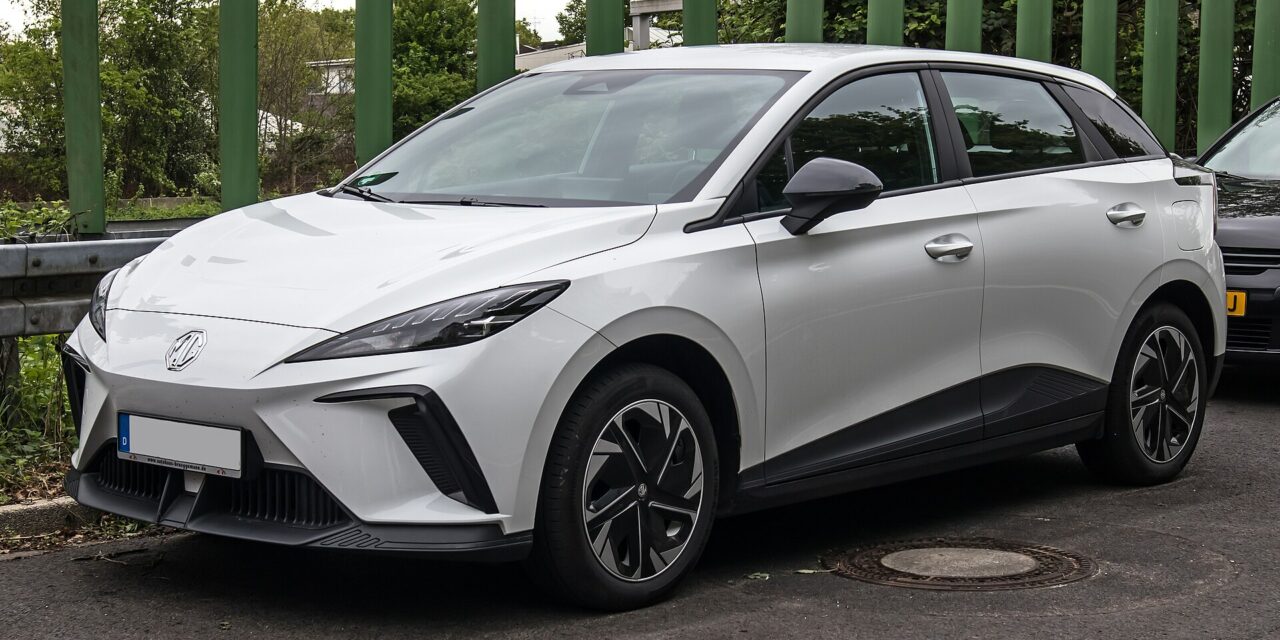
The MG4 has become one of the most interesting used electric-car searches in the UK because it puts a proper family-sized hatchback, rear-wheel drive and a usable battery within reach of buyers who might otherwise be looking at an older petrol supermini. That does not make every example an automatic bargain. The car is still young enough for its history to matter more than a long list of age-related wear items, and its battery, charging and software deserve more attention than the paintwork alone.
A good used MG4 is one with a clear provenance, a successful charging demonstration and a spec that suits the way you actually travel. Start there, then use the rest of the usual used-car routine.
First, identify exactly which MG4 is being advertised
MG has sold the first-generation MG4 with different battery capacities, power outputs, trim levels and charging capabilities. Names such as SE, Trophy, Long Range and XPower are not interchangeable. A range figure in an advert can also be a manufacturer test figure, a dashboard estimate or a seller’s guess.
Before travelling, ask the seller for the registration, VIN and a photograph of the V5C. Then confirm the exact version from the paperwork, rather than relying on alloy wheels or a badge. Ask for:
- the original order form or invoice, if available
- the service and warranty paperwork
- both keys
- the charging cable or cables supplied with the car
- confirmation of any software or recall work completed
- a photo of the charging port and its flap open
This matters because an EV’s value is tied closely to its real-world usability. A cheaper short-range car may be ideal for local driving and poor value for frequent motorway trips. Conversely, paying extra for a larger battery is hard to justify if the car will mainly be charged at home and used on shorter journeys.
Make charging part of the viewing, not a promise for later
The single most useful MG4 viewing is one that includes a proper plug-in. Do not accept a vague assurance that it charges fine, especially if the car is low on battery. Arrange to see it connected to a compatible charger, with the car recognising the connection and charging beginning normally. If a public rapid-charging stop is practical, that is an even better demonstration, but a successful home or workplace AC charge is still useful evidence.
Look for damage, corrosion, looseness or a broken cover around the charge port. Check that the cable locks in and releases normally. On the screen, make sure the displayed charge level, estimated time and charging status behave sensibly. A seller should not need to clear warning messages or repeatedly restart the process to make it work.
Ask how the car has usually been charged. There is no single perfect answer: regular home charging and occasional rapid charging can both be normal. What matters is whether the owner can describe a routine that fits the mileage, and whether the car demonstrates the basic function without drama.
Treat the battery as a condition check, not a single percentage
A dashboard range estimate is not a laboratory battery-health certificate. It moves with temperature, recent driving, cabin heating, wheel and tyre condition, route and driving style. A low displayed range after a cold motorway run does not, by itself, prove a weak battery.
Instead, look for a fuller picture. Compare the state of charge and estimated range with the car’s recent use. Ask whether the dealer can provide a battery-condition report and who produced it. If one is offered, read what it actually measures, the date, the mileage and any limitations. An independent inspection that covers the high-voltage system may be worthwhile on a more expensive example, but no report replaces a normal road test and charging demonstration.
Do not let a seller turn ordinary EV range variation into a false guarantee. Equally, do not dismiss recurring warnings, obvious range inconsistency or an unwillingness to charge the car for inspection. Those are reasons to pause and investigate.
Check the screen, software and connected features carefully
The MG4 is a software-heavy car compared with an older petrol hatchback. Switch the car fully on and take time with the instrument display and centre screen. Test the reversing camera, climate controls, navigation if fitted, Bluetooth or smartphone connection, steering-wheel controls and driver-assistance settings.
A slow start-up is less important than repeated crashes, persistent alerts or controls that do not respond. Note any warning lights before the test drive and check again afterwards. Ask the seller whether the car has received dealer software updates and whether there are invoices or job cards to support that answer.
If the car is sold with a connected-app account, clarify the handover process before paying. The previous owner should remove their personal account and data. You should be able to register the car in your own name after collection, rather than discovering later that a digital key or remote feature is still tied to somebody else.
Road-test it like a used car, not like a gadget
An MG4 can feel brisk even in its less powerful forms, so resist the urge to judge it only on acceleration. Begin with a cold start if possible. Listen for suspension knocks over broken surfaces, feel for vibration through the steering wheel and test the brakes progressively. Regenerative braking should feel predictable, not accompanied by warnings or abrupt behaviour.
On a safe route, check that the car tracks straight, the steering is consistent and the driver-assistance systems can be adjusted or switched as the handbook allows. Test parking sensors, camera and wipers. Run the air conditioning and heating long enough to confirm they work, because cabin climate has a noticeable effect on an EV’s consumption and comfort.
Also inspect the tyres. EVs are heavy and can produce strong low-speed torque, so mismatched tyres, very uneven wear or a bargain-brand replacement on one corner deserve questions. Check the tyre sizes and load ratings against the car’s placard or handbook.
Do the free checks before leaving a deposit
The electric powertrain does not replace ordinary used-car due diligence. Use the registration to check the MOT history. The GOV.UK service shows passes, failures, recorded mileage and advisories for tests in England, Scotland and Wales, so it can reveal repeat tyre, suspension or brake issues even on a comparatively new car.
Run the official safety-recall check as well. GOV.UK says the registration-based service can show safety recalls that have not been checked or fixed. If a serious safety recall is outstanding, the government says the vehicle must not be driven. Ask the dealer or manufacturer to confirm completion in writing rather than assuming a recall has been dealt with.
A history check that includes finance and insurance-write-off information is sensible before buying any used car. Match the registration, VIN, colour and keeper details across the V5C, advert and vehicle. For a dealer sale, keep copies of the advert and written promises about condition, battery reports, included cables and warranty.
Warranty is part of the price, so read it before negotiating
Many used MG4s may still have manufacturer cover remaining, but the length and terms depend on the date of first registration, mileage, the component and any transfer conditions. Do not assume that a general vehicle warranty, high-voltage battery warranty and dealer’s own used-car warranty all cover the same things.
Ask for the start date, mileage limit, service requirements and the procedure for making a claim. If a dealer is selling an add-on warranty, request the policy wording before agreeing to it. It should not distract from the dealer’s own responsibilities if the car is not as described or is not of satisfactory quality.
A car with a little warranty remaining can be worth more than a near-identical car without it, but only if the paperwork and condition support the premium.
The short list to take to an MG4 viewing
Before you agree a price, make sure you can answer yes to these questions:
- Do I know the exact battery, trim and charging specification?
- Has the car charged successfully while I watched?
- Are the charge port, cables, screens and key functions working?
- Have I checked MOT history, recalls, finance and the identity of the car?
- Is there a clear record of servicing, updates and warranty cover?
- Does the road test reveal sound tyres, brakes, suspension and steering?
- Does the car’s range and charging setup suit my own journey pattern?
The MG4 is attractive because it can offer a lot of electric car for the money. The sensible buyer does not try to prove that every battery is perfect in one afternoon. They verify the specification, see the car charge, check its history and walk away from unresolved warnings. That process is much more valuable than chasing the lowest advert price.
For official checks, use the GOV.UK MOT history service and the GOV.UK vehicle safety-recall service. Current vehicle-tax rules and rates are published in the GOV.UK vehicle tax tables.





Trackbacks/Pingbacks