Many UK drivers assume tax and insurance move together. If the car is taxed, it must be insured. If it is insured, taxing it is the last box to tick. Real life is messier than that, and it is exactly why people get caught out after buying a used car, reviving a parked-up vehicle or cancelling cover too soon.
The important point is this: vehicle tax and insurance are separate legal duties. A taxed car is not automatically insured, and an insured car is not automatically taxed. That sounds obvious when written down, but it is one of the most common areas of confusion in everyday motoring.
The short answer
If you mean can I legally drive a car just because I have taxed it, even though I have no insurance? the answer is no. GOV.UK is clear that you must have at least third-party insurance to drive on UK roads, and driving uninsured can lead to a £300 fixed penalty and 6 points, with tougher penalties if the case goes to court.
If you mean can an uninsured car still end up taxed? that is where the answer becomes more nuanced. The government removed the old insurance check from the taxing process after bringing in continuous insurance enforcement. In plain English, the tax system and the insurance policing now sit alongside each other instead of one automatically blocking the other every time.
That does not make an uninsured vehicle safe or legal to use as normal. If the vehicle is uninsured and not declared off road with a SORN, GOV.UK says the registered keeper can still be fined £100, and the vehicle can be clamped, impounded or even destroyed.
Why drivers get this wrong
This confusion has a simple cause. Years ago, many drivers were taught that you needed to prove insurance when taxing a car. That used to be part of the process. The government then removed that insurance check when taxing vehicles, because uninsured vehicles were being tackled separately through continuous insurance enforcement.
So the old rule of thumb partly died, but the legal risk did not. That leaves people with the wrong mental shortcut: they think tax proves insurance, or that paying the tax means the car is now road legal. It does not.
The safer way to think about it is this:
- tax deals with whether the vehicle is licensed for the road
- insurance deals with whether you are covered to use or keep it legally
- MOT, where required, deals with whether it has the basic test certificate needed for road use
- roadworthiness still matters regardless of paperwork
You need the whole set in place, not just one piece.
What happens if the car is uninsured but not SORN
This is the part many owners miss. You do not only need insurance when you are actively driving. GOV.UK says that if a vehicle is registered in your name and is not declared off road, it must normally be insured at all times. That rule is called continuous insurance enforcement.
So if you cancel the policy because the car is parked for a while, but forget to make a SORN, you can still trigger enforcement even if the car never moves.
That is why an uninsured but taxed vehicle can be especially awkward. The tax does not protect you from insurance enforcement, and the insurance gap does not automatically cancel the tax. You can end up paying for one obligation while still breaching another.
The practical order if you have just bought a car
This is where the question comes up most often. Someone buys a used car privately or from a dealer and wants to drive it home the same day. The legal order is usually:
- Arrange insurance in your own name
- Make sure the car has a valid MOT if it needs one
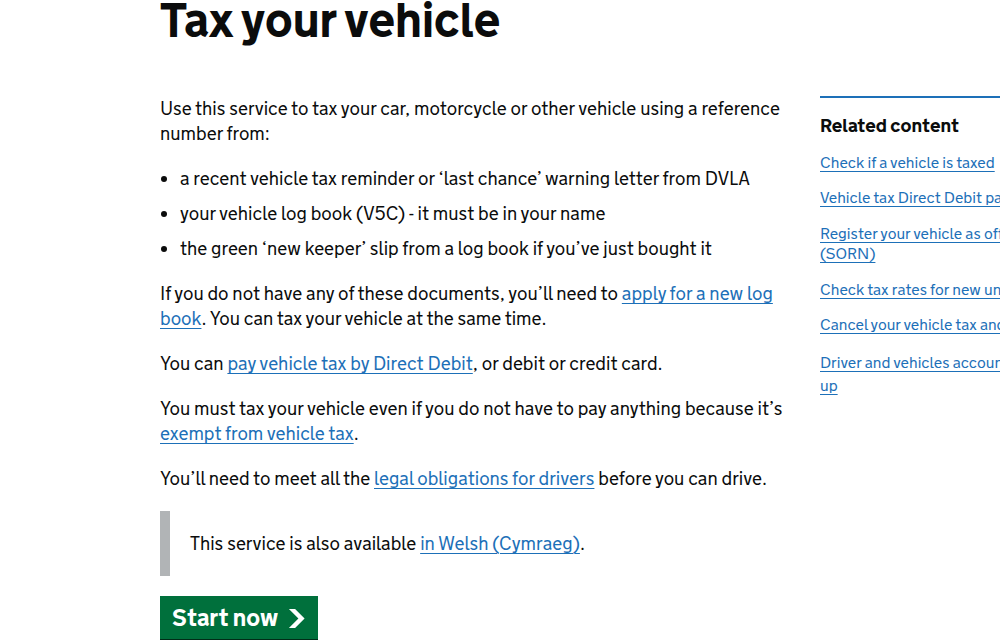
- Tax the vehicle using the green new keeper slip or another valid reference
- Drive it only once those basics are in place
If you reverse that order, you can create a nasty false sense of security. The car may show as taxed, but you can still be committing an offence if you drive it uninsured.
If you are in that exact position, our guide to taxing a car you have just bought covers the paperwork in more detail.
What if the car is staying off the road
If the vehicle is not going to be used and will be kept on private land, the cleaner answer is usually to make a SORN instead of trying to juggle tax and no insurance. GOV.UK says you do not need to insure a vehicle that is kept off the road and declared off road with a SORN.
That only works if it is genuinely off the public road. A car left on the street outside your house is not safely in SORN territory just because you are not using it.
If you still want theft or fire cover while it is stored, that is a separate insurance choice rather than a legal road-use requirement. Our guide to insuring a SORN car explains when laid-up cover makes sense.
Can you drive to an MOT without insurance?
No. This is another costly misunderstanding. A pre-booked MOT can create a limited exception around tax or SORN in the right circumstances, but it does not remove the need for insurance. GOV.UK says it is illegal to drive on a road or in a public place without at least third-party cover.
So if the plan is to revive an untaxed car by driving it to a test, insurance still needs sorting first.
How to check where you stand before problems start
If you are unsure whether the vehicle is showing correctly on the databases, do the boring checks now rather than after a letter or roadside stop.
- Check the tax position using the official GOV.UK vehicle tax checker
- Check insurance using the free askMID check-your-vehicle service
- Confirm whether the car needs an MOT and whether the certificate is current
- If the car is not being used, decide whether it should be insured, SORNed, or both in the case of optional laid-up cover
Those checks take minutes and can stop an avoidable admin mess.
A quick Northern Ireland note
Northern Ireland has some different practical rules around vehicle tax and proof of insurance, especially at Post Office applications. GOV.UK flags that the insurance rules differ there, so drivers in Northern Ireland should be careful about relying on Great Britain assumptions.
The bottom line
If you are asking whether a taxed car is fine to use without insurance, the answer is straightforward: no. Tax does not replace insurance, and driving uninsured remains a serious offence.
If you are asking whether the tax system itself always stops an uninsured vehicle from being taxed, the answer is more complicated than many people expect. The old insurance check was removed, but the legal need for insurance did not disappear with it. That is why a car can still cause trouble even if the tax side looks sorted.
The safest rule is simple: insure it, tax it, make sure the MOT is valid if required, and SORN it if it is genuinely going off the road. Anything else is where the avoidable fines begin.