A towbar can turn a family car into a useful holiday, DIY or cycling tool. It can also be a costly mistake if it is ordered on the assumption that every version of a model is ready to tow. Before choosing a detachable ball, fixed flange or a fitting slot, check the exact car, the intended trailer and the paperwork around them.
The crucial point is that a towbar does not create towing capacity. It has to suit a car that is approved to tow, and the finished outfit must remain within the car’s, towbar’s, trailer’s and driver’s limits. Here are the five checks worth making before any money changes hands.
1. Check that this exact car is approved to tow
Start with the handbook, the manufacturer’s specification for the precise engine and gearbox, and the VIN plate. Do not rely on a similarly named model in an advert. Hybrid, electric, automatic and four-wheel-drive versions can have different towing limits, and some cars are not approved for towing at all.
GOV.UK says the car’s maximum towing weight is normally in the handbook or specification sheet. It also points to the VIN plate, usually under the bonnet or inside the driver’s door. The gross train weight on that plate is the maximum for the fully loaded car plus fully loaded trailer. If there is no train weight shown, GOV.UK says the vehicle should not be used for towing.
That is a useful early filter. A towbar catalogue may list a physical fitment for a car, but that is not a substitute for the manufacturer’s towing approval. Ask the fitter to confirm the part number against the registration and VIN, then check the car’s own documentation too.
2. Buy a type-approved towbar, not just a towball that fits
For a car first used on or after 1 August 1998, a new towbar must be type approved. In practical terms, it needs to be designed for the vehicle and carry a label with an approval number and the vehicles it is approved for. This is not a detail to leave to a marketplace listing or a seller’s verbal reassurance.
The government’s towing-equipment guidance sets out the rule and the limited exception for cars first used before that date. Ask to see the towbar’s rating label or paperwork after fitting, and keep the invoice. It is useful evidence of what was fitted if you later sell the car, make an insurance query or need replacement parts.
Fixed and detachable systems can both be suitable. The sensible choice is the one rated for the exact car and the job it will do. A detachable neck may be neater when it is off the car, while a flange towbar can suit some accessories, but neither style makes a low-rated car capable of pulling a heavier trailer.
3. Do the weight and noseweight sums before choosing the hardware
There are several limits, and the lowest relevant one wins:
- Car’s braked towing limit: the maximum braked trailer weight specified for that exact vehicle.
- Gross train weight: the permitted total for a loaded car and loaded trailer.
- Towbar limit: the towbar’s own maximum trailer and vertical-load ratings.
- Noseweight: the downward load imposed on the towball. Check the car’s limit as well as the towbar’s, and do not exceed the lower figure.
- Trailer maximum authorised mass: the trailer’s permitted maximum loaded weight, shown on its plate or in its documents.
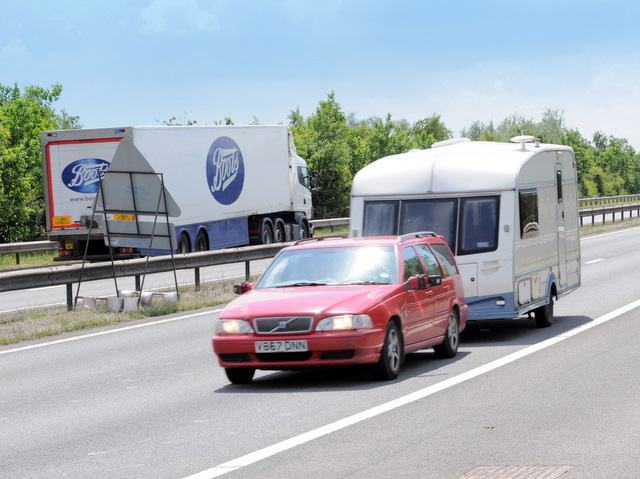
Noseweight is particularly easy to miss when the purchase is really about carrying bikes. A rack, bikes and any adapter place a vertical load on the towball, so they must be within both the vehicle and towbar limits. A towbar fitter can identify the hardware rating, but they cannot decide how much luggage, water, tools or holiday kit will be in the car and trailer on departure day.
If the figures are close, use a public weighbridge once the outfit is loaded rather than guessing. GOV.UK’s guidance is clear that gross train weight must not be exceeded.
4. Specify the electrics for what you will tow
Fitting the metalwork is only part of the job. The vehicle’s towing electrics need to operate the trailer lights correctly, and a modern car may need vehicle-specific wiring and coding so it recognises a connected trailer. That can affect warning systems, parking sensors, rear fog-light behaviour and, on some models, stability functions. The exact behaviour is manufacturer-specific, so confirm it with the fitter before booking.
Tell the fitter whether the car will tow a small luggage trailer, a caravan, a horsebox or a bike carrier. The answer changes the socket and wiring requirements. It is better to fit the correct system once than to discover before a trip that the caravan’s charging or auxiliary circuits are not supported.
Before leaving the workshop, test every required light with the trailer connected: indicators, brake lamps, tail lamps, number-plate lamps, reversing lamp if fitted, and rear fog lamp. A trailer must display the same registration number as the towing car. If the trailer or caravan is wider than the rear of the car, suitable towing mirrors are required too.
5. Tell the insurer, then check the whole towing setup
A professionally fitted towbar can still be a modification that an insurer wants recorded. Do not assume a detachable towbar is invisible for insurance purposes. Contact the insurer before fitting, describe the equipment and say how the car will be used. Get the policy record updated in writing if it needs to be declared.
Motoring Mojo’s guide to declaring car modifications explains why practical accessories such as towbars are worth checking rather than assuming.
Finally, a towbar does not remove the need to make the trailer roadworthy. GOV.UK says a loaded trailer over 750kg needs a working brake system; any fitted brakes must work, and a breakaway cable or secondary coupling is required in case the trailer detaches. Check tyres, lights, coupling, load security and the registration plate before every journey.
A five-minute brief for the towbar fitter
Take these details to the fitting appointment:
- The full registration and, if requested, VIN of the tow car.
- The manufacturer’s braked towing limit, gross train weight and noseweight limit.
- What will be towed or carried, including the trailer’s maximum authorised mass or the bike rack’s loaded weight.
- Whether you need a fixed or detachable system and the type of electrical socket required.
- Confirmation that the insurer has been asked about the modification.
That short preparation produces a better result than simply asking for the cheapest towbar available. The right setup is the one that is type approved for the exact car, correctly wired, within every weight limit and declared where the insurer requires it. Once those checks are done, booking the fitting is the easy part.