A seat belt that rubs your neck is distracting, uncomfortable and often a sign that the driving position needs attention. The answer is not to tuck the belt under your arm, put it behind your back or buy a clip that creates slack. Start with the seat and belt adjustment instead.
The Highway Code says drivers should make sure the seat, seat belt, head restraint and mirrors are adjusted correctly before driving. It is a small pre-drive routine, but it makes a real difference to comfort and to how the restraint is positioned if you need it.
Where a seat belt should sit
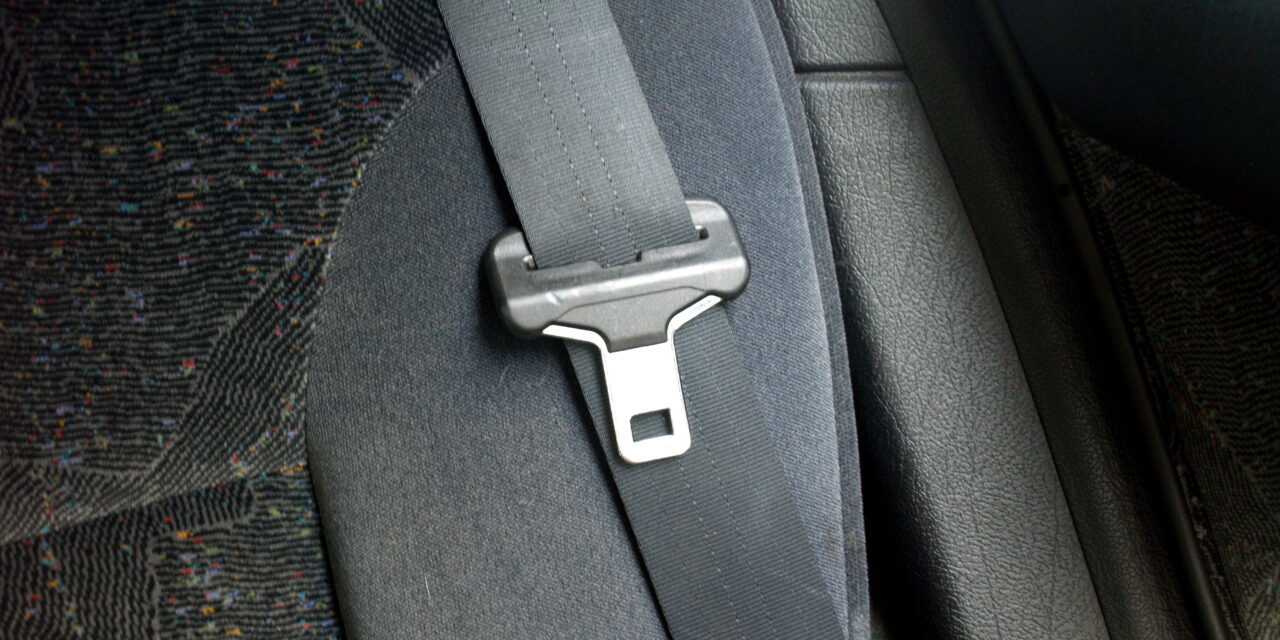
The diagonal part of a three-point belt should run across the middle of your shoulder and chest, rather than touching your neck or slipping off the outside of your shoulder. The lap section should lie low across your hips and upper thighs, not across your stomach.
That positioning is why simply pulling the shoulder section down, sitting on it or placing it under an arm is a bad solution. It changes the way the restraint works and can leave far too much movement in a collision. The legal requirement to wear a seat belt applies to drivers and adult passengers in cars unless a specific exemption applies. GOV.UK sets out the main rules here.
Use this order to get a better fit
Make the adjustments while the car is parked. Do not lean across the cabin or try to alter the seat while moving.
1. Set the seat position first
Sit fully back in the seat and adjust the distance from the pedals so you can press them properly without stretching. Then set the backrest reasonably upright. A very reclined position can make the shoulder belt sit in the wrong place and puts you further from the head restraint.
Adjust the seat height if your car offers it. Raising or lowering the whole seat a little can change where the upper belt crosses your shoulder. It can also improve your view without needing to sit too close to the steering wheel.
2. Adjust the upper belt guide
Many cars have a height-adjustable upper anchorage on the door pillar. Look for a sliding guide above or just behind your shoulder, often released by a button. Move it in small steps, buckle up again and check the belt crosses the centre of the shoulder without cutting into the neck.
Do not assume it should be at the highest setting. The right position depends on your height, seat height and the particular car. If the belt is still on your neck with the guide at its lowest useful setting, revisit the seat height and backrest before looking for accessories.
3. Check the head restraint as part of the same job
The head restraint is not just for comfort. Set it so the centre of the restraint is roughly level with the back of your head where the vehicle allows. Keep it close to your head, without pushing you into an awkward posture. The Highway Code specifically includes the head restraint in its pre-drive adjustment advice.
4. Remove bulky layers
A thick coat, padded gilet or bag strap can stop the belt lying flat. Before a long drive, take off or open a bulky outer layer and make sure the webbing is not twisted. A twist concentrates the belt against the body and is a straightforward thing to correct.
What not to do when the belt is uncomfortable
- Do not put the shoulder belt under your arm. It can leave your upper body poorly restrained.
- Do not put the belt behind your back. You may be buckled in, but you are not using the belt as intended.
- Do not use a clip, stopper or comfort gadget that introduces slack. The belt needs to sit snugly and retract freely.
- Do not alter the belt or its mounting. Drilling, moving an anchorage or making a home-made extension is not a safe fix.
Soft, vehicle-compatible pads can sometimes make the edge of the webbing more comfortable, but they are not a substitute for correct adjustment. Avoid anything that stops the belt retracting, prevents it sitting flat or changes the routing. If in doubt, use the vehicle handbook and ask a dealer or qualified repairer about an approved accessory for that model.
If you are shorter, taller or pregnant
Shorter drivers may get the best result from combining a lower upper-belt guide with a raised seat. Taller drivers may need the guide higher and the seat further back, provided they can still operate the pedals and controls safely. In either case, the belt should still cross the shoulder, not the neck or outer arm.
For pregnancy, the lap section should sit low across the hips and below the bump, with the diagonal section between the breasts and to the side of the bump. Never place the lap belt over the bump. If the car’s normal belt does not fit comfortably, take medical advice where appropriate and check the handbook rather than relying on an unverified add-on.
When it is a car problem rather than an adjustment problem
Book the car in if the belt will not extend or retract smoothly, the upper guide is damaged or stuck, the buckle is unreliable, or the webbing is twisted, frayed, cut or contaminated. Do not spray lubricant into a retractor or dismantle it yourself.
These faults are not merely irritating. Seat belts are checked at MOT, and damaged webbing or a belt that does not operate correctly can lead to a failure. For a fuller look at the defects that matter, see our guide to worn seat belts and the MOT.
The quick pre-drive check
- Seat adjusted so you reach the pedals and controls without stretching.
- Backrest reasonably upright and head restraint correctly positioned.
- Lap belt low across the hips.
- Shoulder belt across the centre of the shoulder and chest.
- Webbing flat, untwisted and free to retract.
- No clips, slack-creating accessories or bulky layers trapped under the belt.
If the belt still rubs your neck after those checks, consult the handbook for your car’s adjustment range and have the belt hardware inspected. Comfort matters, but the safe answer is a properly adjusted restraint, not a workaround that defeats it.