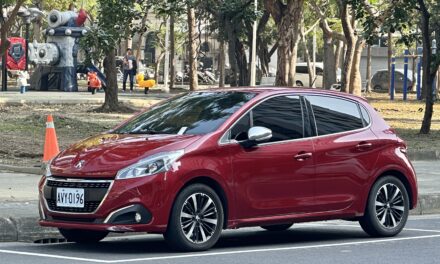
Buying a small first car before passing can make practice easier to fit around lessons. It can also create an insurance trap: a provisional licence does not make somebody automatically covered to drive their own car, their parent’s car, or a friend’s car.
There are two different situations to separate. A learner using somebody else’s car may be added to that car’s annual policy or may have a separate learner-driver policy. A learner using their own car needs to be its registered keeper and needs their own policy that covers them as a learner driver, according to the DVSA’s guidance.
Get the cover confirmed before the L-plates go on. A quote screen, an assumption that fully comprehensive cover extends to every driver, or an insurance policy that starts tomorrow is not enough for a practice drive today.
The short answer: what is needed?
For a learner to practise legally on a public road in Great Britain, the practical starting checklist is:
- a valid provisional driving licence for the type of car being driven
- insurance that specifically covers the learner’s use of that car
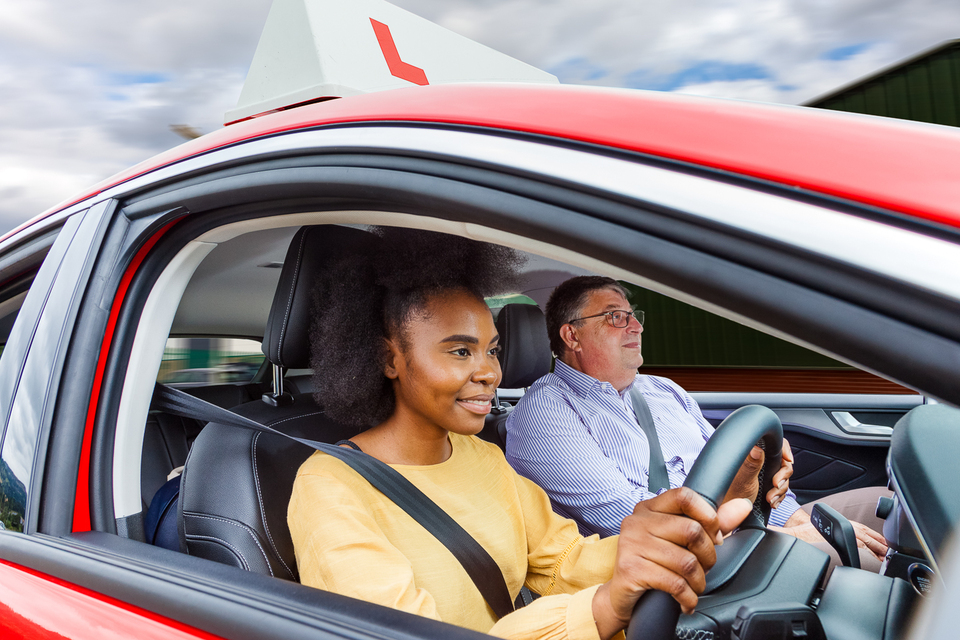
- a qualified supervisor in the front passenger seat
- red L-plates, or D-plates in Wales, clearly displayed front and rear
- a road-legal car: taxed, MOT’d where required, registered and safe to drive.
For an own car, the DVSA says the learner must be the registered keeper and hold their own learner-driver insurance policy. The V5C is not proof of ownership, but the registered-keeper point is important when setting up the policy. Give the insurer accurate keeper, main-driver, address, mileage and use details.
Own car, parent’s car or driving-school car: do not buy the wrong cover
The policy route depends on whose car it is. It is worth deciding this before comparing prices, because the cheapest-looking quote may cover a completely different arrangement.
| Where the learner practises | Usual insurance route | Key point to check |
|---|---|---|
| The learner’s own car | The learner’s own policy with provisional-licence cover | The learner is the registered keeper and the policy permits supervised practice. |
| A parent’s, partner’s or friend’s car | Add the learner as a named driver, or buy a learner policy for that specific car | Ask how a claim affects the car owner’s no-claims discount and excess. |
| An instructor’s dual-control car | The instructor or school arranges cover | Confirm what is included in the lesson price. Do not assume the learner needs a separate policy for that lesson. |
Adding a learner to an existing annual policy can be straightforward, but a claim may affect the main policyholder’s no-claims discount. The DVSA specifically advises checking this. A standalone learner policy can be useful where the insurer confirms that claims are handled separately from the car owner’s annual policy, but that is a product feature to verify, not a universal rule.
Questions to ask before accepting a learner policy
Insurers set their own terms, so compare the cover rather than just the premium. Ask these questions in writing or save the policy wording:
- Is this cover for a provisional licence holder practising in this exact vehicle? Check the registration number, start time and end time.
- Who can supervise? The legal minimum and an insurer’s own minimum age can differ. Some policies impose an older age threshold for the accompanying driver.
- What happens to a no-claims discount after a claim? This matters especially where the learner is added to a family car’s main policy.
- What excess applies? Read both compulsory and voluntary excesses. A low premium can still leave a large amount payable after damage.
- Does the policy include commuting, school or college parking, or just private practice? Never infer permitted use from the word “learner”.
- What happens when the test is passed? Provisional cover does not necessarily continue once the learner can drive unsupervised. Arrange a full-licence policy before the first solo journey.
- Are modifications and declared drivers correct? Wheels, exhaust changes, cosmetic changes and other alterations can all be material to an insurer.
Do not declare a parent as the main driver if the learner actually owns and uses the car most of the time. That can be insurance fronting, which can lead to a refused claim or cancelled policy. The policy details must describe the real arrangement.
The supervisor is part of the legal setup
A learner practising with family or friends needs more than a willing passenger. The supervisor must be at least 21, qualified to drive that type of car and have held a full licence for at least three years. The licence can be from the UK, EU, Switzerland, Norway, Iceland or Liechtenstein. They must not be banned from driving.
For a manual car, the supervisor needs a full manual entitlement. A full automatic-only licence does not qualify somebody to supervise a learner in a manual.
There is a separate insurance check too. The DVSA notes that some insurers require the supervisor to be over 25. The policy’s condition is therefore just as important as the statutory minimum. A supervisor should also be sober, alert and able to intervene with calm, useful instructions. Taking payment, including fuel money, for private supervision is not allowed unless the person is an approved or trainee driving instructor.
Get the car ready, not just insured
Insurance is only one part of road legality. Before each practice session, make a quick vehicle check:
- Fit legal L-plates clearly at the front and rear. In Wales, legal D-plates may be used instead.
- Check the vehicle has tax and, if it needs one, a valid MOT.
- Check tyres, lights, mirrors, fuel level and warning lights. Do not practise in a car that is not safe to drive.
- Consider an additional interior mirror for the supervisor. The DVSA recommends one so they can see behind the car.
- Remove or cover the learner plates when a full-licence holder is driving the car.
Family practice is not motorway practice. A learner may only drive on a motorway when accompanied by an approved driving instructor in a dual-control car. That excludes a normal drive with a parent or friend, even if the insurance policy is valid.
Can the learner take the driving test in their own insured car?
Often, yes. The car must meet the DVSA rules for using your own car for the test, and the insurance must cover the learner taking the practical test. The test vehicle cannot have certain safety warnings, and some cars are not allowed because of visibility or safety concerns. Check the current DVSA list rather than relying on an instructor’s old advice.
Do this before booking, not on test morning. The same applies to cover after the pass: passing the test changes what the driver is allowed to do, but it does not automatically convert a learner policy into cover for unsupervised driving.
What to do before the first practice drive
- Decide whose car will be used and make sure the insurance route matches it.
- Check the learner’s provisional licence and the supervisor’s age and entitlement.
- Read the certificate, schedule and policy wording for learner, vehicle, supervisor and permitted-use conditions.
- Confirm the exact start date and time of cover.
- Fit L- or D-plates, check the car is road-legal and choose a quiet, familiar route.
- Keep the policy documents accessible on the phone, but do not use the phone while driving.
The saving from practising in a family car can be real, but only if the policy is right before the wheels turn. Treat the insurance choice as part of the lesson plan, not a formality to sort out afterwards.
Rules and policy terms can change. For the official current guidance, see the DVSA’s guide to supervising a learner driver and the Highway Code learner-driver requirements.