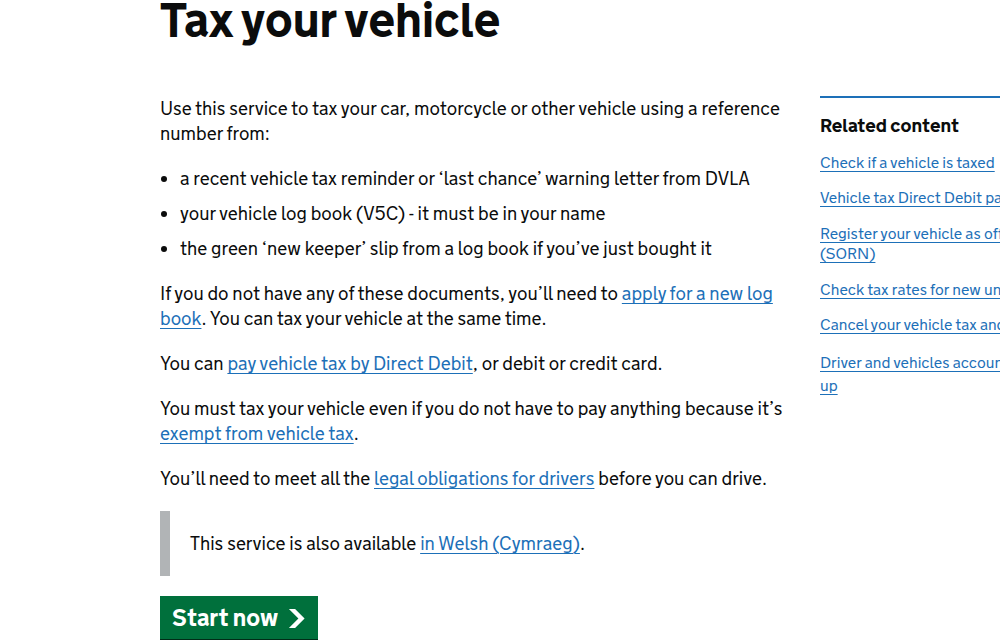
If you are trying to tax a car in the UK, the DVLA website is usually the easiest route. But the Post Office still matters, especially when the online service cannot do what you need.
That is the bit many drivers miss. The Post Office is not just an old-fashioned alternative for people who do not like doing things online. In some situations it is the only practical route, such as changing into or out of the disabled tax class, or taxing a vehicle when you need counter staff to check documents that the website cannot handle.
Here is when a Post Office vehicle tax visit makes sense, what paperwork to take, and the snags that still catch people out.
The short answer
Yes, you can still tax a car at the Post Office, but only at branches that deal with vehicle tax.
For most standard cases, the online DVLA service is quicker. The Post Office becomes useful when:
- you want to pay in cash, by cheque or postal order
- you need help using a V11, V5C or V5C/2 in person
- you are applying with a V62 because the log book is missing and you cannot use the online replacement route
- you need to tax a vehicle in Northern Ireland and must show paper insurance and MOT evidence
- you need to change into or out of the disabled tax class
What documents do you need to tax a car at the Post Office?
The Post Office says you need one of these vehicle documents:
- your V5C log book
- your V5C/2 new keeper slip if you have just bought the vehicle
- your V11 reminder
- your V85/1 if it is an HGV
Alongside that, you may also need:
- payment for the vehicle tax, unless the vehicle is exempt
- bank or building society details if you want to set up Direct Debit
- a valid MOT certificate or other evidence the MOT is valid when the tax starts
- a valid exemption certificate if you are claiming disabled vehicle tax
- GVT or PSVC paperwork if your reminder says you need it
If you live in Northern Ireland, the rules are tighter. GOV.UK and the Post Office both say you will also need a paper insurance certificate or cover note, plus an original MOT certificate or evidence of a Temporary Exemption Certificate.
When the Post Office is better than doing it online
The online route is still the default for most people. But there are a few cases where the counter is genuinely useful.
1. You want to pay in cash or by cheque
The DVLA online service takes card payments or Direct Debit. The phone service does not let you pay by Direct Debit. The Post Office is the one route that still gives drivers a wider payment mix, including cash, cheque, card, postal order and Direct Debit.
If you are helping a relative who does not bank online, or you simply do not want the payment coming off a card there and then, that can matter.
2. You have just bought the car and want a face-to-face check
If you have the green V5C/2 new keeper slip, you can usually tax the car online. But some buyers still prefer to take the slip to a participating Post Office and have the documents checked in person, especially if they are collecting a vehicle from a private seller and want the tax sorted before the drive home.
That does not replace the normal checks you should do before buying. It just gives you another legitimate way to get the tax in place.
3. The log book is missing and you need to start a V62 application
This is one of the most useful counter cases.
If you do not have a V5C, V5C/2 or V11, the Post Office says you will need to apply for a new V5C using a V62 form, which you can pick up in branch. The published fee is £25.
GOV.UK adds an important detail here. If you are the registered keeper and do not need to change anything on the log book, you may be able to get a replacement V5C online or by phone instead, and tax the vehicle at the same time. If that online replacement route does not fit your situation, the paper V62 route is what is left.
That means the Post Office is not always the fastest option for a missing log book, but it is still a real fallback when the digital route does not apply.
4. You need to change the tax class for a disabled vehicle
This is the biggest reason many people still need the Post Office.
GOV.UK says changing a car into or out of the disabled tax class can only be done at a Post Office. So if the vehicle was previously used by a disabled person, or you are taxing it in that class for the first time, the website is not the full answer.
5. Your MOT has only just been updated
GOV.UK warns that it can take up to two days for MOT information to update after a pass. If you try to tax immediately, the system may not recognise the valid MOT yet.
In that situation, a Post Office visit can still help if you have acceptable evidence, such as an MOT certificate or a screenshot of the vehicle’s MOT history. It is not magic, but it can save a wasted evening of refreshing the DVLA site.
When the Post Office will not fix the real problem
Drivers sometimes head to the counter hoping a person can override a rule that the system is enforcing correctly. Usually, they cannot.
No valid insurance
If the vehicle needs insurance for road use, you still need insurance sorted first. A counter visit does not bypass that legal requirement.
No valid MOT where one is required
If the vehicle needs an MOT and does not have one, taxing it is still blocked apart from the limited exemptions already set out by DVLA rules.
Wrong name or keeper details
If the document trail is wrong, a branch cannot simply ignore it. You may need to fix the V5C issue first, or use the proper V62 route if the log book is missing.
The branch does not offer vehicle tax
Not every Post Office branch handles vehicle tax. You need a participating branch, so check before you set off.
Post Office vs DVLA online: which route should you use?
| Situation | Best route |
|---|---|
| You have a V11, V5C or V5C/2 and just want the fastest standard route | DVLA online |
| You want to pay by cash, cheque or postal order | Post Office |
| You need to set up Direct Debit in person | Post Office |
| You are the registered keeper, the details have not changed and the V5C is missing | DVLA replacement V5C service first, or phone if eligible |
| You need a paper V62 because the online replacement route does not apply | Post Office for the form, then DVLA by post |
| You need to change into or out of the disabled tax class | Post Office |
| You are in Northern Ireland and must show paper insurance and MOT proof | Post Office |
A simple checklist before you leave home
Before going to the Post Office to tax a vehicle, make sure you have:
- a participating branch selected
- one key vehicle document, such as the V5C, V5C/2 or V11
- MOT evidence if the record may not have updated yet
- payment method or bank details for Direct Debit
- any extra evidence for disabled tax, HGV tax or Northern Ireland requirements
If the log book is missing, decide one thing before you travel: are you eligible for the online replacement V5C route? If yes, that may be easier than starting with a paper V62.
The mistake that wastes the most time
The biggest time-waster is treating every missing-log-book case as a Post Office job.
Sometimes it is. Sometimes it is not.
If you are already the registered keeper and none of the V5C details need changing, GOV.UK says you can often get a replacement online or by phone and tax the vehicle at the same time. That is usually easier than filling in a V62 and waiting for a paper application to move through the system.
The counter route matters most when the digital replacement service does not fit, not because it is always better.
Final word
The Post Office is still a live vehicle-tax route in the UK, but it is no longer the default answer for everyone.
For a routine renewal, the DVLA website is usually quicker. For awkward cases, especially disabled tax class changes, paper-document problems, in-person payment and some Northern Ireland applications, the Post Office is still the route worth knowing.
If you go prepared with the right document and the right branch, it can save a lot of backtracking.