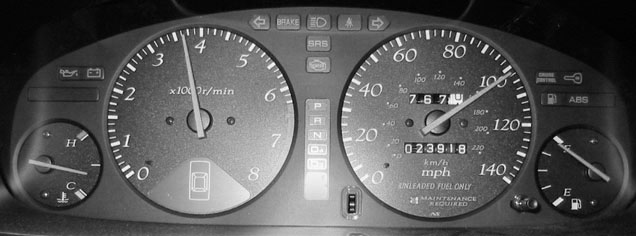
A red brake warning light is not one to shrug off and hope disappears by the next set of lights. On most cars it points to one of a small number of issues: the parking brake is not fully released, the brake fluid level is low, or the braking system has detected a fault serious enough to flag on the dashboard.
The tricky part is that some causes are minor and cheap, while others are the sort of problem that can leave you with a long brake pedal and a recovery truck. That is why this light needs a calmer, more methodical response than a guess and a quick top-up.
First, know what the light is trying to tell you
On many UK cars, the red brake warning light is the symbol with an exclamation mark inside a circle with brackets around it. Depending on the car, it may also be described as the parking brake warning light or brake fluid warning light.
RAC guidance treats red warning lights as serious and potentially dangerous. It says you should stop the car when it is safe and get it checked by a professional. RAC also notes that if the brake system warning light stays red after you release the parking brake, it can point to low brake fluid or another braking system issue.
That does not automatically mean total brake failure is moments away, but it does mean you should assume the car needs checking before you carry on as normal.
The two questions that matter straight away
1. Is the parking brake fully released?
This sounds obvious, but it is still the first thing to rule out. If you have driven off with the handbrake partly applied, or the switch on an electronic parking brake has not reset properly, the warning can stay on.
If you release the parking brake fully and the light goes out, you may have had nothing more than that. If it stays on, move to the second question.
2. Does the car feel normal when you brake?
If the pedal suddenly feels longer, softer or spongier than usual, or the car pulls to one side, stop driving as soon as it is safe. The same goes for any grinding noise, a strong burning smell, or a warning light that appears with an ABS light at the same time.
Halfords warns that when the ABS indicator and brake warning light are showing together, there could be something seriously wrong with the braking system. RAC goes further and says you should not drive if you see a red brake warning light.
That is the sensible rule to follow.
What you can safely check yourself
There are only a few home checks worth making, and all of them should be done on level ground with the engine off and the car safely parked.
Check the brake fluid level in the reservoir
If your car has a transparent brake fluid reservoir, look for the MIN and MAX marks from the outside. The MOT inspection manual says testers only check hydraulic brake fluid levels where the reservoir is transparent or an indicator is fitted, and they do not remove the cap.
That matters for drivers too. If the level is visibly low, you have learned something useful without opening anything.
A low level does not always mean there is an external leak. It can happen as brake pads wear down. But it can also point to fluid loss somewhere in the system, which is why blindly topping it up is not a proper fix.
Look for obvious leaks or wetness
Check the ground under the car and look around the inside of each wheel if you can do so safely. Brake fluid leaks are not always dramatic puddles, but any obvious wetness around brake components is a reason not to continue driving.
Think about what happened before the light came on
Did it appear after the car sat unused for weeks? After recent brake work? During a long downhill run? After the ABS light came on earlier in the week? Those details help a garage get to the cause faster.
What not to do
Do not assume a top-up has solved it
A low reservoir level is a symptom, not a diagnosis. If the level has dropped, you need to know why.
Do not keep driving just because the brakes still "sort of" work
Brake problems often get worse under heavier use, in traffic, or during emergency stops. A car that slows down acceptably on your street may feel very different at motorway speed or in a sudden stop.
Do not ignore the ABS light if it is on as well
The GOV.UK MOT inspection manual says an ABS warning device that is not working, or one that shows a system malfunction, is a Major defect. That alone tells you it is not a light to brush aside.
So can you drive with the red brake warning light on?
The cautious answer is no, not as normal road use.
If the light came on because the parking brake was not fully released and it goes out immediately once corrected, you are probably fine. Outside that, treat a red brake warning light as a stop, assess and investigate problem.
If the light stays on, the safest next step is recovery or a short move only to get fully out of danger, not a routine trip to work or a motorway journey. If the pedal feel has changed, if the car pulls, or if the ABS light is on too, do not continue.
What a garage will usually be checking for
A garage will normally start with the obvious possibilities and work inward:
- low brake fluid level
- worn brake pads causing the fluid level to drop
- a leak from a hose, caliper, wheel cylinder or pipe
- a sticking or faulty handbrake or parking brake switch
- a master cylinder problem
- an ABS or electronic brake force distribution fault
- poor quality or contaminated brake fluid
The GOV.UK MOT manual gives a useful clue about how testers judge some of these faults. Brake fluid below the minimum mark is a Minor defect, but if it is significantly below the minimum mark it becomes Major. Contaminated brake fluid is also listed as Major.
That means a car can move from "worth checking soon" to "should not be ignored" faster than many drivers realise.
Will it fail an MOT?
It depends on the exact reason.
The same GOV.UK manual says:
- a brake fluid warning light illuminated or defective is a Minor defect
- incorrect functioning of the brake fluid level warning device is also Minor
- an ABS warning device not working is Major
- an ABS warning device showing system malfunction is Major
So the dashboard light itself is not always an automatic fail in the way people assume. But the underlying cause can still produce a Major defect, and a red brake warning light should never be judged by MOT outcome alone.
A car can scrape through a test with a Minor issue and still be a poor bet for daily use until the fault is understood.
When a fluid top-up is reasonable and when it is not
If you know the car well, the fluid is only fractionally low, the brakes feel normal, and you are topping up after confirming the system has already been inspected for pad wear or another known cause, that is one thing.
If the warning light has appeared unexpectedly and you do not know why, a top-up is not the same as a repair. You may briefly hide the symptom while the real problem gets worse.
That is especially true if you have any of these at the same time:
- spongy pedal feel
- fresh fluid marks on a wheel or tyre
- the car pulling when braking
- the ABS light or other brake-related lights on
- repeated need to top up the reservoir
The bottom line
A red brake warning light after startup is sometimes nothing more than a parking brake issue, but it is too closely linked to low fluid and brake system faults to gamble on. Check the simple things, pay attention to pedal feel, and if the light stays on, treat the car as needing proper inspection before normal driving.
With brakes, the expensive mistake is rarely the garage bill. It is assuming the warning light means less than it does.