
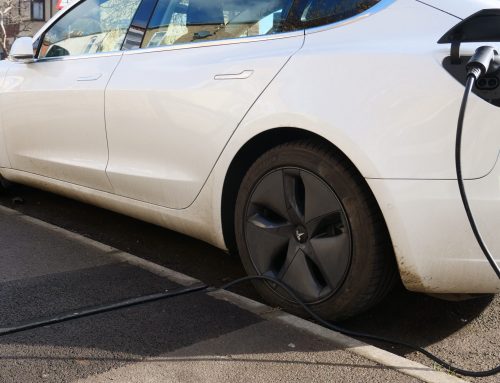
If you’ve been hesitating to make the switch to an electric vehicle because you don’t have a driveway, 2026 might be the year to reconsider. With nearly half of UK households lacking off-street parking, the automotive industry and government have responded with innovative solutions that make EV ownership accessible to everyone—not just those with private garages.
The Driveway Dilemma: Why It’s Less of a Problem Than You Think
The statistic often quoted—that one third of UK houses lack a driveway—actually understates the situation. According to the Electric Car Scheme, a staggering 47% of UK households don’t have off-street parking. This includes flat dwellers, terraced house owners, and those living in busy urban areas where street parking is the norm.
For years, this presented a genuine barrier to EV adoption. The conventional wisdom held that home charging was essential for practical EV ownership, leaving millions feeling excluded from the electric revolution. However, 2026 brings a paradigm shift: owning an EV without a driveway is not only possible but increasingly practical and cost-effective.
Home Charging Solutions for the Driveway-Free
Pavement Gullies and Cable Channels (Gul-e, Charge Gully)
The most exciting development for driveway-less EV owners comes in the form of pavement gullies—shallow channels built into the pavement that allow charging cables to run safely from your home to your parked car at the kerbside.
Companies like Gul-e and Charge Gully have engineered systems that sit flush with the pavement surface, eliminating trip hazards while protecting cables from weather and damage. The Gul-e system, for instance, features a chequer-plate cover and brush mechanism that securely holds the charging cable when in use but remains virtually invisible when not.
Installation is surprisingly straightforward—typically taking around 2 hours from start to finish—and the solutions are designed to be council-approved and safety-compliant.
Government Legislation Updates (Summer 2026)
Perhaps the most significant development is the UK government’s promise to pass legislation in summer 2026 that will allow motorists to run power cables through charging "gullies" built into the pavement outside their homes without needing planning permission.
As reported by The Guardian in April 2026, this change recognizes that "households without off-street parking could soon be able to charge their electric vehicles from home under new government plans." The legislation aims to cut through the bureaucratic red tape that has previously slowed adoption of pavement charging solutions.
This means that before the end of 2026, EV owners who previously needed to seek individual council permissions will be able to install compliant charging gullies under permitted development rights—much like adding a satellite dish or certain home improvements.
OZEV Cross-Pavement Grant Extension to March 2026
Financial support remains available through the OZEV (Office for Zero Emission Vehicles) Cross-Pavement Grant, which has been extended to March 2026. To qualify, applicants typically need to:
- Own or rent a residential property with suitable on-street parking approved by the local council
- Obtain council permission for a cross-pavement charging solution
- Install the solution before their chargepoint
- Own an eligible electric vehicle
Gul-e and similar providers often assist with the application process, making it easier for homeowners to access this funding.
Wall-mounted Chargers with Kerbside Reach
For those whose parking situation allows, specialized wall-mounted chargers designed to reach kerbside parking spaces offer another avenue. These units are typically installed on the front wall of a property and feature extended cables that can safely reach vehicles parked at the curb.
Alternative Charging Strategies
When home charging solutions aren’t feasible or desirable, several effective alternatives exist:
Workplace Charging Benefits and Tax Advantages
For many EV owners without driveways, workplace charging has become the primary solution. The advantages are compelling:
- Convenience: Charge while you work, eliminating separate charging trips
- Cost-effectiveness: Often cheaper than public rapid charging
- Tax benefits: Electricity for workplace charging is not treated as a taxable benefit
- Employer incentives: Many companies offer installation grants or subsidies
The average cost for installing a commercial electric car charger at a workplace is around £1,000-£1,500, but grants of up to £500 are now available for businesses installing chargepoints.
Public Charging Networks: Costs and Accessibility
The UK’s public charging infrastructure has expanded rapidly, with over 87,000+ public charge points available as of 2026. These are found in:
- Residential streets (increasingly via lamp-post and pavement solutions)
- Retail destinations and supermarkets
- Workplaces
- Motorways and major routes
However, cost remains a consideration. According to Zapmap’s March 2026 data, the weighted average PAYG price is:
- 54p/kWh for 3kW-49kW (Standard / Standard Plus) chargers
- 76p/kWh for 50kW+ (Rapid / Ultra-rapid) chargers
This compares to home electricity rates averaging around 27p/kWh (including VAT at 5%), highlighting why reducing public charging costs is crucial.
Destination Charging at Supermarkets and Retail Parks
Many supermarkets, shopping centres, and retail parks now offer free or low-cost charging while you shop. Tesco, Sainsbury’s, and Lidl have particularly aggressive rollout programs, often providing 7kW-22kW chargers that can add significant range during a typical shopping trip.
Lamp-post and Streetlight Charging Options
Innovative solutions like char.gy have transformed thousands of lamp posts across the UK into charging points. These are particularly valuable in urban areas where lamp posts already line residential streets, requiring minimal additional infrastructure.
Making Public Charging Affordable
The Charge Scheme and Salary Sacrifice Savings (20-50%)
For those relying on public or workplace charging, The Charge Scheme (offered through The Electric Car Scheme) provides a game-changing benefit: salary sacrifice for charging costs.
By paying for your charging from your gross salary before tax and National Insurance deductions, you can save 20-50% on charging costs—effectively neutralizing much of the price disadvantage of public charging versus home charging.
This means that even when using the same public networks, your effective cost could drop to approximately 27-43p/kWh for standard charging and 38-46p/kWh for rapid charging—bringing it much closer to home charging economics.
Zap-Map and Other EV Charging Apps for Price Comparison
Apps like Zap-Map, PlugShare, and The Charge Scheme’s own app have become essential tools for driveway-less EV owners. They allow users to:
- Compare prices across different charging networks in real-time
- Check charger availability before arriving
- Filter by charger type, speed, and payment method
- Plan routes with charging stops
- Access user reviews and reliability ratings
Subscription Models and Membership Benefits
Many charging networks now offer subscription models that provide discounted rates in exchange for a monthly fee. For regular users, these can offer significant savings over pay-as-you-go pricing, particularly for those who rely heavily on public charging.
Financial Incentives and Grants Available in 2026
Up to £500 Grant for Chargepoint Installation
In February 2026, the UK Government announced grants of up to £500 for:
- Renters
- Flat owners
- Homeowners without driveways
- Businesses installing electric vehicle chargepoints
This represents a significant reduction in the barrier to entry for both home and workplace charging solutions.
Council-specific Pavement Charging Initiatives
Almost half of councils across the UK now offer specific support for pavement charging solutions. A Freedom of Information request by Vauxhall found that 42% of councils in England, Scotland, and Wales plan to have cross-pavement charging available by the end of 2026.
These initiatives vary but may include:
- Streamlined application processes
- Partial funding for gully installations
- Preferred contractor lists
- Technical guidance and support
Employer Support for Workplace Charging
Forward-thinking employers are recognizing that supporting EV adoption aligns with sustainability goals while also being an attractive employee benefit. Beyond the tax advantages, many companies now:
- Offer installation grants for home charging (even for those without driveways, via pavement solutions)
- Provide preferential parking for EVs
- Subsidize workplace charging electricity
- Offer EV salary sacrifice schemes that include both vehicle and charging costs
Real-World Considerations and Practical Tips
Safety First: Avoiding Trailing Cables Across Pavements
One critical point that cannot be overstated: never leave trailing charging cables stretched across pavements. This creates serious trip hazards, poses insurance risks, and can result in council intervention or fines.
Proper solutions like pavement gullies exist specifically to eliminate this risk while enabling safe home charging.
Planning Permission vs. Permitted Development Rights
While the summer 2026 legislation promises to move pavement charging solutions into permitted development rights (meaning no planning application needed), it’s essential to:
- Verify the exact status of legislation before installing
- Check if your council has any additional requirements or guidelines
- Ensure any installation meets British Standards and safety regulations
- Consider consulting with a qualified electrician familiar with EV installations
Weatherproofing and Cable Protection Solutions
The British climate demands robust outdoor solutions. Look for:
- IP-rated connectors and enclosures (minimum IP44 for outdoor use, IP65+ preferred)
- UV-resistant cable sheathing
- Freeze-resistant materials for colder climates
- Proper drainage considerations in gully designs
Neighbour Relations and Shared Solutions
In terraced housing or flats, consider whether shared solutions might work better:
- Community gully installations serving multiple households
- Shared workplace-style charging in residential car parks
- Agreements with neighbours for shared access to charging points
- Building management approaches for flat complexes
Future-Proofing Your EV Ownership
Infrastructure Improvements Coming in 2026-2027
The pace of innovation shows no signs of slowing. Developments to watch include:
- Expansion of lamp-post charging networks
- Increased deployment of smart pavement channels
- Growth in community charging hubs
- Advances in wireless and inductive charging trials
- Improved grid capacity in residential areas
Technology Advances in Wireless and Inductive Charging
While still emerging, wireless charging technology continues to develop. Pilot projects in Nottingham and Milton Keynes are testing inductive charging pads installed in pavement that can charge compatible EVs simply by parking over them—eliminating the need for physical cables entirely.
Community Charging Hubs and Shared Schemes
Some innovative approaches involve community-owned charging hubs where residents collectively invest in charging infrastructure that serves multiple households, often combined with renewable energy generation like solar panels.
Making the Decision: Is EV Ownership Right for You?
Assessing Your Parking Situation and Charging Needs
Before committing, honestly evaluate:
- Your typical weekly mileage and charging frequency
- Availability of workplace charging and associated costs
- Local public charging options and their reliability
- Council policies on pavement charging solutions
- Your budget for both vehicle acquisition and charging access
Calculating Total Cost of Ownership Without Home Charging
Create a realistic comparison that includes:
- EV purchase price or lease costs
- Electricity costs (factoring in any salary sacrifice savings)
- Maintenance savings versus petrol/diesel vehicles
- Vehicle Excise Duty benefits (currently zero for EVs)
- Congestion charge and ULEZ exemptions (where applicable)
- Potential resale value considerations
Test Driving and Living with an EV Before Committing
Many manufacturers and dealers now offer extended test periods, and services like PCP agreements with optional return features make it easier to try EV ownership with reduced risk. Consider:
- Week-long test drives to experience charging routines
- Speaking with current EV owners in similar housing situations
- Using apps to simulate your charging costs based on local rates
- Investigating salary sacrifice schemes through your employer
Conclusion
The answer to "Can you own an EV without a driveway in the UK?" is a resounding yes—and it’s becoming easier, safer, and more affordable every month. While having a driveway certainly simplifies home charging, the combination of innovative pavement solutions, expanded workplace charging, improved public networks, and smart financial schemes like salary sacrifice means that nearly half of UK households previously deterred by parking limitations can now seriously consider electric vehicles.
The key is to assess your specific situation, explore all available options, and leverage the growing ecosystem of support designed specifically for driveway-less EV owners. With summer 2026 legislation set to further simplify pavement charging solutions, there’s never been a better time to make the switch to electric—driveway or no driveway.
This guide reflects information available as of May 2026. Always check with local authorities, installers, and financial advisors for the most current information applicable to your specific circumstances.






Trackbacks/Pingbacks