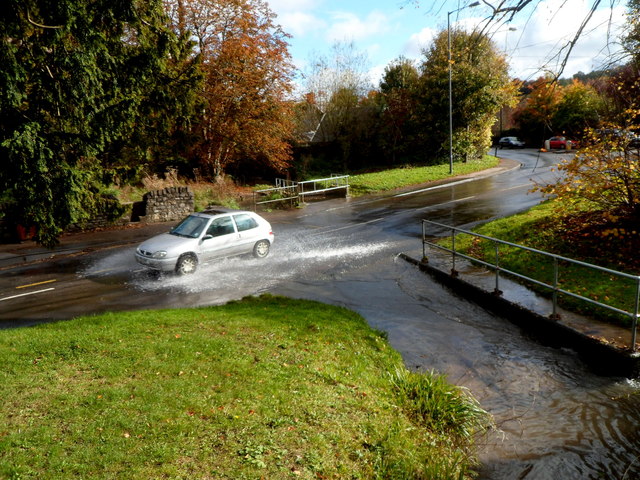
The safest answer to an unfamiliar flooded road is usually to turn around. Water hides potholes, washed-out edges, open drains and the true depth of the road. It can also move surprisingly quickly. There is no reliable water-depth figure that makes every car safe to take through, so a painted line, another driver’s attempt or confidence in an SUV is not a sound test.
For UK drivers, the useful question is not ‘can my car make it?’ but ‘can I be certain this is safe?’ If the answer is no, do not enter the water. Find another route, wait for conditions to change or stop somewhere safe and check the situation.
First decision: turn around or proceed?
Turn around and do not drive through if any of these apply:
- the water is moving, rising or has debris in it;
- you cannot see where the road runs, its edges or the surface beneath the water;
- a road-closed sign, barrier or official instruction is in place;
- the water is close to, above or difficult to judge against the lower part of the vehicle;
- another vehicle has stopped, turned around or appears to be in difficulty;
- it is dark, visibility is poor, or you would need to guess what is ahead.
Never drive around a closure. It is there because the road authority has information you may not have, or because a safe route cannot be guaranteed. A detour is irritating; a stranded car in moving water is a serious emergency.
Before a journey in heavy rain, use GOV.UK’s live flood service for alerts, warnings and the five-day outlook. It also directs drivers in Wales, Scotland and Northern Ireland to the relevant local services. Check the Met Office warnings and, for England’s motorways and major A roads, National Highways live travel updates. Conditions can change after you set off, so use a safe stopping place to check again rather than doing it at the water’s edge.
If you decide it is safe enough to cross
Only consider a crossing where the water is still and shallow, the road is clearly visible, there are no signs or barriers, and you can see a safe exit. Even then, slow down before the water, leave a generous gap to the vehicle ahead and make smooth, gentle inputs. A bow wave from going too quickly can push water into the engine bay or towards another road user.
Do not stop in the water, do not change gear if you can avoid it, and do not attempt to overtake. Keep your speed low and steady. Once clear, test the brakes gently when it is safe to do so, because water can temporarily reduce their effectiveness. Leave extra room before you need to brake properly.
This is deliberately cautious advice. A car’s air intake, electrical components, tyres and ground clearance all vary, and the road beneath the water matters as much as the water itself. Four-wheel drive does not make deep or moving water safe.
Your car has stalled in floodwater: what now?
Do not try to restart it. Repeatedly turning the key or pressing the start button can make engine damage worse if water has been drawn in. If there is any immediate risk to life, call 999. If you can leave the vehicle safely, move to higher ground and keep clear of flowing water. Do not wade into water simply to recover belongings or inspect the car.
When it is safe, contact your breakdown provider or insurer and explain that the vehicle has been in floodwater. Tell the recovery operator where the car is, whether it is blocking the road and whether water is still rising. If the car is an EV or hybrid, do not handle damaged high-voltage components or cables: treat it as a recovery job, not a roadside repair.
On a motorway or other high-speed road, put personal safety ahead of the vehicle. If you are in a live lane or cannot get to a safe place, use the emergency services. Motoring Mojo’s guide to what to do when broken down on a motorway covers the key decisions while waiting for help.
After water has reached the car
Do not assume the car is fine because it drove away. Water can affect brakes, bearings, electrical connections, carpets and cabin filters, while contaminated floodwater can cause corrosion and leave a lasting smell. Take clear photographs before cleaning anything, note the location and time, and keep receipts for recovery or emergency travel.
Arrange an inspection before returning the car to normal use if the water reached the cabin, engine bay or electrical areas, or if it stalled. Warning lights, rough running, unusual noises, damp carpets, poor braking or a musty smell are all reasons to stop using it and get professional advice. Do not dry out an interior with high heat near electrical equipment, and do not disconnect or probe EV or hybrid battery components yourself.
Whether flood damage is insured depends on the policy and its terms. Contact the insurer promptly, describe what happened accurately and ask before authorising repairs where the policy requires it. Keep the car available for inspection unless the insurer or recovery professional says otherwise.
A two-minute wet-weather routine
- Check the forecast, warnings and route before leaving.
- Keep enough fuel or charge for a sensible diversion.
- Carry a charged phone and avoid relying on a route that has only one crossing or low-lying access road.
- At floodwater, stop somewhere safe, assess it and choose the detour if there is any doubt.
- After any crossing, test the brakes gently and remain alert for changes in steering, braking or warning lights.
The Highway Code’s adverse-weather guidance is a worthwhile refresher before autumn and winter journeys. Its central lesson applies here too: adjust to the conditions, leave more space and do not let the journey plan outrank safety.
Bottom line: if a flooded road makes you hesitate, that is the decision made. Turn around, use official live information and get home later rather than putting yourself, passengers and recovery crews at risk.