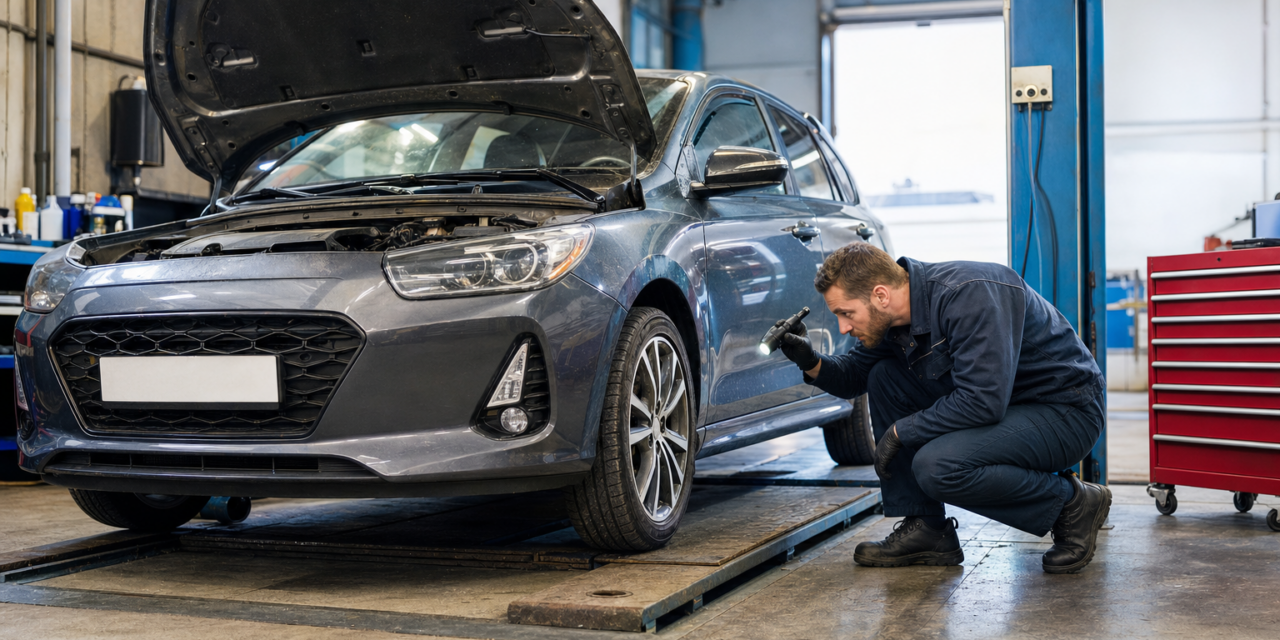
Before you book the cheapest MOT, check the fee cap, the retest rules and the extras
A cheap MOT offer can look like an easy win. Sometimes it is. Sometimes it is the front door to a bigger bill, a rushed booking or a retest situation you did not expect.
The useful bit for UK drivers is that MOT pricing is not a free-for-all. There is a legal maximum test fee for different vehicle classes, and the retest rules are clearer than many garages make them sound. Once you know those two things, it gets much easier to judge whether an MOT deal is actually good value or just a low number designed to get the car on the ramp.
If you are booking soon, here is what an MOT should cost, when a retest can be free, and where the real cost often creeps in.
What is the maximum MOT fee for a car?
According to GOV.UK, the maximum MOT fee for a car is £54.85. For a standard motorcycle, the maximum is £29.65.
That cap matters because it gives you a benchmark. If a garage wants more than that for a standard Class 4 passenger car MOT, something is off. If it charges less, that is allowed.
So yes, those £30 to £45 MOT offers you see from fast-fit chains and local garages can be genuine. They are discounting below the legal cap, not breaking it.
Why do some garages charge much less than the maximum?
Because the MOT itself is often not where they expect to make the money.
That does not automatically mean a cheap MOT is a scam. Plenty of garages use MOT pricing to keep ramps busy, win repeat service work or bring in customers who will also buy tyres, brakes or servicing.
But it does mean you should keep your eyes open if the bargain test quickly turns into a list of urgent work you did not expect.
A cheap MOT offer is worth considering when:
- the garage has a decent local reputation
- the booking terms are clear
- the garage explains any failures properly
- you are not being rushed into same-minute approval for extra work
It is worth being more cautious when:
- the offer price is vague until the end
- the garage will not explain failure items in plain English
- you are pushed hard towards repairs before you have seen the result sheet
- the retest terms sound deliberately fuzzy
What actually happens if your car fails?
This is where a lot of drivers stop thinking about the MOT fee and start worrying about the repair bill.
The MOT only checks whether the vehicle meets minimum road safety and environmental standards on the day of the test. It does not promise a fault-free car, and it does not set the repair price.
If the car fails, you need to separate three different costs:
- the MOT test fee
- the repair cost
- any retest fee
Drivers often focus on the first one because it is easy to compare online. In real life, the second and third are where the expensive surprises come from.
When is an MOT retest free?
This is one of the most useful rules to know before you book.
GOV.UK says you only need a partial retest if you leave the vehicle at the test centre for repair and it is retested within 10 working days. In that situation, there is no fee for the retest.
That matters because some drivers assume any failure automatically means paying for another full MOT. Not true.
What if you take the car away for repairs?
You may still avoid a full retest fee, but the terms change.
GOV.UK says if you take the vehicle away for repairs and bring it back to the same test centre before the end of the next working day, you may only need a partial retest. What gets rechecked depends on the original faults.
Miss that window and the garage may be able to charge again, depending on the situation.
So if your car fails and you want another garage to do the repairs, the timing matters almost as much as the labour rate.
Is the cheapest MOT always the best value?
Usually not.
The best-value MOT is the one that gives you:
- a fair test at a sensible price
- clear explanations if something fails
- reasonable repair quotes if work is needed
- a practical retest process
A rock-bottom booking fee is less impressive if the garage is slow to test the car, vague about faults or expensive on tyres and brakes.
A slightly dearer MOT at a garage you trust can work out cheaper overall, especially if it saves you from panic-buying repairs you would rather price-check first.
What an MOT does and does not check
This is another place where drivers get caught out.
The MOT is not a full health check and it is not the same as a service. It checks safety and emissions-related areas that fall inside the test standard.
The official GOV.UK guide to car parts checked at an MOT covers areas such as:
- lights and electrical equipment
- steering and suspension
- brakes
- tyres and wheels
- seatbelts
- body structure in relevant areas
- exhaust and emissions
- driver view of the road
What it does not do is guarantee your clutch is healthy, your timing belt is within schedule or your engine is free from every developing fault. That is why a car can pass an MOT and still need non-MOT maintenance soon after.
The extras that push the real bill up
The test fee is capped. The rest is not.
These are the usual pressure points after an MOT:
Tyres
A tyre close to or below the legal limit can turn a cheap test into a three-figure visit quickly. If one axle needs a pair, the headline MOT price becomes almost irrelevant.
Brakes
Pads and discs are common wear items. Sometimes the recommendation is fair. Sometimes it is worth asking for measurements, photos or a second opinion if the quote feels aggressive.
Bulbs, wipers and minor fixes
These are often the easiest same-day upsells. They may also be perfectly legitimate. The trick is to ask what failed, whether it is a fail or an advisory, and what the fitted price includes.
Suspension and steering parts
This is where costs jump. If the tester finds a worn bush, ball joint, spring or track rod end, you are into labour as well as parts. These faults matter because they affect safety and may also affect tyre wear, steering feel and future MOT outcomes.
How to tell if a repair quote is reasonable
You do not need to become a mechanic in the reception area. Just slow the process down.
Ask:
- what exactly failed
- whether it is a fail, dangerous defect or advisory
- whether the garage can show you the worn part
- whether the quote includes VAT, parts and labour
- whether there is a retest fee if you do not approve the work there and then
A good garage should not struggle with any of that.
If you feel bounced into approval with no explanation, it is sensible to pause unless the defect is clearly dangerous and the car should not be driven.
Can a garage charge less than the legal MOT maximum and still do a proper test?
Absolutely.
A discounted MOT does not mean the result is less official or less valid. The legal standard of the test stays the same. The only thing changing is the price the garage chooses to charge you for carrying it out.
What matters is not whether the offer is cheap, but whether the garage is testing and advising properly.
Should you book an MOT and service together?
Sometimes yes, but not by default.
Bundling them can be convenient, especially if the car is due both at about the same time. It can also reduce hassle if the garage spots service-related issues before they become MOT problems later.
But do not assume a package deal is always cheaper. Some garages price the service attractively and keep the MOT near the cap. Others use a cheap MOT to bring you in and price the service more heavily.
Treat them as separate numbers and compare the total.
The simplest way to avoid MOT bill shock
Do a bit of homework before test day.
A quick pre-check can reduce the odds of paying for avoidable failures or emergency same-day fixes:
- check tyre tread and obvious sidewall damage
- make sure all exterior lights work
- top up washer fluid
- check the wipers are not torn or smearing badly
- make sure the number plates are readable and secure
- clear clutter that blocks the driver’s view
- check when the MOT expires using the GOV.UK MOT history service
None of that replaces real maintenance, but it can stop silly failures turning into needless hassle.
So what should you pay?
For a standard UK car, anything up to £54.85 sits within the legal cap set out by GOV.UK. Paying less than that can be a genuine saving, provided the garage is straightforward and the follow-on costs are sensible.
The bigger question is not just "How cheap is the MOT?" but "What happens if the car needs work afterwards?"
That is where value is won or lost.
The bottom line
The cheapest MOT in town is not automatically a bad idea, but it is only a good deal if the whole process is fair. The legal maximum for a car MOT is £54.85, and the retest rules can save you money if you understand the 10 working day and next working day windows.
Book with the fee cap in mind, ask clear questions about any failure, and do not let a low headline price distract you from the repair quote that follows. That is the part of the MOT most likely to hit your wallet.