Can you tax a car for someone else? The paperwork matters more than whose card you use
If you are trying to help a partner, parent, son, daughter or friend get a car road legal, the answer is not just about who pays.
The DVLA tax system cares far more about the vehicle record and the reference number you are using than about whose fingers are on the keyboard. That is why some people manage it in minutes, while others hit a brick wall even though they are ready to pay.
For most UK drivers, the practical answer is this: you can help arrange the tax if you have the right vehicle document or reference number and the car is actually eligible to be taxed. What you cannot do is magic a vehicle through the system just because you know the registration number or want to pay on somebody else’s behalf.
Here is what matters before you start.
The short answer
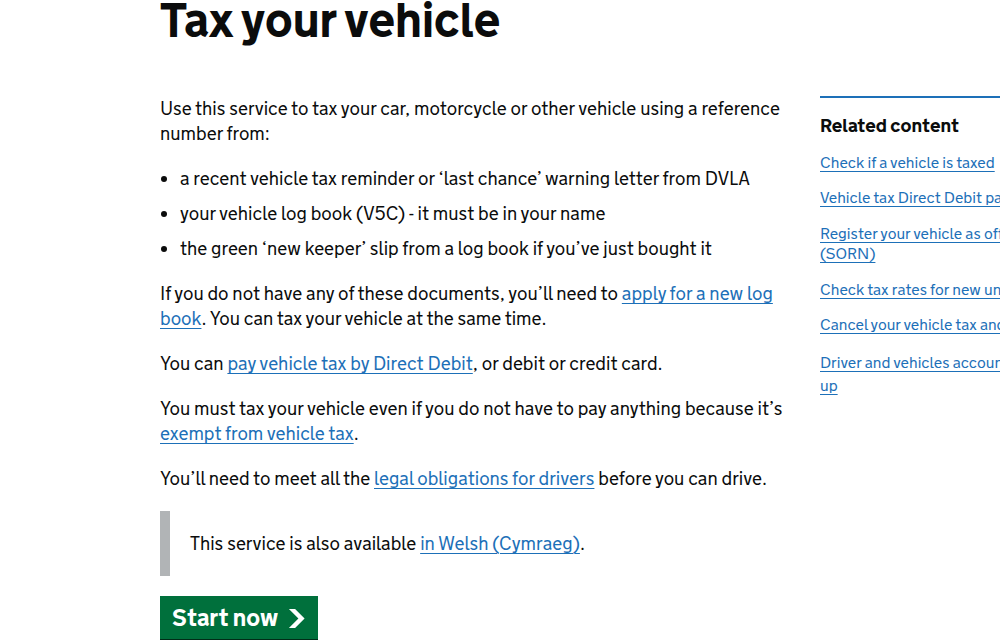
A vehicle can only be taxed through the official GOV.UK vehicle tax service if you have an accepted reference number. GOV.UK says the online route uses one from:
- a recent vehicle tax reminder or last-chance warning from DVLA
- the vehicle log book or V5C, if it is in the current keeper’s name
- the green new keeper slip from the log book, if the vehicle has just been bought
If you do not have one of those, GOV.UK says you may need to apply for a new log book first. In some cases the tax can be done at the same time. In others, it cannot.
So if by "tax a car for someone else" you mean helping with the admin or making the payment, that can be straightforward. If you mean taxing a car without the right paperwork, the answer is usually no.
The question people get wrong
Many drivers assume vehicle tax works like topping up someone else’s Oyster card or paying a household bill for a relative.
It does not.
Vehicle tax is tied to the car’s official record. The system wants a reference number that proves the person taxing it has the right route to do so. That is why the real question is not "Can I use my card?" but "Do we have the document the DVLA will accept?"
That difference matters most in four common situations:
- you are helping an older relative who is not comfortable online
- you are collecting a car for someone else
- you have just bought a used car and are sorting the paperwork in a hurry
- the log book is missing and someone assumes payment alone will solve it
When you usually can sort it out
In practical terms, helping somebody tax a vehicle is usually easiest when one of these applies.
1. The current keeper has the V5C in their name
GOV.UK says the online service accepts the vehicle log book, but it must be in the current keeper’s name.
That means the keeper can be taxed up using the V5C reference, even if another person is helping with the process. If you are doing it for a parent or partner, the important point is that the document route is valid.
2. The buyer has the green new keeper slip
If a car has just changed hands, the seller’s old tax does not carry over. GOV.UK’s buy a vehicle step-by-step guide is clear that the vehicle must be taxed before it is used on the road.
The usual document for that is the green V5C/2 new keeper slip. GOV.UK says a new keeper can use that slip to tax the vehicle before the full V5C arrives.
So if you are helping someone tax a newly bought car, this is normally the key document.
3. You are doing it at a Post Office with the right paperwork
GOV.UK says you can also tax a vehicle at a Post Office branch that deals with vehicle tax. The Post Office vehicle tax page says you will need one of the accepted vehicle documents, such as:
- the V5C log book
- the V5C/2 new keeper slip
- a V11 reminder
You may also need proof of a valid MOT if the records have not updated yet.
This can be the simplest route if the person who needs the car taxed is not comfortable doing it online.
When the DVLA will stop you
This is where drivers waste time.
You only know the registration number
That is not enough. The GOV.UK system is built around the reference number from the accepted document, not just the plate.
The car has just been bought, but the green slip is missing
This is the big one.
GOV.UK’s tax a vehicle without a V11 reminder page says that if you are the new keeper, you cannot tax the vehicle without a new keeper slip. You need to apply for a new V5C by post, and a replacement costs £25.
That means a helpful friend or family member cannot simply step in and tax the car anyway. Without the green slip, the system does not treat the new keeper as ready for the quick route.
The current keeper has lost the paperwork
There is a difference between a current keeper and a new keeper.
GOV.UK says that if the current keeper does not have a V5C or V11, they can apply for a replacement V5C and tax the vehicle at the same time. That is much more flexible than the new-keeper position.
The vehicle is not otherwise road-legal
Tax is only one piece of the job. GOV.UK’s buying guide also says the vehicle must be insured before it is used on the road, and it usually needs a valid MOT unless it is exempt.
The vehicle tax page adds that you must meet all legal obligations for drivers before you can drive.
So even if someone manages to sort the tax, that does not make an uninsured or unroadworthy car fair game.
What documents work, and when
This is the quickest way to avoid a wasted journey or a failed online attempt.
Use the online DVLA route when you have:
- a recent V11 reminder or last-chance warning
- a V5C in the current keeper’s name
- a green V5C/2 new keeper slip if the car has just been bought
Use the Post Office route when you have:
- one of the accepted vehicle documents above
- payment details if needed
- MOT evidence if the system has not caught up yet
Expect a delay if:
- the new keeper slip is missing
- the wrong person is trying to rely on a V5C that is not the valid route for their situation
- the MOT has only just been passed and the records are not live yet
- the paperwork story is messy because the car has only just changed hands
Common real-world scenarios
"I want to tax my elderly mum’s car for her"
Usually possible if she is the current keeper and you have the correct V5C or V11 route. The key point is not your relationship to her. It is whether the vehicle has the paperwork the DVLA service accepts.
"I am collecting my son’s newly bought car"
If he has the green new keeper slip, the car can normally be taxed through the official route before it is driven. If that slip has gone missing, this gets much harder, and paying for it on his behalf will not fix the missing-document problem.
"My partner bought a car but the seller forgot the log book"
That is a red flag anyway. For the tax problem specifically, GOV.UK says a new keeper cannot tax the vehicle without the new keeper slip. That is one reason a missing V5C should slow the whole deal down.
"Can I do it at the Post Office instead?"
Sometimes yes, but the Post Office still needs the right document. It is not a workaround for missing essentials.
The easy rule to remember
If the car belongs to somebody else, think about the document route, not the payment route.
Ask these questions first:
- Is this person the current keeper or a new keeper?
- Do we have a V11, a V5C in the current keeper’s name, or the green new keeper slip?
- Is the car insured?
- Does it have a valid MOT, or is it exempt?
- Are we trying to tax it before it is driven on the road?
If those answers line up, helping somebody else sort the tax is usually straightforward.
If they do not, the problem is almost never the bank card. It is the missing paperwork.
Bottom line
Yes, you can help arrange vehicle tax for somebody else in the UK, but only if the car can be taxed through the proper DVLA route.
The system is built around accepted documents and reference numbers, not goodwill. If you are the new keeper and the green slip is missing, or if the paperwork does not match the situation, the tax will usually stop there.
That is why the smartest move is to check the document in your hand before anyone worries about who is paying.