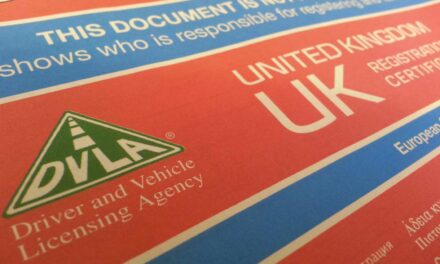
Thinking about a private plate on a financed car? Check the V5C before you spend a penny
A private registration can be one of the easier ways to make a car feel more personal, but finance changes the admin in a way plenty of drivers miss.
The quick assumption is that if you make the monthly payments, you can do what you like with the plate. In practice, the detail that matters most is not the payment method. It is whether you hold the V5C log book for that vehicle, and what your finance company allows.
That is the bit worth sorting out before you buy the registration, order physical plates or promise yourself you will move it across later.
The short version
- Yes, you can often put a private plate on a car with finance on it.
- The cleanest cases are usually HP or PCP agreements where you are the registered keeper and hold the V5C.
- You should still check your finance terms and get lender approval before you make changes, because the finance company usually remains the legal owner until the agreement ends.
- If you do not hold the V5C, you should assume you cannot just arrange the change yourself.
- GOV.UK says that if you assign a private number to a vehicle, you must get the number plates made by a registered supplier.
- When you take the plate back off, GOV.UK says the vehicle’s original registration is usually reassigned automatically, the removal costs £80, and you must tell your insurer the new registration number.
- If the car is due to be handed back, sold or swapped soon, think about the exit plan before you spend money on the plate.
Why the V5C matters more than the finance agreement headline
This is where drivers often overcomplicate things.
The useful first question is not simply "Is it PCP or HP?" It is "Who holds the V5C, and what does the lender allow?"
Stellantis Financial Services says that if you hold the V5 document for the vehicle, you can usually arrange the plate change directly with the DVLA and then tell the lender the new registration once it has been completed. The same FAQ also says that if you do not hold the V5, which it gives as the typical contract hire situation, you will not be able to put a private plate on the financed vehicle yourself.
That is a much better starting point than guessing from the monthly payment alone.
HP and PCP are often workable. Contract hire is a different story
With hire purchase and PCP, you are commonly the registered keeper while the finance company remains the legal owner until the agreement ends. That is why a private plate is often possible, but not something to do casually.
UK Car Finance says that on HP or PCP the finance company remains the owner during the agreement, and drivers should contact the finance company for permission first and check the terms of the agreement.
That lines up with common sense. Even if the DVLA process is straightforward, you are still making a registration change on a vehicle that is tied to a finance agreement. The lender needs to know what is happening, and some will want the request handled in a particular way.
Contract hire and lease-style agreements are usually stricter. If the funder keeps the V5C, you should expect a slower process, extra paperwork or a flat no.
What the DVLA process actually changes
GOV.UK says you can assign a private number to a vehicle as part of the standard personalised registration process. Once the assignment is approved, you must get the physical number plates made by a registered supplier.
That matters because the legal change is not the same thing as simply bolting new plates onto the car. The DVLA assignment has to be done first.
If you are buying the registration now and planning to fit it to the financed car later, keep that order straight:
- check lender approval and your agreement terms
- complete the DVLA assignment properly
- get the physical plates made by a registered supplier
- update the insurer and any toll or charging accounts that use the registration number
That sounds obvious, but it is exactly the sort of admin chain that gets messy when people rush the fun part and leave the paperwork for later.
The exit plan matters more than many buyers realise
A private plate on a financed car is easy to like on day one and easy to forget about on hand-back day.
That is where people get caught.
Stellantis says that when a vehicle is being returned, the private plate needs to be removed in good time and notes that the process can take up to 8 weeks, so drivers need to start early. That warning is worth taking seriously even if your own lender quotes a different timeline.
If the car may be:
- handed back at the end of PCP
- part exchanged before the finance is settled
- refinanced into something else
- sold once the agreement ends
then your personalised registration needs an exit plan before the deal becomes time-sensitive.
A cheap private plate stops feeling cheap very quickly if it delays a collection, confuses settlement paperwork or leaves your cherished registration stuck on the wrong car at the wrong moment.
Taking the plate back off is where the real admin starts
This is the part buyers tend to under-budget, both in time and effort.
According to GOV.UK, taking a private number off a vehicle costs £80. The vehicle’s original registration is usually reassigned automatically if the application succeeds, often straight away. GOV.UK also says the replacement V5C can take 4 to 6 weeks to arrive, and that you must tell your insurance company the new registration number.
So the removal job is not just one click and done. It can mean:
- paying the £80 DVLA fee
- waiting for the paperwork to catch up
- fitting the original or replacement number plates back onto the car
- updating your insurance policy
- updating any automatic payment accounts tied to the registration, such as the Dart Charge or London charging schemes
If you leave that until the final week of a finance hand-back, you are making life harder than it needs to be.
Before you buy the plate, run this checklist
1. Ask the lender a direct yes or no question
Do not settle for vague chat.
Ask whether you can put a private plate on the financed car, whether they need to approve it first, and whether they require any forms or notice when you remove it later.
2. Confirm whether you hold the V5C
If you do, the route is usually simpler.
If you do not, assume the funder controls the process and that you should not spend money until they have confirmed what is possible.
3. Think about how long you are keeping the car
A private plate makes more sense on a car you expect to keep for a while. If the agreement only has months left to run, the admin may outweigh the fun.
4. Budget for the way back out
Too many drivers think only about putting the plate on. The removal fee, lead time and paperwork matter just as much.
5. Tell your insurer when the registration changes
Do not assume the insurer will somehow know because the DVLA does.
When the registration changes, your policy records need to change too.
So, can you put a private plate on a car with finance on it?
Usually, yes, if the finance structure and the lender allow it.
The strongest answer is this: a financed car is not automatically ruled out, but the V5C and the lender’s consent decide how easy the job will be.
If you hold the log book and your finance company is content, the process can be fairly straightforward. If the funder holds the V5C, or the car is close to hand-back, the idea can become far less attractive.
That is why the smart move is to treat a private plate on a financed car as a paperwork job first and a styling job second.
If you are moving a registration between vehicles, our guide to transferring a private plate to another car covers the DVLA steps, and if the car is going back soon, it is also worth reading our article on putting a private plate on a lease car, because the funder-controlled side of the process is where the delays usually start.