A used car advertised with full service history often costs more, and sometimes that extra money is justified. Sometimes it is just sales patter wrapped around a stamped booklet and a vague promise that the car has always been looked after.
In the UK, the phrase only matters if the paperwork stands up. That means the service record should make sense for the car’s age, mileage and maintenance schedule, and it should be supported by invoices, digital records or garage printouts that tell a consistent story.
If all you are really buying is a nicer advert, the premium is not worth it. If the history helps you avoid a timing-belt bill, a neglected automatic gearbox, a skipped brake-fluid change or a suspicious mileage story, paying more can make perfect sense.
What full service history should mean in practice
A proper full service history is not just a stack of stamps. It is a record showing that the car has been serviced at the right intervals, by the right mileage, with enough detail to give you confidence that routine maintenance really happened.
On older cars, that might mean:
- a stamped service book
- itemised invoices
- MOT mileages that line up with service dates
- receipts for major jobs such as timing belt replacement, gearbox oil services, brake fluid changes or spark plugs
On newer cars, it may mean:
- a digital service record from a franchised dealer or specialist
- workshop invoices tied to the registration or VIN
- manufacturer printouts showing date, mileage and the work carried out
The key point is simple. Full service history should help you understand how the car has actually been maintained, not just give the advert a more expensive feel.
When it is worth paying extra
Paying more for full service history usually makes the most sense when the missing evidence could leave you exposed to a large bill soon after purchase.
That is especially true if the car:
- is due an expensive scheduled job soon
- has a known weakness where missed servicing makes a big difference
- uses a wet-belt engine or a long-interval automatic gearbox that buyers often fail to check properly
- is a hybrid or EV where the service record may also support battery or component cover
- is a newer or higher-value car where strong documentation will also help when you come to sell it
In other words, the history is worth more when it reduces real risk.
When the phrase is worth much less
There are plenty of cases where full service history sounds impressive but adds less value than buyers think.
Be cautious if the car has:
- stamps but no invoices
- long unexplained gaps between services
- very low mileages used to excuse missed time-based servicing
- no proof of major age-related jobs
- a digital history the seller cannot actually show you
- recent cosmetic preparation that is doing more work than the paperwork
A ten-year-old budget car with patchy but believable records, sensible MOT history and clear proof of major maintenance may be a better buy than a dearer example carrying a lazy full service history claim.
The UK checks that separate the real thing from sales talk
1. Check the intervals against time as well as mileage
Do not just ask whether it has been serviced. Ask whether it has been serviced on time.
Many UK cars work on time-or-mileage schedules. A low-mileage car that went three years between services can still be poorly maintained even if the odometer looks attractive. Oil ages, brake fluid absorbs moisture and some maintenance is calendar-based rather than distance-based.
If the seller cannot show the expected rhythm of servicing, the phrase full service history starts to lose its value quickly.
2. Use the GOV.UK MOT history checker as a cross-check
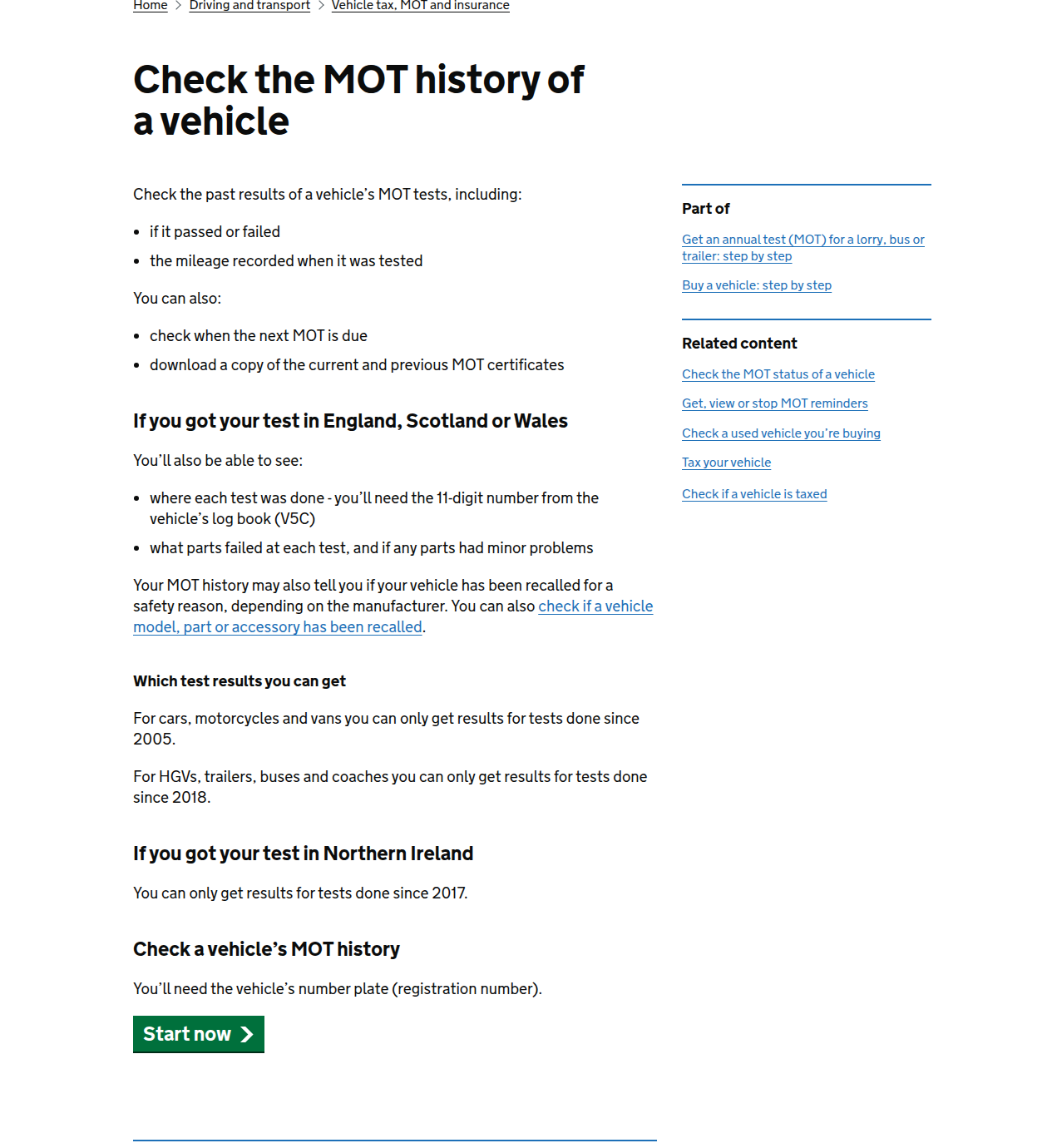
The MOT history service is one of the best free checks a buyer has. It lets you see past test dates, mileages and, in many cases, advisory patterns.
That matters because a service history should tell a story that broadly matches the MOT record. If the service book suggests careful ownership but the MOT trail shows repeated neglect, tyre advisories that were left to drag on, or mileage progression that raises eyebrows, you should slow the deal down.
For most cars, vans and motorcycles, GOV.UK says you can only see MOT test results since 2005. In England, Scotland and Wales, the service can also show mileage history and advisory details.
3. Look for invoices, not just stamps
A stamp proves much less than many buyers assume. Invoices are where the useful detail usually lives.
A good invoice can show:
- the mileage at the visit
- exactly which service was carried out
- the garage that did the work
- extra items fitted or recommended
- whether the car had follow-up work such as brakes, tyres, coils, filters or fluids
If a seller says the car has full service history but cannot show any invoices at all, you should value that claim more cautiously.
4. Make sure the expensive jobs have evidence of their own
This is where buyers often overpay.
A used car can have a tidy service record and still be heading straight towards a large bill because the important extra work has not been done. Depending on the car, that can include:
- timing belt replacement
- wet-belt related maintenance
- automatic gearbox oil service
- brake fluid changes
- coolant changes
- spark plugs on petrol engines
- hybrid battery health checks where relevant
If the premium example does not have proof of those jobs, the cheaper car may not be the riskier one.
5. Check that digital service history is actually accessible
Plenty of newer cars no longer rely on a stamped service book, which is fine. But the record still needs to be available.
Ask for:
- a dealer printout
- screenshots or PDFs from the manufacturer system
- invoices that match the digital entries
- the date and mileage of the last service
If the seller says it is all on the system but nobody can show it to you, treat that as incomplete evidence, not full service history.
6. Run a recall check while you are there
A service history and a recall history are not the same thing, but careful owners usually have a better paper trail overall.
GOV.UK says you can use the registration number to check whether a car has an outstanding safety recall that has not been fixed. The same guidance also says you will not usually have to pay for recall repairs or parts.
If a seller is presenting the car as exceptionally well looked after, an unresolved safety recall deserves a direct question.
7. Remember that trader descriptions matter
Citizens Advice says buyers still have legal rights if something is wrong after purchasing a used car, including where there is a false mileage reading. That does not mean you should rely on a later dispute to sort out bad paperwork.
It does mean one useful thing before you buy. If a trader is using full service history as part of the sales pitch, ask them to show you exactly what supports that wording before you leave a deposit.
So how much more should you pay?
There is no fixed UK percentage that makes sense for every used car. The right premium depends on what the history actually saves you from.
You can usually justify paying more when the better-documented car gives you confidence on three points at once:
- the servicing schedule has been followed properly
- the expensive age or mileage-sensitive jobs have evidence behind them
- the car will be easier to sell later because the paperwork is strong and believable
You should be far more sceptical if the price gap is being driven by the phrase itself rather than by documentation you can inspect.
A simple way to think about it is this. If the better history would stop you walking into a four-figure maintenance surprise, a premium can be rational. If it is just a neater folder and the same unanswered questions, keep your money.
Walk away signs
Think carefully about moving on if:
- the advert says full service history but the seller starts backtracking in person
- the service dates and mileages do not follow any sensible pattern
- major scheduled work is being described as probably done
- the digital history cannot be accessed or printed
- the MOT record and the service story do not line up
- the seller wants a deposit before you have seen the evidence
Bottom line
Full service history can absolutely be worth paying more for on a used car in the UK, but only when the record helps you verify maintenance, cross-check the car’s story and avoid the bills buyers most often inherit.
Treat it as evidence, not a magic phrase. If the paperwork is thin, inconsistent or missing the expensive bits, the premium belongs in your pocket, not in the seller’s advert.