If you are shopping for a used Renault Clio, the good news is that it is usually an easy supermini to own. The bad news is that the cheapest cars often hide the exact problems that make a Clio feel like a bargain for about three weeks.
For most UK buyers, the Clio makes the most sense as a tidy petrol hatchback with strong service history, healthy tyres and no mystery warning lights. The cars that deserve more caution are neglected small-turbo petrols, short-trip diesels and automatic examples with jerky low-speed behaviour.
Quick answer: what should you check on a used Renault Clio?
Start with these areas first:
- dashboard warning lights and every electrical function, including infotainment, air conditioning and keyless entry if fitted
- EDC automatic cars for hesitation, shuddering or clumsy low-speed pull-away
- diesel cars for DPF, EGR and injector-related warning signs if they have lived on short journeys
- suspension knocks, worn bushes and uneven tyre wear
- bodywork, alloy damage and signs of poor repair after parking knocks
- full service history, proper recall completion and MOT advisories that keep repeating
A well-kept petrol Clio is usually the safer bet than a cheap diesel with patchy history.
Which used Renault Clio are most buyers looking at?
In the UK, this search usually means two generations.
The fourth-generation Clio, sold here from 2013 to 2019, is the one you see most often in the lower-price used market. It is widely available, cheap to run in petrol form and easy to find in Dynamique Nav, Iconic and GT-Line trims.
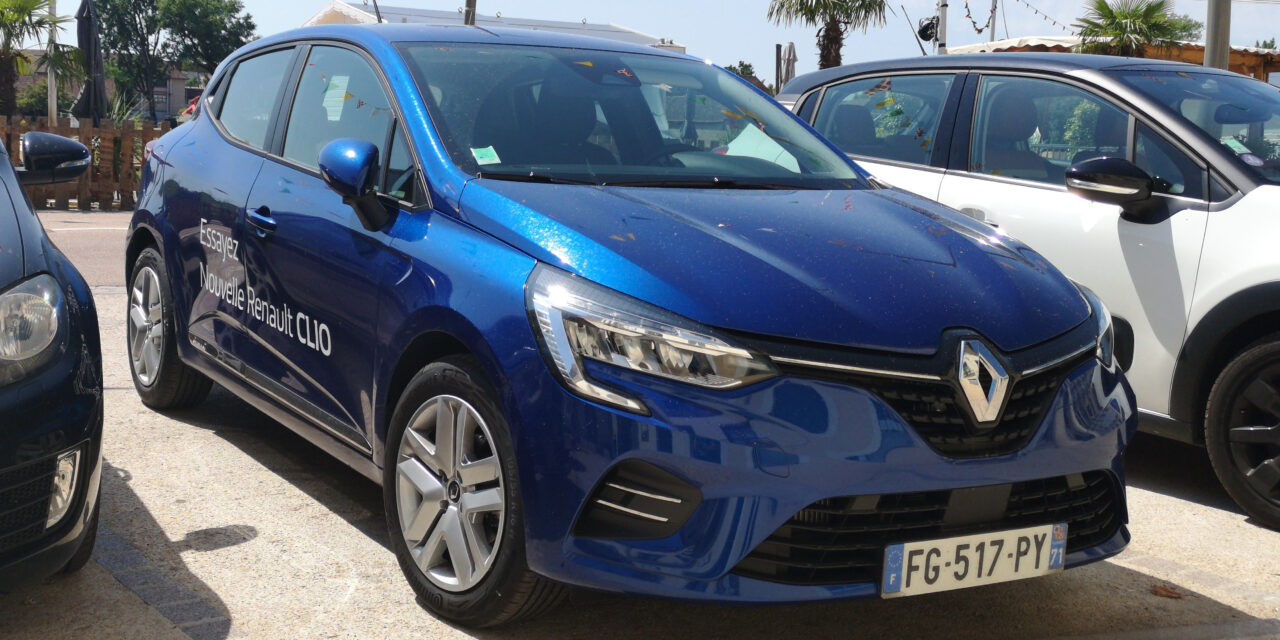
The fifth-generation Clio arrived in late 2019. It feels more upmarket inside and the hybrid E-Tech models are more appealing if your budget stretches that far, but they are still priced above the bargain end of the classifieds.
For value, most buyers will be choosing a Mk4 car. For refinement and safety kit, the newer Mk5 is the nicer thing to live with.
Is a used Renault Clio generally reliable?
Broadly, yes, but condition matters more than badge appeal.
The Clio is common for a reason: it is comfortable enough, frugal enough and usually cheap enough to make sense as a first car, second car or urban runabout. That said, it is not a car you should buy on looks alone. A neglected example can quickly land you with electrical gremlins, suspension work, tyre bills or diesel emissions trouble.
The Clio is usually strongest when bought with simple priorities: good history, tidy maintenance record and a specification you will actually use rather than a long kit list that gives you more things to test and potentially fix.
Best used Renault Clio versions to target
For most private buyers, a petrol manual is the sweet spot.
A 0.9 TCe or later 1.0 TCe petrol with a solid history usually makes more sense than chasing the cheapest diesel. These engines suit the way many Clios are actually used in Britain: school runs, mixed commuting and town driving. If the engine starts cleanly from cold, idles smoothly and has been serviced properly, that is the sort of Clio most buyers should shortlist first.
The 1.5 dCi can still work well if you regularly cover motorway miles, but it is less forgiving of neglected servicing or a life spent on repeated short journeys. E-Tech hybrids are attractive in the newer shape, but you should still check all software, charging data and service history carefully because tidy examples are not cheap.
Common used Renault Clio problems to look for
1. Electrical niggles and cabin tech faults
This is one of the first places to be picky.
On both generations, test everything rather than assuming a small fault is harmless. Check the infotainment screen, Bluetooth pairing, DAB radio, steering-wheel controls, electric windows, central locking, mirrors, USB ports and air conditioning. If the car has keyless entry or push-button start, make sure both keys work properly and the system responds consistently.
A Clio with several minor electrical faults can still drive fine on your test route, but it is often a sign that previous maintenance has been casual elsewhere too.
2. Jerky EDC automatic behaviour
An automatic Clio can be a good city car, but the gearbox needs a proper test drive.
Spend time in traffic, not just on an open road. You want clean pull-away, smooth parking-speed manoeuvres and no long pause when selecting drive. If the car shudders, hesitates or feels confused at roundabouts and junctions, be cautious. Sellers sometimes dismiss this as normal automatic behaviour. It is not something you should ignore on a car you are about to buy.
If you want the lower-risk used option, a manual Clio is usually the easier recommendation.
3. Diesel DPF and EGR trouble on short-trip cars
This matters most on the 1.5 dCi.
A diesel Clio that has spent years doing cold starts and short urban runs is more likely to suffer from DPF blockage, EGR-related running issues or injector complaints. Warning signs include sluggish acceleration, excessive fan activity after shutdown, poor fuel economy, warning lights or a seller who vaguely says it "just needs a good run".
A diesel can still be a sensible used buy for longer-distance drivers. It just needs the right previous life and the paperwork to prove it has been maintained properly.
4. Suspension knocks and tyre wear
Clios are light, but British roads still punish suspension parts.
Listen for clunks over potholes, speed bumps and broken town-road surfaces. A cheap Clio sitting on mismatched tyres or showing uneven inner-edge wear deserves extra care because it can point to poor alignment, worn suspension parts or owners who have simply cut corners.
If you want a quick refresher on what tyre wear can tell you, our guide to wheel alignment vs tracking is worth reading before you go viewing cars.
5. Brake feel, steering and recall history
The Clio has had several recall actions on earlier Mk4 cars, including brake-hose related work on some 2013 to 2015 cars, a wiper-linkage issue, a rear spoiler bonding issue and a rear axle bolt check on some 2016 examples.
That does not mean the car is a bad buy. It does mean you should ask whether recall work has been completed and, if possible, confirm it with a Renault dealer using the VIN.
On the test drive, the steering should feel straight and consistent and the brakes should stop the car cleanly without pulling, pulsing or a long soft pedal.
6. Signs of neglect in the body and interior
Because the Clio is often bought as a practical daily, many examples have lived a hard life.
Look for bumper corner scuffs, kerbed alloys, worn seat bolsters, sticky trim, missing parcel shelves, wet carpets and a boot area that suggests repeated heavy use. None of these issues is unusual on its own, but together they help tell you whether the car has been cared for or merely kept moving.
A rough cabin is often a better warning sign than a freshly washed bonnet.
7. Patchy servicing on small turbo petrols
The petrol Clio is usually the safer used choice, but only when it has been serviced properly.
Buy the car cold if you can. Listen for rough running, rattly starts, uneven idle and any sign that the engine has not enjoyed regular oil changes. Check the history for sensible routine maintenance rather than a book with long gaps and no invoices.
With a used Clio, the difference between a tidy owner and a careless one matters more than chasing the exact trim badge.
What to check before you buy
Before you hand over money, make sure you have checked:
- service history, ideally with invoices rather than stamps alone
- MOT history for repeated advisories on tyres, suspension, brakes or emissions
- recall completion, especially on 2013 to 2016 Mk4 cars
- both keys, locking functions and infotainment features
- tyre brand and wear across all four corners
- clutch bite point on manuals and smooth operation from the automatic gearbox if fitted
If the seller cannot explain the car’s maintenance history clearly, move on. There are plenty of Clios in the market.
Which used Renault Clio is the safest bet?
For most buyers, the safest choice is a petrol manual with good history and modest, believable mileage.
That could be a tidy Mk4 Dynamique Nav or Iconic if you are budget-led, or a newer Mk5 1.0 TCe if you want a more polished cabin and improved safety kit. Unless you genuinely need diesel economy for regular longer runs, petrol is normally the simpler answer.
If you are cross-shopping this end of the used market, our guides to the used Peugeot 208 and the best used small automatic cars under £10,000 in the UK may also help narrow the list.
Should you buy a used Renault Clio?
Yes, a used Renault Clio can still be a very smart small-car buy. It is comfortable, easy to park, cheap to run in the right spec and common enough that you do not need to panic-buy the first one you see.
The trick is being choosy.
Buy on condition, history and how the car drives, not on colour, screen size or a tempting monthly payment. A good petrol Clio is usually a sensible used hatchback. A neglected diesel or a jerky automatic with half the electrics not working is the one to leave behind.