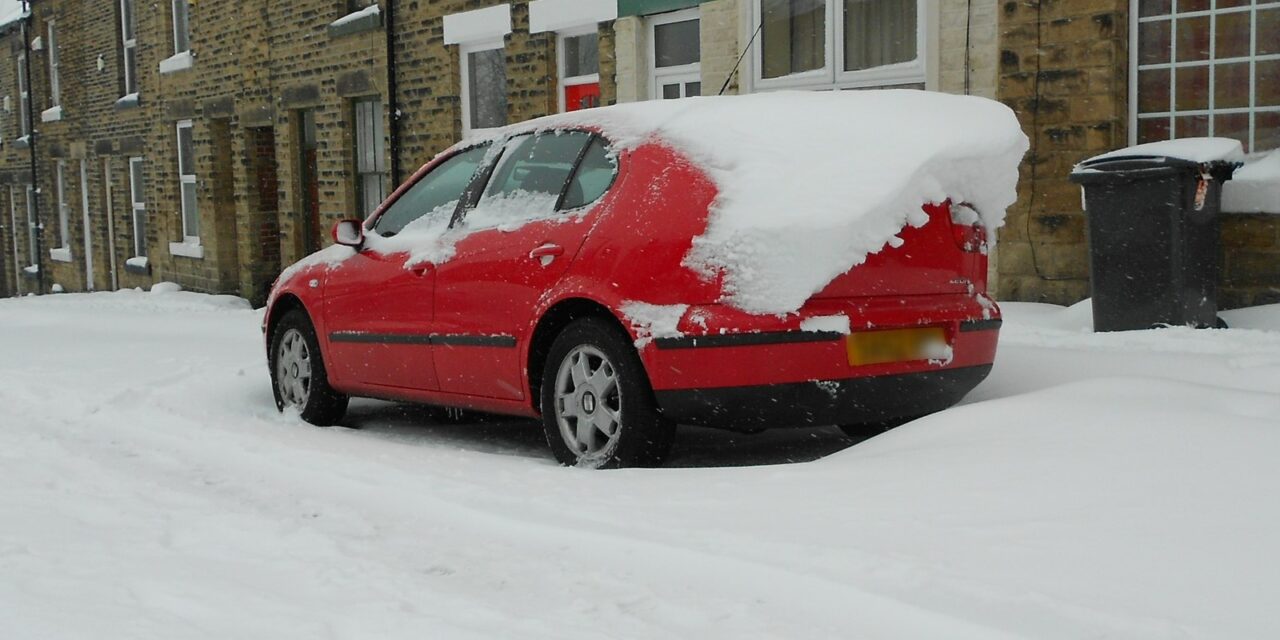
Snow on the roof can look like a minor nuisance when you are late for work. It is not. A sheet of snow or ice can slide forward under braking, wipe out your view through the windscreen, or come loose into the path of somebody behind you. The Highway Code is unusually direct about it: before setting off, remove all snow that might fall off into the path of other road users.
That means clearing more than a small viewing hole in the windscreen. Treat the roof, bonnet, lights, mirrors, number plates and every window as part of the same pre-drive job.
Is it illegal to drive with snow on your car roof?
There is no simple, stand-alone offence called “driving with snow on your roof”. But leaving snow where it can fall onto another road user is contrary to Highway Code Rule 229. Depending on what happens, a driver could also face action for using a vehicle in a dangerous condition or for careless driving.
The practical test is straightforward: if the snow or ice could obstruct your view, hide a light or registration plate, or detach and create a hazard, clear it before moving. It is a far better calculation than hoping a short journey will shake it loose harmlessly.
What Rule 229 says you must do
The rule applies before you set off in snow or ice. It says you MUST be able to see, and specifically requires drivers to:
- clear all snow and ice from all windows
- make sure lights are clean and number plates are visible and legible
- make sure mirrors are clear and windows are thoroughly demisted
- remove snow that might fall into other road users’ path
- check the planned route for delays and further severe weather.
The capitalised MUST matters. Some parts of the rule reflect legal duties under vehicle construction, lighting and registration-mark laws. Even where a particular phrase is practical Highway Code advice rather than its own named offence, ignoring it can be used as evidence of poor driving if there is a collision.
Why the roof is the part drivers miss
A clear windscreen can give a false sense that the car is ready. The roof load is still waiting to move. On a hatchback or estate, snow can slide down the screen when you brake, turn downhill or meet a change in airflow. A roof layer that has partly thawed and re-frozen can come off as a hard slab rather than loose powder.
The risk is not limited to the driver behind. A lump falling sideways when you pull out can distract a cyclist or pedestrian, while snow pushed onto your own screen can remove sight of a junction at exactly the wrong moment.
Do not solve this by sweeping snow from the roof onto the pavement or into the carriageway. Brush it onto your own driveway or another safe area where it will not create a slip hazard or block a drain.
A two-minute clear-down routine
Start at the top and work down. That reduces the chance of undoing your work by pushing roof snow back across the glass.
- Brush the roof first. Use a soft brush or snow broom. Avoid a metal scraper on paintwork. Reach the centre from both sides rather than leaning heavily on a door or tyre.
- Clear the bonnet and boot lid. Snow here can blow up over the screen or rear window once speed rises.
- Clear every window and both mirrors. A porthole in the windscreen is not enough. Clear the rear screen and front side windows so you can check junctions and mirrors properly.
- Deal with ice properly. Use de-icer and a purpose-made scraper on the glass. Do not pour boiling water over a cold windscreen: the sudden temperature change can crack glass.
- Check lights, cameras, sensors and number plates. Modern driver-assistance cameras and parking sensors can be obscured long before the car feels unsafe. Clean them, but do not rely on them instead of looking.
- Demist from the inside. Condensation on the inside of the glass can be just as limiting as frost outside. Start the demister, use the air conditioning if fitted, and wait until the glass is genuinely clear.
Keep a scraper, de-icer and gloves in the car, but do not store a wet cloth inside afterwards. It raises cabin humidity and makes the next morning’s misting problem worse.
Once you are moving, leave much more room
Clearing the car does not make the road dry. Rule 230 warns that, in icy or snowy weather, stopping distances can be up to ten times greater than on dry roads. Treated roads can still be slippery, especially on bridges, shaded stretches and quieter side roads.
Set off gently, use smooth steering and braking, and increase the gap to the vehicle ahead well beyond your usual dry-road distance. Rule 231 advises avoiding sudden actions, driving slowly and progressively braking before bends. If the route looks doubtful, delaying the journey is the safer choice.
Do not rely on these shortcuts
“It will blow off at 30mph.” That is exactly the problem. It may blow onto your windscreen or someone else.
“The heater will clear everything.” It may eventually clear the inside, but it will not remove a roof load or make an iced number plate readable. Idling also wastes fuel and can be unsafe in an enclosed space.
“I only need a small gap to see through.” You need a proper view around the vehicle, not just a narrow forward slot. Side and rear visibility matter at junctions, crossings and lane changes.
“My car has traction control.” Electronic systems cannot create grip on ice, remove snow from your roof or overcome excessive speed.
The sensible winter rule
Before you release the handbrake, walk once around the car. If a loose layer could move, a window is not fully clear, or a light or plate is obscured, take another minute. It is a small delay that protects your visibility and gives the people around you fewer hazards to deal with.
For the full official wording, read Highway Code Rules 229 to 231 before the first proper cold snap arrives.