If your car came on run-flat tyres, there is a good chance you have had the same thought the first time a replacement quote landed in your inbox: can I just switch to normal tyres instead?
In most cases, yes, you usually can. But it is not a decision to make on price alone. You need to check the exact tyre size, load index and speed rating your car requires, think about what happens after a puncture, make sure your tyre pressure monitoring system is working properly, and be realistic about whether your car, insurer, lease agreement or manufacturer guidance expects something more specific.
That is the difference between a smart switch and a false economy.
The short answer
Most UK drivers can move from run-flat tyres to conventional tyres, provided the replacements match the vehicle’s required size and specification and the change is made sensibly.
In plain English, that means:
- the new tyres must be the correct size for the car
- they must meet the required load index and speed rating
- you should not mix run-flats and standard tyres casually, especially not as a one-tyre budget shortcut
- your TPMS needs to be working
- you need a puncture backup plan, because the big convenience of a run-flat disappears the moment you switch
If you are changing away from run-flats, the sensible route is usually to do it in axle pairs at minimum, and often as a full set if all four are due soon.
Why drivers want to switch in the first place
Run-flat tyres have a real advantage. The AA says they are designed to keep supporting the car after a puncture so you can drive to safety or a tyre centre instead of stopping at the roadside. Michelin says its run-flat system can allow limited driving at up to 50mph for up to 50 miles after a loss of pressure. Continental gives the same broad 50 miles or 80km figure for self-supporting run-flats.
That matters on a dark motorway shoulder or on a school run where changing a wheel by the kerb is the last thing you want to do.
But there are trade-offs too:
- run-flats are often pricier to replace
- ride comfort can be firmer because the sidewalls are stiffer
- some tyre fitters are more cautious about repairing them after a puncture
- many drivers prefer the feel of a car on conventional tyres once they have switched
So the motivation is usually simple: cost, comfort or both.
What UK rules actually say
This is where people often expect a hard legal ban that is not really there.
The DVSA MOT inspection manual says run-flat and conventional tyres can be mixed on the same axle, although it also says this is not recommended. That wording matters. It means the MOT rulebook is not the same thing as best practice.
So while there is no simple UK law saying you must stay with run-flats forever, that does not mean any mix-and-match setup is a good idea. If your car was tuned around run-flats, swapping one tyre on the cheap and leaving the opposite side as a run-flat is still asking for uneven behaviour, especially in braking, turn-in and puncture situations.
The better standard is not just what passes an MOT. It is what leaves the car feeling consistent and predictable.
The checks that matter before you switch
1. Check the exact specification, not just the tyre size
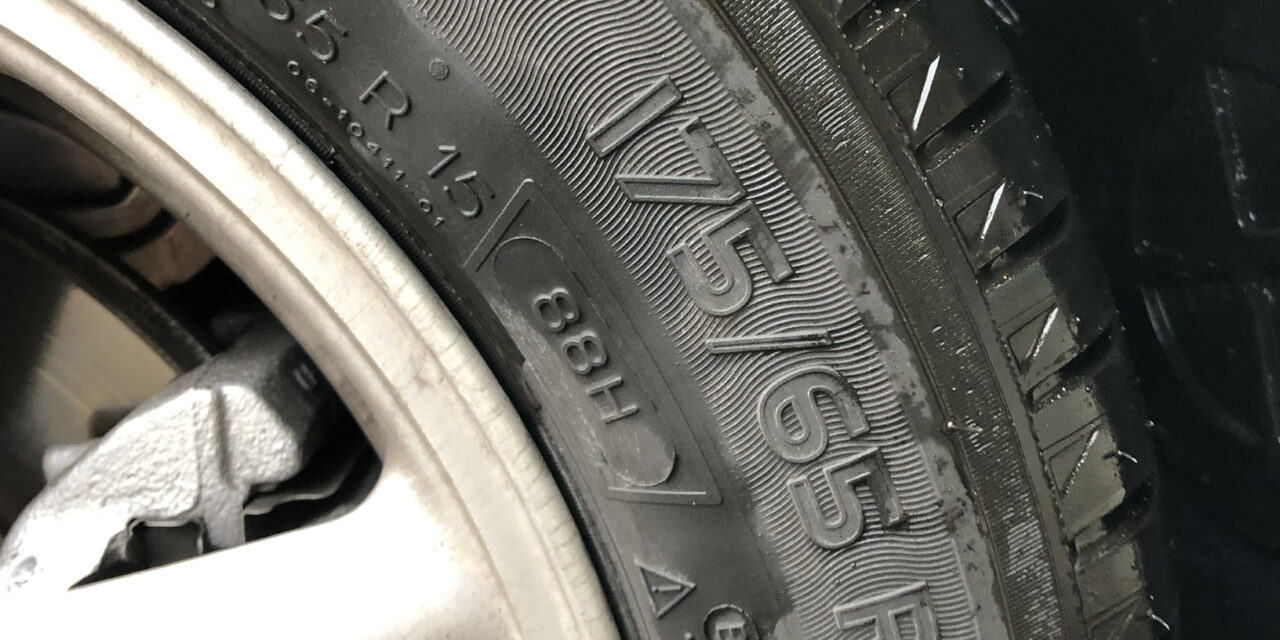
Two tyres can share the same headline size and still not be equivalent. Before switching, check:
- width, profile and wheel diameter
- load index
- speed rating
- any extra-load marking if your car needs it
- any manufacturer-specific marking if your car came with one
If you need a refresher on sidewall markings, our guide on how to read tyre size, load index and speed rating is worth five minutes before you buy.
This is especially important on heavier German saloons, SUVs and performance models that originally came with run-flats for a reason.
2. Check the handbook for vehicle-specific guidance
This is the step too many people skip because the internet says "yes" and they stop reading there.
Your owner’s manual may say the car can use conventional tyres as long as the spec is correct. Or it may make model-specific recommendations around approved tyres, pressure settings or emergency mobility equipment. Some cars are more tolerant of a switch than others.
If the handbook wording is cautious, do not ignore it just because a tyre retailer says a standard tyre will fit the wheel. Fit and suitability are not always the same thing.
3. Make sure your puncture plan still makes sense
Run-flats help because they buy you time. Standard tyres do not.
So before you switch, ask a very basic question: if you pick up a nail on the A1 or M6 next month, what happens next?
Check whether your car has:
- a space saver spare
- a tyre repair kit and compressor
- roadside assistance you actually trust
- enough boot space and willingness to carry a spare if needed
A lot of run-flat-equipped cars were sold without a spare wheel because the tyre itself was the backup plan. If you remove that plan, replace it with another one.
4. Do not treat TPMS as optional
Run-flats rely heavily on tyre pressure monitoring. Continental says a TPMS is required for self-supporting run-flat tyres, and the AA makes the same point about safe operation.
Even if you switch to conventional tyres, the TPMS still matters. The DVSA MOT manual says TPMS inspection applies to M1 passenger vehicles first used on or after 1 January 2012, with the usual exclusions listed in the manual. In other words, a warning light issue is not something to shrug off.
If the system is not working properly, fix that before or during the tyre change.
5. Change in pairs, not as a panic patch
This is where drivers get into trouble. One run-flat gets damaged, one standard tyre is cheaper and in stock, and suddenly the car ends up with a compromise nobody really meant to create.
The sensible rule is simple:
- if one tyre on an axle needs replacing and the opposite tyre is still a run-flat, think very carefully before mixing
- if you are moving away from run-flats, do it as an axle pair at the very least
- if tread depths are already getting close across all four corners, a full set is often the cleaner answer
Yes, the DVSA manual says mixed run-flat and conventional tyres can still pass. No, that does not make it the best way to spend your money.
6. Consider how the car will feel afterwards
Some drivers switch to conventional tyres and immediately prefer the ride. Others notice a slightly softer feel and miss the sharper, more tightly controlled response they had before.
Neither reaction is wrong. It depends on the car, the tyre brand, the pressure, the wheel size and what you value. A BMW on big wheels may feel noticeably different from a family hatchback on smaller rims.
If you value comfort more than ultimate response, conventional tyres often make a lot of sense. If you value the built-in puncture mobility and the factory feel, sticking with run-flats may still be worth the extra outlay.
7. Check lease, warranty and insurance wording if the car is not fully yours
If the car is leased, on salary sacrifice, or still under a manufacturer-backed scheme, do not assume you can fit whatever you like and sort it out later.
Look for wording around:
- approved tyre specifications
- end-of-contract standards
- like-for-like replacement expectations
- any requirement to follow manufacturer recommendations
Most mainstream insurance policies care more about roadworthy, correctly specified tyres than about whether they are run-flats or not. But if you are making any change on a premium or performance car, it is still sensible to avoid assumptions.
When you should probably stay with run-flats
Switching is not always the smart play. Keeping run-flats may be the better answer if:
- you regularly do motorway miles and value the puncture safety margin
- the car has no spare and very limited space for a proper backup
- the manufacturer strongly expects run-flat fitment on your exact model
- you are in a lease or finance return situation where arguments over tyre type are not worth the hassle
- you are replacing only one tyre and cannot sensibly convert the axle yet
There is no prize for changing away from run-flats if the move creates more compromise than benefit.
When switching to normal tyres often makes sense
On the other hand, conventional tyres can be the better choice if:
- you want lower replacement costs
- you want a more forgiving ride
- you can change both tyres on the axle, or all four
- you have a proper puncture backup plan
- the handbook and tyre fitter both confirm the spec is suitable
For plenty of UK drivers, especially those with older BMWs, Minis and Mercedes models that came on run-flats in the first place, this is the route that delivers the best balance of comfort and cost.
The mistake to avoid
The bad version of this decision is not switching from run-flats to normal tyres. The bad version is doing it lazily.
That means:
- choosing on price alone
- ignoring the load index and speed rating
- mixing tyre types because one happened to be available that afternoon
- forgetting that the car may have no spare
- assuming a TPMS light is harmless
That is how a money-saving idea turns into a poor-driving car or an avoidable breakdown.
Bottom line
Yes, you can usually swap run-flat tyres for normal ones in the UK. But do it as a planned change, not a desperate one. Match the correct specification, change in pairs or as a set, make sure your TPMS and puncture backup are sorted, and check the handbook before you hand over your card details.
If you do that, the switch can be perfectly sensible. If you do not, sticking with run-flats may be the cheaper decision in the long run.
And if your immediate issue is a puncture rather than a planned tyre change, read our guide on what to do after a run-flat tyre puncture before you book the repair or replacement.