A car sitting outside a home for weeks can look abandoned long before it meets the legal test. Flat tyres, damaged glass, no number plates or a vehicle that has plainly been left to deteriorate are much more useful evidence than simply recognising that it has not moved.
In England and Wales, the practical first step is normally to report a suspected abandoned vehicle to the local council. The council decides whether it is abandoned, can obtain registered-keeper details from DVLA and has powers to investigate and remove it. That is why trying to move it yourself, advertising it for sale or arranging for it to be towed is a bad idea.
Start by separating an eyesore from an abandoned vehicle
There is no single number of days after which a parked car becomes abandoned. A taxed, insured-looking car can remain legally parked in the same bay for a long time, even if neighbours find it inconvenient. Equally, a vehicle may be abandoned even if it has not yet been there for months.
Government guidance says a council is likely to regard a vehicle as abandoned if one or more signs apply:
- it is not recorded with a keeper by DVLA and is untaxed;
- it has been stationary for a significant time;
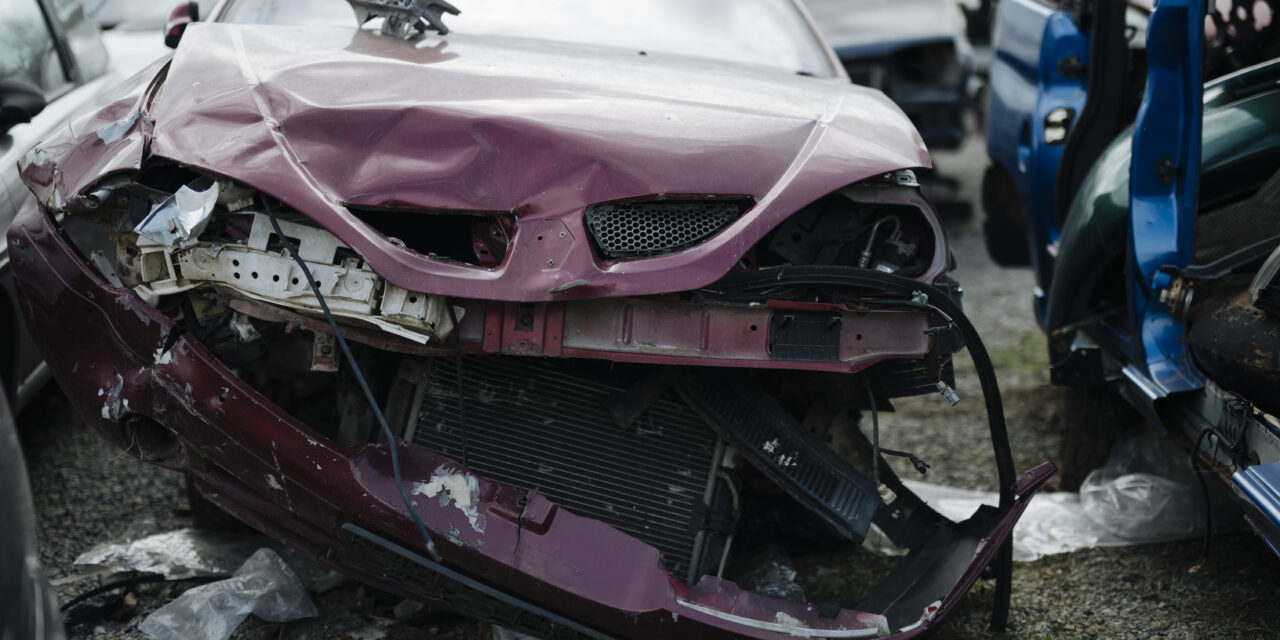
- it is significantly damaged, run-down or unroadworthy, such as having flat tyres, missing wheels or broken windows;
- it has been burnt out; or
- it has no number plates.
Those are indicators, not a DIY legal checklist. A car with a flat battery or an expired MOT is not automatically abandoned, and an untaxed car can sometimes be lawfully kept off the public road. Leave the decision to the authority.
Make a useful report, not just a complaint
Find your council through the GOV.UK abandoned-vehicle reporting service, then use its online form or the contact route it gives you. Councils set their own forms and response processes, so give them the detail that helps an officer identify and assess the car:
- the full registration number, if displayed;
- the exact location, including the street, nearby house number or landmark, and whether it is on a road, car park or private land;
- make, model, colour and any obvious distinguishing damage;
- how long it appears to have been there and when you last saw it move, if known;
- clear date-stamped photographs taken from a public place, where safe to do so; and
- specific signs of deterioration, such as flat tyres, smashed windows, missing plates, leaking fluids or fire damage.
Do not assume that the tax status tells the whole story. You can check whether a vehicle is taxed using the official vehicle-tax checker, but that result is only one piece of the picture. Avoid publishing the registration on social media or trying to identify the keeper yourself.
If it is blocking access or creating immediate danger
Suspected abandonment is not the same as an urgent obstruction. If a vehicle is blocking a dropped kerb, access for emergency services, a junction or a narrow road, tell the council or police about the actual hazard when you report it. If there is an immediate risk to life, a fire, a dangerous leak, or an emergency route is blocked, call 999. For non-emergency police matters, use 101 or the relevant online reporting service.
Do not damage the vehicle, deflate its tyres, push it into the carriageway or use another car to tow it. Apart from the obvious safety risks, you could cause damage and create a dispute that obscures the original problem.
What changes if the car is on private land?
A vehicle can still be abandoned on land in the open air, including private land. The process is not necessarily quicker, however. Government guidance says that, when an authority proposes to remove a vehicle from land in the open air, it normally has to give the landowner or occupier 15 days’ notice. The authority cannot remove it if the landowner or occupier objects during that notice period.
That 15-day notice rule does not apply where the vehicle is abandoned on a road or highway. The guidance also notes that an authority may decline removal from land if getting the vehicle to the nearest highway would be unusually costly, for example because specialist machinery is needed.
If the vehicle is on your driveway, communal parking area or business premises, keep a record of where it is and speak to the managing agent or landowner as well as the council. Do not treat a car left on your property as yours to dispose of. Ownership, registered keeper status and any finance interest are separate matters.
What the council can do after investigating
Councils and national park authorities can obtain keeper information from DVLA and may enter land at a reasonable time to investigate or remove an abandoned vehicle. If it is only fit for destruction or has no number plates, it may be disposed of straight away. In other cases, the authority must try to find the owner.
Where an owner is found, the authority must give seven days’ written notice to collect the vehicle before disposal. An owner who claims it can get it back after paying removal and storage costs. If the owner cannot be found, or does not comply with the notice, the authority may dispose of it, including by destruction at an authorised treatment facility or sale. The government guidance says an owner may claim sale proceeds for up to a year, less the authority’s costs.
Abandoning a vehicle or vehicle parts can also lead to a fixed penalty notice or prosecution. That is another reason not to make a well-meant private arrangement with a car you do not own.
Three things not to mistake for abandonment
A car with no MOT
A lapsed MOT does not establish abandonment. It can be a useful fact for an authority, but the condition and circumstances matter. If it is on a public road and you believe it is unsafe, say why in the report rather than making a general assertion.
A taxed car that has not moved
Tax does not prove that a car is in regular use, but it does make a quick conclusion less sensible. Note the date, condition and any genuine safety issue. Repeated reports with no fresh evidence are unlikely to speed up an assessment.
A neighbour’s untidy project
A long-running repair project can be frustrating without being abandoned. Unless there are clear signs of neglect, danger or unlawful parking, a calm conversation or a route through the landowner may be more productive than assuming removal will follow.
The sensible next move
Take a few factual photos, make one well-documented report to the right council and retain the reference number. If the vehicle becomes more dangerous, gains new damage or blocks access, update the same report with the new facts. That gives the authority a clearer basis to act while keeping you out of a dispute over a vehicle that is not yours.
For the underlying rules, see the Department for Environment, Food & Rural Affairs guidance on abandoned vehicles and local-authority responsibilities.