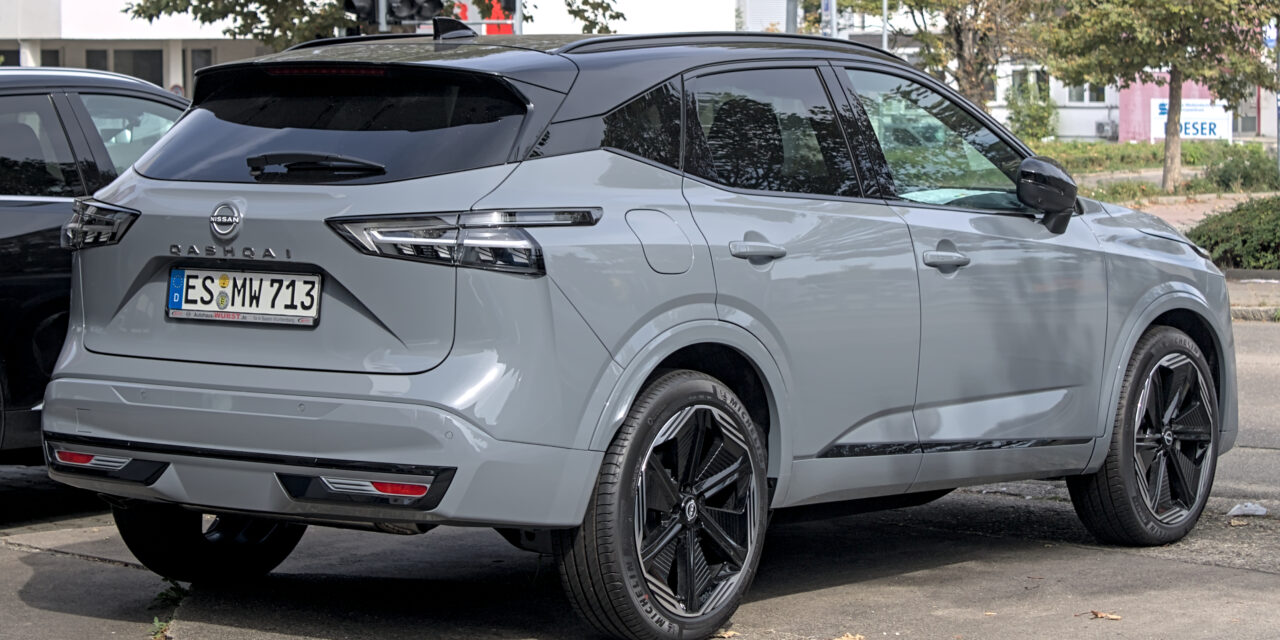
The Nissan Qashqai has been a default family SUV choice in the UK for years, and the e-Power version is the one that tends to catch out buyers who assume it is just another ordinary hybrid. It is not. In the Qashqai e-Power, the petrol engine works mainly as a generator while the electric motor drives the wheels, so the car has a more EV-like feel than a typical self-charging hybrid.
That difference is exactly why a used Qashqai e-Power can be a smart buy for the right household. It is also why you should not shop one in the same lazy way you would shop a normal petrol Qashqai. If you are comparing it with a Toyota hybrid, a mild-hybrid SUV or a diesel family car, there are a few checks that matter far more than the badge, the claimed mpg or the dealer patter.
Why the e-Power Qashqai deserves a closer look
Nissan positions the Qashqai e-Power as the more refined, more efficient step up from the mild-hybrid versions. Official Nissan UK material for the current Qashqai says e-Power models are driven by an electric motor, use a 1.5-litre petrol engine to top up the battery, and in current form offer official combined fuel consumption of 6.2 to 6.3 litres per 100km, which is roughly 44.8 to 45.6mpg in old money. The current brochure also lists a 55-litre fuel tank, so on paper the cruising range looks strong for family use.
It is easy to see the appeal. Independent UK reviewers still rate the Qashqai highly as an all-round family SUV, with recent reviews from Auto Express, Carbuyer, Honest John and Parkers all praising its comfort, tech and refinement, while also making the point that the e-Power version is the one that feels most convincing. For a buyer who does not want a full EV yet, that is a useful place to sit.
The catch is that a used example needs to feel right on the road and stack up on the paperwork. A tidy advert and a hybrid badge are not enough.
First, understand what you are actually buying
If you have not driven an e-Power car before, book the test drive before you fall in love with the spec list. Around town, the electric motor does the driving work, and Nissan also gives the Qashqai e-Power features such as EV Mode and e-Pedal Step. In normal use that means easy low-speed response and a smoother feel than many petrol automatics.
But it also means you need to pay attention to how the petrol engine joins in as a generator. On a good car, the system should feel well sorted. What you do not want is a car that sounds strained, feels rough, throws up warning lights or has clearly been living an unhappy life of missed servicing and short-trip neglect.
Also remember that the newest press reviews and the latest Nissan brochure refer to the updated Qashqai range. If you are shopping used, many of the cars in your price bracket will be earlier examples, so buy the actual car in front of you, not the headline from a review of a newer facelifted one.
The used checks that matter most
1. Start it from cold, not warm
A pre-warmed hybrid can hide a lot. Ask for the car to be cold when you arrive. You want to see how it starts, whether any warning lights linger and how the petrol engine behaves before everything is up to temperature. A smooth handover between electric drive and engine assistance matters more here than on a normal petrol SUV.
2. Do a mixed test drive, not a five-minute lap
The Qashqai e-Power needs more than an estate-road shuffle. Drive it in traffic, on a faster A-road and, if possible, on a dual carriageway. Listen for any harsh engine flare when you accelerate firmly, check whether the brake feel is natural, and make sure the car tracks straight and quietly at speed. A hybrid that feels impressive only in the first two miles is not impressive enough.
3. Check the service history for consistency, not just stamps
Nissan’s current UK brochure lists a service interval of one year or 18,000 miles, whichever comes first. That does not mean every used car will have been maintained on time. Look for dated invoices, mileage progression and evidence that routine servicing happened when it should. Gaps matter on any used car, but they matter even more on a complex hybrid where software, diagnostics and system health checks are part of the ownership story.
4. Ask exactly how much warranty is left
Nissan UK says every new Nissan gets 3 years or 60,000 miles of general cover, and the brand’s warranty page also highlights 5 years or 60,000 miles for electrified powertrain components. On a used e-Power, that means age and mileage are a big part of the value equation. A car with meaningful Nissan cover left is easier to buy with confidence than one sitting just outside it.
5. Inspect the tyres like they cost real money, because they do
Many family SUV buyers still underestimate tyre costs. The Qashqai can run on large wheels and wide tyres, and a heavy-ish hybrid on cheap rubber is a false economy. Check that all four tyres are a decent brand, inspect the inner shoulders for uneven wear and make sure mismatched budget tyres are not masking a car that has been maintained on the cheap.
6. Make sure the tech works properly
One reason people buy a Qashqai is the equipment list. Depending on trim, you may be getting Google built-in features, a 12.3-inch centre screen, a digital driver’s display, parking cameras and driver-assistance kit. Spend time with all of it. Pair your phone, test the cameras, check the screen response, verify there are no persistent alerts and make sure the driver-assistance systems behave normally rather than throwing up repeated messages.
7. Open the boot and use it properly
The current Nissan brochure quotes 455 to 504 litres under the luggage cover with the rear seats up, depending on version, and it also mentions a modular boot floor on selected trims. That sounds obvious, but it matters on a family SUV. Check the floor panels, luggage cover, charging-related storage areas and rear-seat folding action. Missing bits are annoying, and replacements can quickly turn a tidy buy into a mildly irritating one.
Which used Qashqai e-Power is likely to make most sense?
For most buyers, the sweet spot is not the cheapest early car and not the flashiest oversized-wheel example either. The sensible play is usually a well-kept middle-trim car with complete history, sensible tyres and enough remaining manufacturer cover to remove some of the anxiety. If you are buying for family work rather than driveway bragging rights, condition and maintenance beat headline spec very quickly.
It is also worth checking whether the car’s price premium over a mild-hybrid Qashqai still makes sense for your mileage. If you do lots of stop-start driving, urban commuting and school-run work, the e-Power’s smoother low-speed behaviour is easier to justify. If your life is mostly longer motorway hauls and you are choosing purely on purchase price, the maths can get less flattering.
When to walk away
-
There is no clear proof of annual servicing.
-
The car is already close to or beyond the useful part of its remaining manufacturer cover and the price does not reflect that.
-
The engine note sounds coarse or oddly intrusive under load.
-
Warning lights, hybrid-system alerts or infotainment glitches appear during the drive.
-
The tyres are poor, mismatched or worn unevenly.
-
The dealer cannot answer basic questions about warranty, recalls or software history.
The bottom line
A used Nissan Qashqai e-Power can be a very good UK family buy if you want SUV practicality without jumping straight to a full EV. The concept makes sense, the cabin is easy to live with and the better examples really do feel more polished than many ordinary petrol alternatives.
Just do not buy one on reputation alone. The smart move is to treat it as a tech-heavy family car rather than a generic used Qashqai. If the cold start is clean, the road test is smooth, the service record is consistent and there is worthwhile warranty cover left, it is a strong contender. If those pieces do not line up, walk away and wait for a better one.