
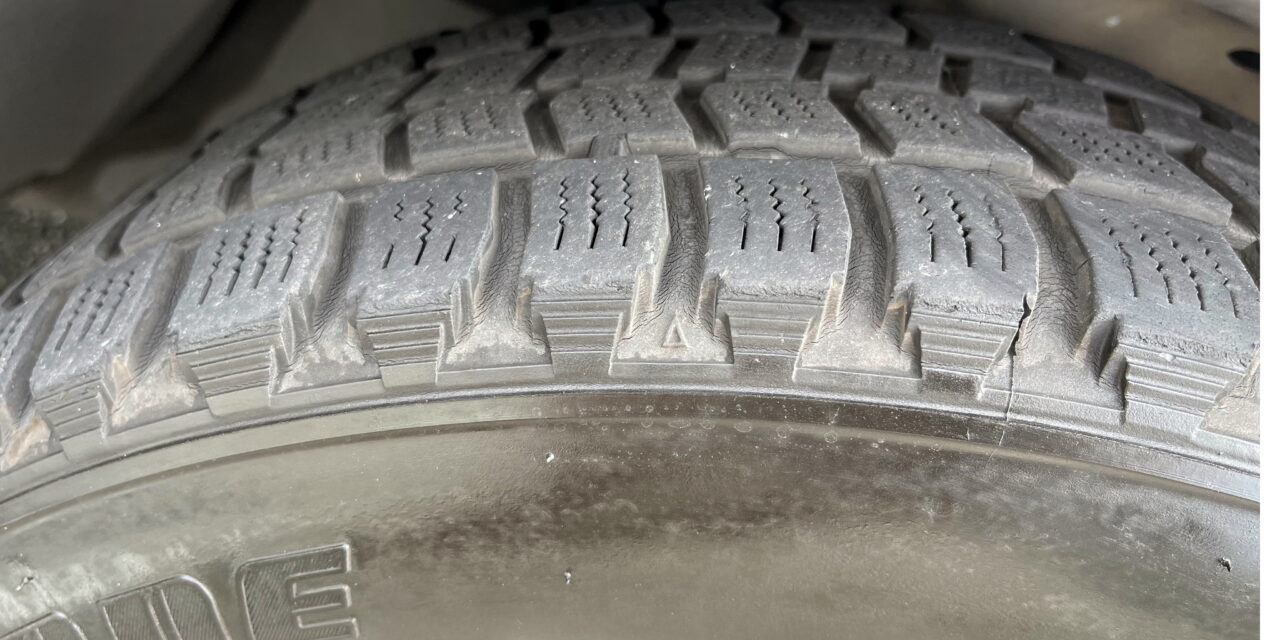
If you are only replacing two tyres, the safest default is usually simple: fit the new pair to the rear axle, not the front.
That catches plenty of UK drivers out, especially owners of front-wheel-drive cars who assume the newest tyres belong on the driven wheels. In practice, tyre makers and road-safety guidance have long pushed the opposite advice because loss of grip at the rear is usually harder to control than loss of grip at the front.
That does not mean every car should be treated the same. Some 4×4 and all-wheel-drive models are fussier about tread differences. Some cars leave the factory with different tyre sizes front and rear. And if you are mixing brands, patterns or tyre types, there are a few rules and a few costly mistakes worth understanding before you pay.
The short answer
If your car uses the same tyre size on all four corners and you are replacing only two tyres, the new tyres should usually go on the rear axle.
That advice applies whether your car is front-wheel drive or rear-wheel drive. The logic is stability. If the rear tyres lose grip first in heavy rain or during an emergency manoeuvre, the car is more likely to step out into oversteer. Most everyday drivers cope better with the front running wide than the rear suddenly trying to overtake the front.
Why the rear axle matters more than many drivers think
The common objection sounds sensible at first: surely the best tyres should go on the front because that is where the steering, much of the braking effort and, on many cars, the driven wheels are?
The problem is that a car with weaker rear grip can become unstable more suddenly. Michelin’s consumer guidance warns that when mixing tyres cannot be avoided, tyres on the same axle must always be the same size and that differences in tyre specification can affect balance, steering response and braking. Its guidance also notes that fitting winter tyres on only one axle can create a traction imbalance between the front and rear.
That is the key point for ordinary road driving. A front axle that gives up first will usually scrub wide. A rear axle that gives up first can rotate the car. On a wet roundabout, a motorway lane change or a quick avoidance move, that difference matters.
What UK rules actually say
This is where it helps to separate law from best practice.
The UK MOT inspection manual says tyres of different structures, such as radial-ply and cross-ply, must not be mixed on the same axle. It also sets out the familiar tread-depth rule for most passenger cars: at least 1.6mm across the central three-quarters of the tread, around the entire circumference.
That is the hard legal baseline.
What UK rules do not do in the same blunt way is ban every mixed-brand or mixed-pattern setup. So a car can be legal while still being a poor choice dynamically. That is why tyre matching advice from manufacturers and safety organisations matters. Legal is not always the same as wise.
Can you mix tyre brands if the size is right?
Sometimes, yes. Sensibly, not always.
If the replacement tyres are the correct size, load rating and speed rating for the car, they may physically fit and the car may remain road legal. But that does not automatically make the setup a good one. Different brands and tread patterns can behave differently in the wet, under braking and near the limit of grip.
If you must mix brands, the smarter approach is to keep the two tyres on the same axle identical to each other, then put the newer matching pair on the rear.
In other words, avoid a car with four completely different tyres if you can. Avoid mixed patterns across the same axle. And if a fitter suggests an odd combination just because it is in stock, it is worth slowing the conversation down before you agree.
The 4×4 and all-wheel-drive exception can get expensive
This is the point many buyers miss.
On some all-wheel-drive and 4×4 vehicles, even modest differences in rolling circumference can put extra strain on the drivetrain. Michelin specifically warns that vehicles with ABS, traction control, AWD or 4WD may require matching diameters in all positions and that even slight size differences can affect vehicle systems and add stress to drivetrain components.
That does not mean every AWD car automatically needs four new tyres every time one wears out. It does mean you should not guess.
Before approving two tyres on an AWD or 4×4 model, check the owner’s handbook or ask the manufacturer-standard-aware fitter what tread-depth spread your system will tolerate. Some vehicles are far more sensitive than others. If the remaining pair is significantly more worn, replacing all four can be the cheaper choice compared with a transfer case, coupling or differential problem later.
What about cars with different front and rear tyre sizes?
Some performance and prestige cars use a staggered setup, with wider tyres on the rear than the front.
In that case, the generic rear-axle rule is not the whole story because you may not be able to swap front and rear at all. Follow the vehicle manufacturer’s fitment and size requirements first. If the car was designed around different tyre sizes at each end, treat that as the starting point, not an afterthought.
Should you replace one tyre, two tyres or all four?
That depends on what is already on the car.
Replacing one tyre can make sense when:
- the other tyre on that axle is nearly new
- you are matching the same brand, model and specification
- tread-depth difference is small and the fitter is satisfied it is appropriate for the vehicle
- the car is not an AWD model with tight tolerance requirements
Replacing two tyres is usually the sensible middle ground when:
- one tyre is damaged but the matching tyre on that axle is also well worn
- the existing pair is old enough that matching a single replacement neatly is difficult
- you want a cleaner, more predictable setup on that axle
Replacing all four is often worth it when:
- the remaining pair is close to replacement anyway
- the car is AWD or 4×4 and tyre circumference differences matter
- you are moving from a poor or mismatched set to a better all-round setup
- the old tyres are aged, noisy or unevenly worn
If you are unsure whether the remaining tyres are still worth keeping, this is also a good moment to check their age and condition, not just the tread depth. Motoring Mojo’s guide on how to check tyre age is worth a look before you sign off a part-used setup.
Five checks to make before you pay for the new pair
1. Confirm the exact size and ratings
Do not order from memory if you can help it. Check the tyre sidewall and the vehicle handbook, then make sure the load index and speed rating are suitable. If you need a refresher, our guide on reading tyre sidewall markings walks through it clearly.
2. Ask where the new tyres will be fitted
Do not assume the fitter will automatically put them on the rear. Ask the question directly before the work starts.
3. Check the age of the remaining pair
A legal tread depth does not mean the older pair is still a great idea to keep. If the other tyres are already several years old, replacing only two may be false economy.
4. Look for uneven wear
If the worn tyres have scrubbed more heavily on one edge or developed odd patterns, you may also need alignment or suspension checks. Otherwise, the fresh pair could start wearing badly too.
5. Be cautious with bargains that create a mixed set
A cheap deal on two odd tyres is not always a deal. If you are tempted by part-worns or a random pair from a different pattern family, read our piece on part-worn tyres in the UK before deciding the saving is worth it.
A quick word on run-flats and specialist tyres
If your car uses run-flat tyres, self-sealing tyres or a manufacturer-approved specialist fitment, do not treat it like a generic hatchback on basic all-season rubber.
Mixing run-flat and conventional tyres on the same axle is not recommended, even though the MOT manual notes that run-flat and conventional tyres can be mixed on the same axle. The better question is whether your car should be set up that way at all. In most cases, sticking with the correct approved type is the safer call.
So where should the new tyres go?
For most normal UK cars on a square setup, the answer is still the rear axle.
That is the safest default, the simplest instruction to give a fitter and the easiest mistake to avoid when you are trying to save money by replacing only a pair.
The exceptions are the ones worth respecting: staggered front-rear sizes, manufacturer-specific requirements and AWD systems that dislike tread or diameter differences.
Bottom line
If you are buying two tyres rather than four, do not focus only on the driven wheels. Focus on keeping the car stable and predictable.
For most cars, that means fitting the new matching pair to the rear, keeping each axle matched as closely as possible, and being extra cautious with AWD or 4×4 models where tyre differences can become a mechanical problem as well as a handling one.
A cheaper tyre invoice is only a win if the car still feels right the moment the road turns wet.




Trackbacks/Pingbacks