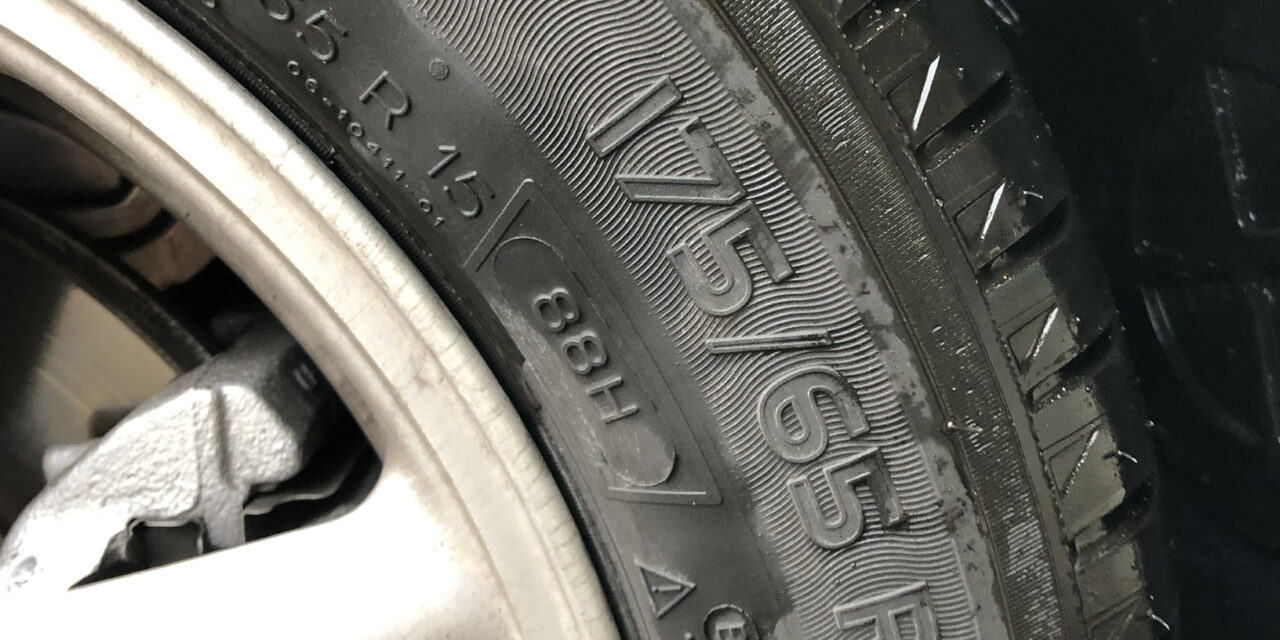
If one tyre is damaged, plenty of UK drivers ask the same question at the fitting bay: do I really need a matching pair, or can I just replace the bad one with whatever is in stock?
The honest answer is more nuanced than many garages, forums and comparison pages make it sound. UK rules do not say every tyre on your car must be the same brand. But the law does draw some hard lines on each axle, and tyre makers are far less relaxed about mixing tread patterns, seasons and wear levels than bargain shopping drivers usually hope.
If you want the short version, use this.
The short answer
Yes, you can have different tyre brands on the same car.
No, that does not automatically mean you should mix them on the same axle.
For a normal passenger car in the UK, the legal baseline is that tyres on the same axle must not be different sizes or different structures, and they must still meet the vehicle’s minimum load and speed requirements. The MOT inspection manual also says a tyre not fitted in line with the manufacturer’s sidewall instructions is a major defect.
That means a mixed-brand car can still be legal. A mixed axle can also still be a bad idea.
What UK rules actually care about
This is the bit that matters when people throw around phrases like "illegal" without saying what they mean.
Under the GOV.UK MOT inspection manual for cars and light vans:
- a tyre with a load capacity or speed rating below the minimum requirement is a major defect
- tyres on the same axle or on twin wheels that are different sizes are a major defect
- tyres on the same axle of different structure are a major defect
- tyres not fitted in compliance with the manufacturer’s sidewall instructions are a major defect
The same manual also says radial-ply and cross-ply tyres must not be mixed on the same axle. It adds that run-flat and conventional tyres can be mixed on the same axle, although this is not recommended.
So if your question is purely legal, the first checks are not badge names. They are size, structure, speed rating, load rating and any vehicle-specific fitting instruction.
Where drivers get caught out
The trap is assuming that if the law does not ban something outright, it must be sensible.
That is not how tyres work.
Michelin’s current UK guidance says tyres on the same axle should be the same model, and it treats mixing brands, tread patterns, tread depths or seasons across one axle as something to avoid apart from temporary situations such as using a spare after a puncture.
That advice is not snobbery. Different tyres can have different rolling circumferences, carcass stiffness, wet-grip behaviour and breakaway characteristics even when the sidewall size looks the same. That can leave the car feeling slightly uneven in normal driving and noticeably unsettled in a wet emergency stop, a motorway lane change or a quick lift of the throttle in a bend.
In plain English, the car may still drive, but it may not react evenly left to right.
Same car versus same axle
This is the distinction that clears up most confusion.
Different brands front to rear
Usually legal, often manageable, sometimes normal.
If your front tyres are one brand and your rear tyres are another, that is not automatically an MOT issue. Many drivers end up in that position after replacing only two tyres at a time.
The important thing is that each axle still has a properly matched pair in the correct size and structure, with suitable load and speed ratings.
Different brands on the same axle
Potentially legal if the tyres are still the same size and structure, but usually not the smart choice.
Even when the sidewall numbers match, mixing one tyre model with another across the same axle can mean different tread patterns, shoulder stiffness and water-clearing performance from left to right. That is exactly why tyre manufacturers and better fitters try to avoid it.
If you are paying for a tyre anyway, this is usually the moment to buy a matching pair rather than the cheapest single replacement.
When replacing one tyre is usually false economy
A single tyre replacement can make sense when the opposite tyre on that axle is nearly new, is the same model and still has plenty of even tread left.
It makes less sense when the tyre on the other side is:
- much more worn
- a different model or brand already
- older and starting to harden
- showing uneven shoulder wear
- part-worn with an unclear history
In those cases, forcing one fresh tyre to work beside one tired tyre often saves less money than it seems. You may still end up paying for a second tyre soon, and you keep the weaker left-right balance in the meantime.
A good fitter should measure the remaining tread, check the wear pattern and tell you whether one tyre is realistic or whether a pair is the more sensible spend.
What about mixing summer, winter and all-season tyres?
This is where legal and sensible drift even further apart.
Michelin says mixing different season types on the front and rear is not what its experts recommend, even if it is not automatically forbidden. The concern is simple: the car can gain and lose grip differently at each end depending on temperature and road surface.
For example, a car on summer tyres at the front and winter or all-season tyres at the rear may behave one way in winter and another in warm weather. That changing balance is not something most drivers want in an emergency.
If you need one simple rule, it is this: keep the same season type across an axle at the absolute minimum, and ideally across all four corners unless your vehicle manufacturer says otherwise.
Why 4×4 and all-wheel-drive cars need extra caution
This is the group that should be least relaxed about mixing.
Some four-wheel-drive and all-wheel-drive systems are far fussier about rolling circumference differences than ordinary front-wheel-drive hatchbacks. Even modest differences in tyre wear or model can put extra strain on the centre differential or coupling if the vehicle expects a tighter match.
Michelin’s advice is to follow the vehicle manufacturer’s recommendations carefully on these cars. That is the right approach. If you drive an AWD BMW, Audi, Subaru, Land Rover or similar, do not assume a cheap single replacement is harmless just because the sidewall size matches.
Check the handbook and, if needed, the dealer or a tyre specialist before mixing brands or tread depths.
The practical buying rule that saves the most trouble
If you have a normal UK family car and one tyre needs replacing, use this order of thinking:
- Match the correct size exactly.
- Make sure the load index and speed rating still meet the car’s minimum requirement.
- Keep the same structure on the axle.
- Try to keep the same tyre model across the axle.
- If that is not possible, strongly consider replacing both tyres on that axle.
- If the car is AWD or 4×4, check the handbook before agreeing to any mismatch.
That is a much better decision chain than fixating on brand alone.
So, can you mix tyre brands on one car?
Yes, across the whole car, many UK drivers do.
But if you are asking what is best practice, the smarter answer is to keep a matched pair on each axle and avoid mixing models side to side unless you are dealing with a short-term emergency.
The cheapest legal option is not always the cheapest safe option. And with tyres, the penalty for getting that balance wrong tends to show up on the wettest day, not the day you pay the invoice.
If a fitter offers you one odd tyre because it is convenient, ask the two questions that matter: will it be matched properly on the axle, and what will the tread-depth difference be side to side? If the answer sounds vague, buy the pair and move on.