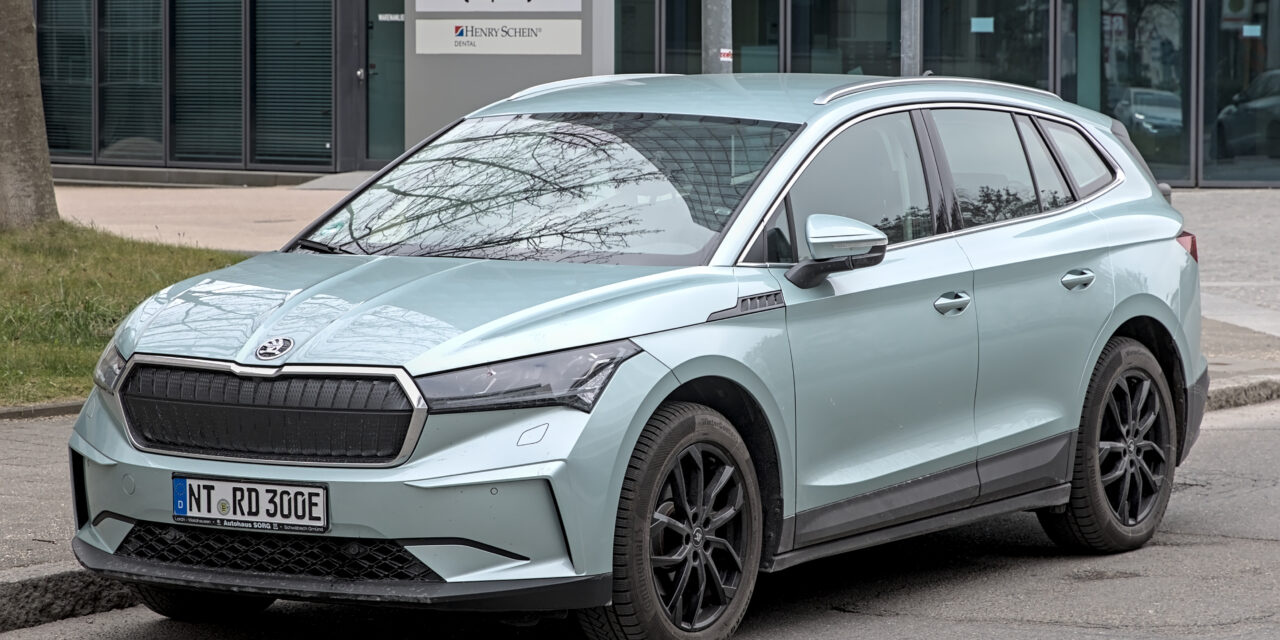
The first-generation Skoda Enyaq is one of the more straightforward ways into a roomy electric family car. It has a practical hatchback-style boot, proper rear-seat space and, in the larger-battery versions, enough real-world range to make longer trips feel normal rather than heroic.
That does not make every example an automatic yes. A used Enyaq is a software-heavy EV with several battery and charging specifications, so the right buying process is less about finding the lowest price and more about proving that the particular car does what its advert says. Here is the sensible UK approach.
Start by identifying the exact Enyaq
Do not rely on an advert calling a car an “Enyaq iV”. Ask for the registration number, VIN and original specification, then establish the battery size, motor, trim and option packs. Early cars were commonly sold as 60 and 80 models, while later naming and equipment changed. The badge alone does not tell you the usable battery capacity, charging hardware or whether desirable equipment was standard or optional.
For a family buyer, the bigger-battery car will usually be the easier one to live with, but it is not automatically better value. Think about the journeys you actually make, where you can charge, insurance cost and the price gap. A smaller-battery car that genuinely covers the weekly routine and is materially cheaper can be the smarter purchase.
Take a proper test drive, not a lap of the block
Arrive with enough time to use the car as an EV. Check the displayed state of charge, the estimated range and the recent efficiency figure, then ask whether the car has been charged shortly before you arrived. The range display is an estimate, not a health certificate, but its behaviour and the car’s consumption can prompt useful questions.
- Drive at town and faster-road speeds, not only around the dealer’s estate.
- Listen for suspension knocks over broken surfaces and check that the steering tracks straight.
- Try the brakes gently and firmly. Regenerative braking should feel predictable, and the friction brakes should not feel rough or reluctant after a light use.
- Use the climate controls, heated items, cameras, parking sensors, infotainment and driver displays. These are expensive to diagnose after collection.
- Check that the car locks, unlocks and starts with every supplied key.
Make sure the rear seats, boot floor and charging-cable storage work for your actual kit. The Enyaq is bought for practicality, so take a buggy, child seat or the bulky item that normally causes an argument at home if that is what matters to you.
Make charging part of the viewing
Ask to connect the car to a charger. At a dealer, even a brief AC session proves more than a promise that it charges. Check that the flap opens and closes cleanly, the connector latches securely and the car begins a session without repeated errors. If the seller will agree, a short public rapid-charge stop is better still, particularly on a car you are close to buying.
Confirm which cables are included, and do not assume a three-pin lead, Type 2 cable or public-charging subscription transfers with the car. If home charging is central to the purchase, get a quote for your own installation before committing rather than treating the previous owner’s setup as evidence that yours will be simple.
Battery health: ask for evidence, then put it in context
A car’s battery percentage on the day tells you its charge level, not its long-term condition. Ask whether there is a recent battery-health report, how the vehicle has usually been charged and whether any battery or charging work has been carried out. A report from a reputable inspection service can be useful when comparing cars, but read what it actually measures and when it was taken.
Check the start date of the manufacturer’s cover from the vehicle’s registration and service history. Skoda says its electric-car batteries are covered for eight years or 100,000 miles, whichever comes first. For the Enyaq, it says capacity is warranted not to fall below 70% of the original value during that period. Read the terms that apply to the individual car, rather than assuming an approved-used warranty extends or replaces that battery cover.
Do not reject a car simply because it has been rapid charged. Nor should you accept a vague assurance that “the battery is fine”. The useful question is whether the car’s condition, charging behaviour, remaining cover and price make sense together.
Software, updates and connected services deserve attention
Early Enyaqs received important software updates, and a smooth demonstration is worth more than a seller saying updates are automatic. Watch for slow starts, frozen screens, warning messages, failed phone pairing or functions that disappear after selecting them. Photograph any warning before it clears.
Ask a Skoda retailer to confirm outstanding campaigns from the VIN, and ask the seller for invoices or digital service records that show completed work. If a car has a recurring fault, a written diagnosis and a repair booking are not the same thing as a repair. Let the fault be fixed and demonstrated before collection, or negotiate as if you will be paying to resolve it.
Read the history with EV-specific questions in mind
Run the registration through the free MOT history service. For cars tested in England, Scotland or Wales, it shows pass and fail information, recorded mileage, advisories and, where available, recall information. Repeated tyre, brake or suspension advisories can say more about a car’s life than a glossy valeting job.
Then match the mileage, service record, V5C and sales description. A high-mileage Enyaq is not automatically a bad buy, but it should have a coherent story: regular servicing, sensible tyre wear, working equipment and a price that recognises the remaining warranty. As with any used car, carry out an independent history check for finance or insurance write-off markers before leaving a deposit.
Look closely at tyres, wheels and the cabin
Big wheels can make an Enyaq look excellent, but kerb damage and low-profile tyres are not cosmetic details. Inspect every wheel, check tyre brands and tread across the axle, and look for uneven inner-edge wear. Replacing a full matched set can quickly change the bargain maths.
Inside, test every seat adjustment, the boot release, parcel shelf, rear-seat catches and charging-port area. Water ingress, damaged seals or an unexplained damp smell deserve a proper explanation. A family SUV gets used hard, and minor omissions become expensive annoyances when they are tied to trim panels or electronic modules.
Should you buy from a dealer or privately?
A good private sale can be cheaper, but it asks more of you. You will need to arrange inspection, history checks, charging evidence and payment protection yourself. A dealer car may cost more, yet it gives you clearer consumer rights and a single business to hold to account if a fault appears. If you buy from a Skoda-approved retailer, ask exactly what its one-year used-car warranty covers and what paperwork proves the vehicle’s preparation.
Whichever route you choose, do not let a low monthly figure hide the cash price, finance cost, insurance quote or any missing equipment. Our guide to negotiating a used car price can help keep the conversation on the whole deal.
The verdict
A used Skoda Enyaq can be an excellent family EV when its specification matches your charging routine and the car passes a deliberate test of charging, software and everyday equipment. Buy the example with the clearest history and the fewest unanswered questions, not merely the most ambitious claimed range or the sharpest-looking finance deal.
Used Skoda Enyaq questions
How long is the Enyaq battery warranty?
Skoda states eight years or 100,000 miles, whichever comes first, with a 70% capacity threshold for the Enyaq. Check the original registration date and the applicable terms for the car you are considering.
Can I check an Enyaq’s battery condition on a viewing?
You can assess charging behaviour and ask for a recent battery-health report, but a dashboard range estimate alone does not establish battery health. An independent inspection is sensible if the result would change your decision.
Do I need to rapid charge an Enyaq before buying it?
It is not essential, but a successful AC charge is a minimum useful check. If rapid charging matters to your journeys, testing it before purchase gives better reassurance than relying on the seller’s word.