Having your car keys stolen is not the same as mislaying them in the house. If the thief can connect the keys to your vehicle or your address, the risk can keep growing after the first theft. The useful response is not to spend the evening comparing replacement-key prices. It is to protect the car, create a clear record and get the right people involved in the right order.
This is a practical UK checklist for ordinary car-key theft. If someone is trying to take the car now, is threatening you, or you can see a crime in progress, call 999 rather than working through the steps below.
1. Get the car somewhere safer, if you can do so safely
Start by thinking like the person who took the keys. Do they know where the car is kept? Did the theft happen near your home, at work, at a gym or during a burglary? Were the keys attached to anything with your address, registration number or employer details on it?
If the answer could be yes, move the car to a secure, well-lit location that is not obvious to the thief, provided you have a working spare key and are insured to drive it. A locked garage is ideal. Otherwise, a trusted relative’s secure driveway or a staffed, secure car park may be better than leaving it in the usual spot. Do not confront anyone or return to a place where you feel at risk.
Use any physical security you already own, such as a steering-wheel lock, but treat it as an extra delay rather than a substitute for telling your insurer. Do not leave the V5C, insurance paperwork, spare keys or a document showing your home address in the car.
2. Report the theft and keep the crime reference number
Report stolen keys to your local police force using its non-emergency online reporting route or 101 where appropriate. Give a precise account of what was taken, where and when it happened, whether the thief could identify the car, and whether any vehicle documents or address details went too.
Keep the crime reference number, the date and time of the report, and any CCTV or witness details. An insurer may ask for them. A report also creates a contemporaneous record if the car is later targeted or recovered. If the vehicle itself has already gone, report that immediately and tell the insurer it has been stolen.
3. Tell the insurer promptly, then ask a very specific question
Check your policy documents and contact the insurer or broker as soon as reasonably possible. The cover for stolen keys, replacement locks, new fobs, recovery and a hire car varies widely between policies. Do not assume comprehensive insurance pays every key-related cost, and do not assume a replacement key means there is no claim issue.
Ask the insurer to confirm, in writing if possible:
- whether key theft is covered and what excess applies;
- whether it wants to authorise a dealer, locksmith or recovery firm before work begins;
- whether it requires the car to be moved or secured in a particular way;
- whether it will pay for reprogramming, replacement locks or both; and
- what it wants you to do if a stolen fob could still start the car.
The legal baseline is that a vehicle used or kept on a public road must normally be insured. GOV.UK’s vehicle-insurance guidance explains the basic rule and the limited exceptions. That does not mean you should cancel cover while the car is being secured. If the vehicle is kept off road and you intend to stop insuring it, get individual advice first: SORN and continuous-insurance rules are separate issues.
4. Arrange the right technical fix, not simply another copy
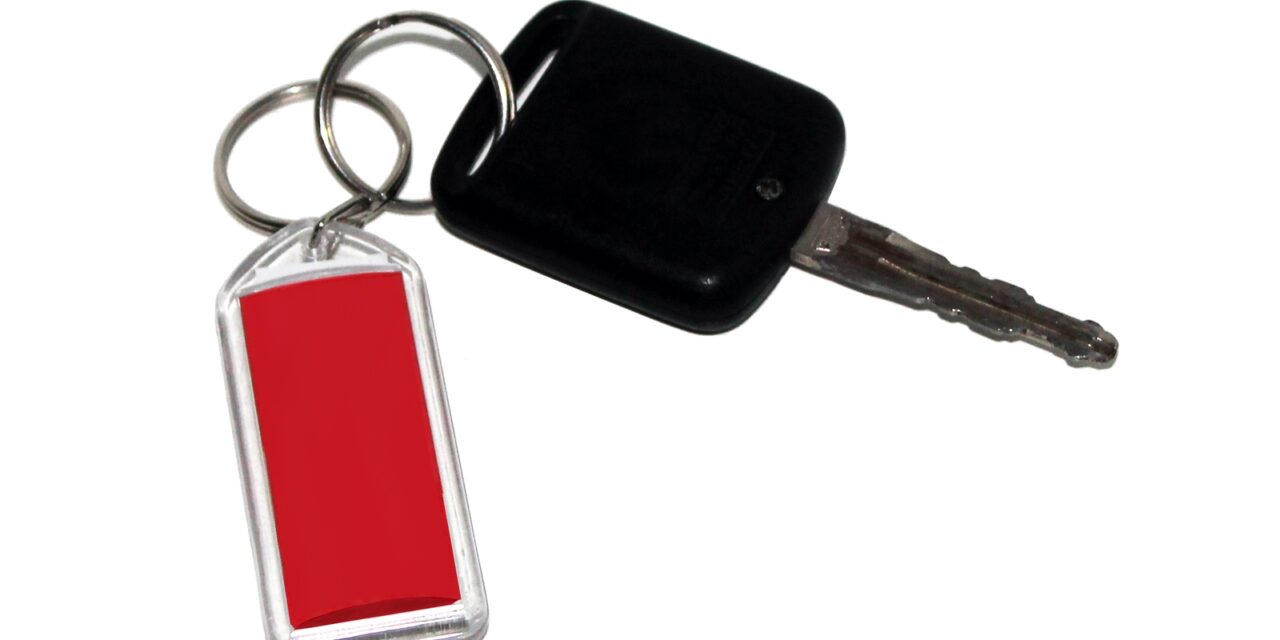
Modern keys are usually electronic credentials as well as pieces of metal. A capable automotive locksmith or franchised dealer can explain what can be removed, reprogrammed or replaced for your particular make and model. The right fix may be a new fob programmed to the car, deleting the missing fob from the vehicle’s memory, a new mechanical blade, replacement locks, or a combination of these.
Tell the provider the keys were stolen, not merely lost. Ask them to put in writing whether the old fob will still unlock or start the car after the work. Keep the invoice and any programming record. If the insurer is paying, follow its authorisation process before committing to an expensive job.
Be wary of online listings promising a universal cheap replacement. A remote or key shell is not necessarily a properly programmed, secure replacement. For some cars, a low upfront price can leave the old key active or lead to a second bill to complete coding.
5. Reduce the chance of a second theft
Review what else was taken with the keys. A driving licence, wallet, work pass, address tag, vehicle registration document or parking permit can change the risk considerably. Change access codes for a shared garage or building if the stolen items could expose them. If home keys were taken too, speak to your home insurer or a qualified locksmith about the security of the property.
For a few days, avoid posting the vehicle’s location on social media. Check the car each time you approach it and do not leave the replacement key in an obvious hiding place. If the theft followed a burglary, ask the police for local crime-prevention advice and consider improving lighting, visible CCTV or access control where appropriate.
What if you only have one key left?
Do not use the last key as a reason to delay action. It is often the key that lets you move the car and prove ownership to a dealer or locksmith. Keep it securely with you, not in the vehicle, and arrange a spare once the stolen key has been dealt with. Before paying anyone, ask what identification, V5C or proof of address they will require. A legitimate provider should take ownership checks seriously.
Can you still drive the car?
Usually, a stolen spare key does not automatically make the car illegal to drive. But legality is not the only issue. The immediate question is whether the car is safe where it is and whether your insurer has given you instructions that affect cover or recovery. If the thief has the only key, do not try to drive the car by improvised means. Arrange recovery through the insurer, a manufacturer assistance scheme or a reputable provider.
The short version
Move the vehicle to safety if possible, report the theft, notify the insurer, get the stolen key properly dealt with and remove any clues that connect a thief to the car or your home. The cost of a replacement key matters, but the bigger mistake is treating a stolen electronic key as though it were only a lost bit of metal.
For a quick check of publicly available vehicle details after the incident, use the official DVLA vehicle enquiry service. It can confirm items such as tax and MOT status, but it is not a substitute for the police report, insurer contact or a security assessment.