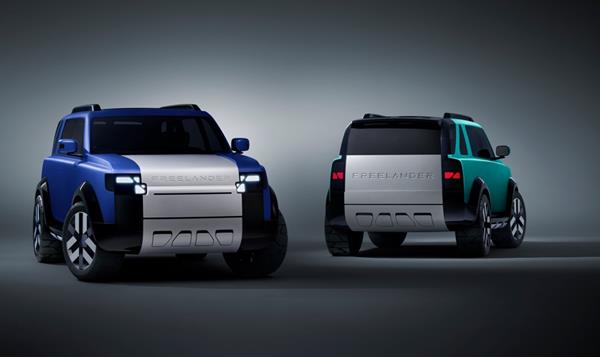
Freelander is suddenly everywhere again. Auto Express has been writing about the first production-bound model, while Top Gear and What Car? have both picked up on the revival of a name that still means something to plenty of British drivers.
The easy version of this story is that Land Rover’s old baby 4×4 is back. The more important version is that JLR and Chery are trying something much bigger than a nostalgic badge revival: they are building a separate premium electric SUV brand, using the Freelander name as the bridge.
According to the official Freelander global debut announcement published on 1 April 2026, the reborn brand is being developed jointly by Chery Group and JLR, will sit on a new architecture, and plans to launch a family of new models within five years in what it calls “key global markets”. JLR had already laid the groundwork last June when it announced a new collaboration model with Chery in China rather than folding these cars into Range Rover, Defender or Discovery.
That is the bit worth paying attention to. This is not a new Land Rover in the old sense. It is not even being presented as a sub-brand within JLR’s usual house of brands. Freelander is being positioned as an independent premium EV line with its own design language, its own operations set-up and, crucially, a heavy reliance on Chinese tech and manufacturing scale.
For UK readers, that changes the question. The interesting point is no longer whether the old Freelander badge has enough nostalgia behind it. It is whether buyers will warm to a car that borrows JLR heritage but is being engineered and industrialised through a different playbook. If that sounds subtle, it is also the reason so many outlets have jumped on the story: there is genuine intrigue here about whether a familiar British name can do a very modern Chinese-European job.
Freelander’s own launch material leans hard into that new formula. It talks up partnerships with Huawei, CATL and Qualcomm, and says the Changshu CJLR plant is getting major investment for EV production. That tells you where the pitch is heading. The value proposition is not old-school mud-plugging romance. It is premium-SUV style, fast-moving software and battery tech, wrapped in a badge with enough history to feel familiar.
There is also a useful reality check buried in the official wording. The company has been careful to talk about “key global markets” rather than publish a full market-by-market launch plan. That matters because some of the punchier UK coverage goes a step further than the official material does. A British launch still looks plausible, and reports suggesting right-hand-drive plans are not hard to believe given JLR’s involvement, but the formal announcement has not yet done the full homework for UK buyers on timing, retail channels or final model line-up.
That gap between the headlines and the confirmed detail is exactly why this story matters now. We are past the stage where Freelander is just a joint-venture footnote, but not yet at the stage where every practical answer is on the table. In other words, the brand is real, the strategy is clear, and the sales proposition still needs proving.
The next thing to watch is simple: when Freelander stops talking about the brand in broad terms and starts talking about actual cars, markets and prices in a way buyers can test. If that happens quickly, this could become one of the more interesting EV launches with a British connection. If it does not, the risk is that the name grabs attention long before the business model earns trust.
For now, the coverage surge makes sense. Not because Britain is getting its old Freelander back unchanged, but because JLR appears to be using one of its most recognisable old names to experiment with what a new-era global EV brand can look like.