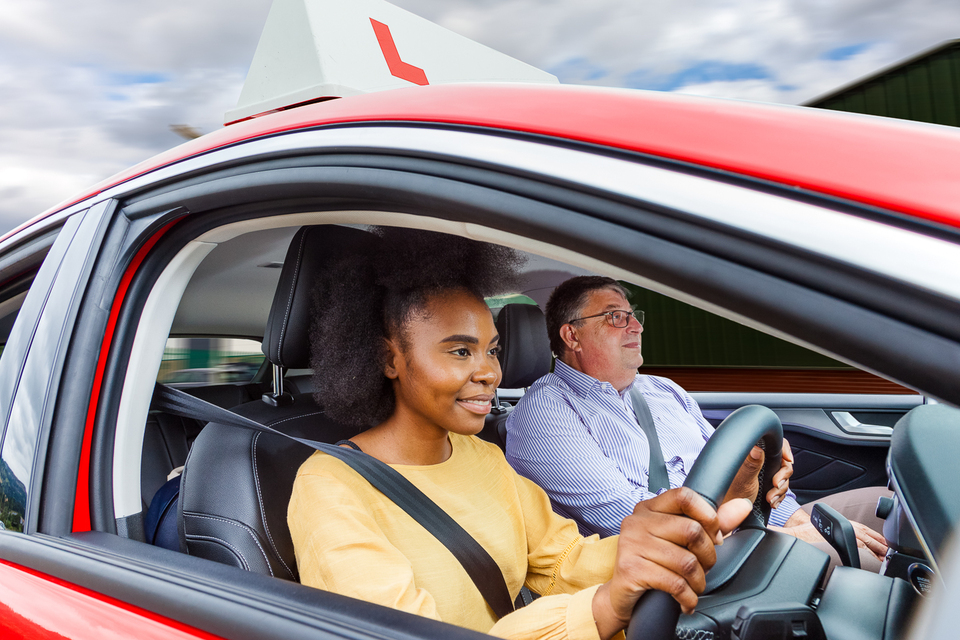
If you passed your practical test in an automatic car, your car entitlement is restricted to automatics. That is the short answer, but it is worth knowing exactly where the line is. It matters when you borrow a friend’s car, book a hire car, apply for a driving job or decide whether it is worth taking a manual test later.
The restriction does not make the licence second-rate. It is a full car licence for automatic category B vehicles. It simply does not give you permission to drive a manual car. With more hybrids and electric cars on the road, that will suit plenty of people.
What an automatic-only licence lets you drive
GOV.UK lists Category B auto as allowing you to drive a Category B vehicle, but only an automatic one. For most drivers, Category B is the ordinary car entitlement: a vehicle with up to eight passenger seats and a maximum authorised mass of up to 3,500kg. The exact entitlement on an individual licence can vary, so check the categories on the back of your photocard or use the DVLA’s online licence information service.
In practical terms, an automatic-only licence normally lets you drive:
- a conventional automatic with no clutch pedal
- a hybrid or plug-in hybrid that drives as an automatic
- an electric car, which does not need a conventional manual gearbox
- an automatic hire car or courtesy car, provided you meet the rental company or insurer’s other rules.
It does not limit you to small cars. The normal Category B weight and seating limits still apply, and separate rules apply to larger vehicles, minibuses and trailers. Do not assume that an automatic transmission removes those other licence checks.
The key restriction: no manual cars
A manual gearbox car needs the driver to operate a clutch and select gears. If your licence says Category B auto, you cannot drive one on the road simply because you have had a lesson or the owner says they are happy for you to try it. Insurance is not a workaround for a missing entitlement.
Look at the codes beside your category on the back of the licence. Code 78 means “restricted to vehicles with automatic transmission”, according to GOV.UK’s driving-licence code list. If the wording on a hire or car-share listing is unclear, ask before collecting it. “Automatic” should be explicit, rather than inferred from a photo of the gear selector.
Does a manual licence cover automatics?
Yes. A driver who passed their car test in a manual normally has a Category B entitlement that covers both manual and automatic cars. That is why a manual test is often described as giving more flexibility.
The reverse is not true: passing in an automatic does not grant the manual entitlement. The important thing is what your licence currently shows, not the type of cars you have driven recently.
What about electric cars and cars with paddles?
Electric cars are automatic for this purpose because there is no conventional manual gearbox to operate. An automatic-only licence is therefore valid for a typical EV. The same principle applies to normal automatic cars that offer a sport mode, steering-wheel paddles or a manual-selection setting. A driver is not turning it into a manual car by choosing a lower gear electronically.
There are unusual vehicle designs and adapted vehicles, so do not rely on a badge, a marketing description or a row of paddles alone if a vehicle is unfamiliar. A hire company, manufacturer handbook or driving instructor can help establish what it is. If the vehicle has a clutch pedal and requires manual gear changes, it is not one to drive on an automatic-only entitlement.
How to upgrade from automatic to manual
You do not need to surrender an automatic licence and start learning from scratch. You take a practical driving test in a manual car to upgrade the entitlement. GOV.UK says drivers who need an upgrade test, including automatic to manual car, must contact the DVSA to arrange it rather than use the standard online booking route.
The sensible route is:
- Take a few manual lessons first. A manual test assesses the same safe-driving standard, while adding clutch control, gear choice and moving off safely.
- Make sure your instructor knows this is an upgrade test, so the lessons focus on the gaps rather than repeating everything you already do well.
- Contact the DVSA using the details on its driving-test booking guidance to book the upgrade.
- When you pass, check the replacement licence when it arrives and make sure the manual restriction has been removed.
There is no need to rush into an upgrade just because someone says manual is always better. It is worthwhile if your work, family cars, travel plans or preferred used cars make manual access genuinely useful.
Before borrowing or hiring a car
Use this quick check whenever you are not driving your own vehicle:
- Confirm that the car is an automatic, not just that it has a modern-looking gear selector.
- Check your licence category and any restriction code rather than relying on what you remember from test day.
- Make sure the insurance policy or rental agreement allows you to drive. Licence entitlement and insurance are separate requirements.
- Check age limits, excesses, required documents and whether additional drivers must be named.
- If you are taking the car abroad, check the destination’s rules and the rental company’s terms before travel.
Is an automatic-only licence a disadvantage now?
It can be a limitation if you regularly need a cheap manual hire car, want access to an employer’s mixed fleet, or are shopping for an older used car where manuals are common. It can also narrow the choice of cars friends and relatives can lend you.
But for a driver who expects to use newer cars, hybrids and EVs, it may make little day-to-day difference. The right question is not whether a manual licence sounds more comprehensive. It is whether the restriction will actually get in the way of the vehicles you need to use.
The bottom line
An automatic-only licence is valid for automatic Category B cars, including the EVs and hybrids that make up an increasing share of the market. It does not cover a manual car, however informal the arrangement may feel. Check the back of your licence, look for code 78, and book a manual upgrade test only if the extra choice will be useful to you.
This guide applies to Great Britain. Driving-licence categories and processes can differ in Northern Ireland, so check nidirect if that is where your licence was issued.