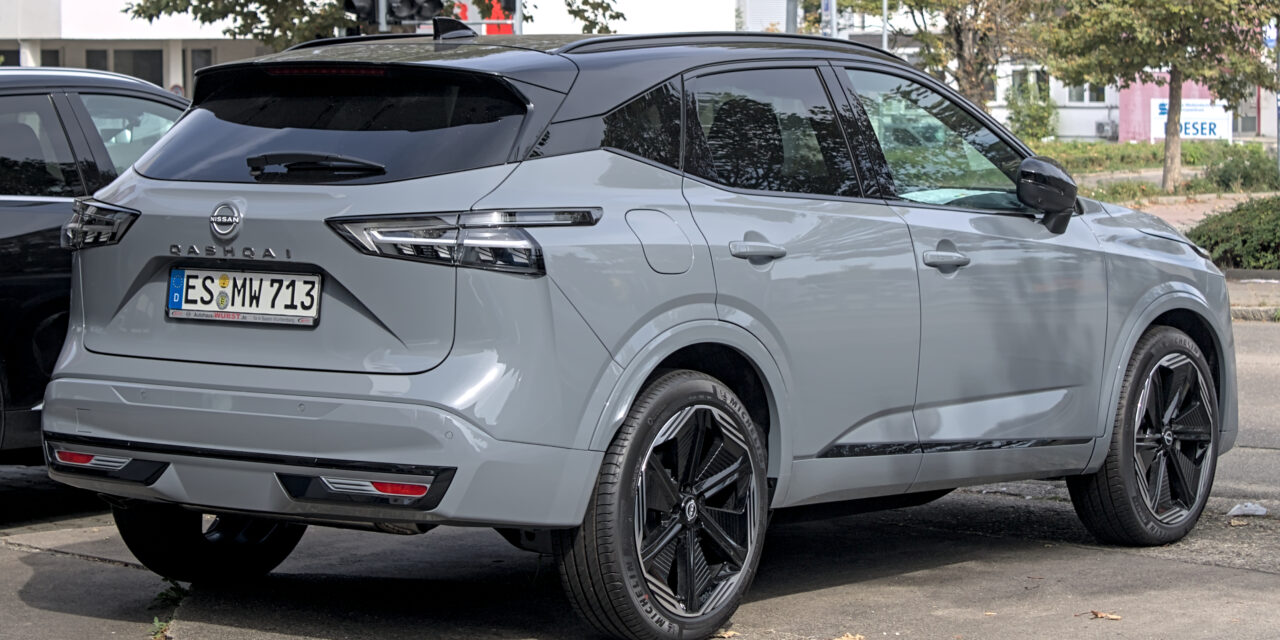
Shopping for a used Nissan Qashqai? Here are the common faults, engine choices, reliability risks and practical UK buying checks that matter before you spend your money.
The Nissan Qashqai has been a default family-car answer in Britain for years. That matters in the used market, because it means there is real choice. You can find everything from older bargain diesels to late hybrid-flavoured cars with far more safety kit and a much smarter cabin.
That popularity is also the catch. Because the Qashqai is so common, plenty of tired examples are dressed up as sensible buys. A clean one can still make a lot of sense. A neglected one can become a slow drip of annoying bills.
Quick answer: what are the main used Nissan Qashqai problems to look for?
The main things to watch are 1.2 DIG-T petrol oil-consumption and timing-chain worries on some older cars, diesel DPF and EGR trouble on short-run cars, battery and electrical gremlins, suspension knocks and bush wear, and patchy service history on high-mileage family workhorses. On any Qashqai, condition and paperwork matter more than trim level.
Before buying, start with these checks:
- full service history and evidence of regular oil changes
- smooth cold start with no warning lights
- any sign of low oil level, smoky running or timing-chain rattle on 1.2 DIG-T cars
- diesel cars that have actually done longer runs, not just school-run duty
- infotainment, cameras, sensors, electric windows and central locking all working properly
- suspension knocks over rough roads and speed humps
- steering that tracks straight, with no uneven tyre wear
- a VIN-specific recall check and clean MOT-history pattern
Why the Qashqai is still such a strong used buy in the UK
There is a reason the Qashqai sells so well new and keeps turning up on used-car shortlists. It sits in a very British sweet spot.
It is high enough to give the easier access many families want, but not so bulky that it becomes a nuisance on narrow roads, tight driveways or supermarket car parks. It looks current enough not to feel like an old compromise, yet it is common enough that parts supply, specialist knowledge and buyer choice are all strong.
The newer shape also added a meaningful safety boost. Euro NCAP gave the current-generation Qashqai a five-star result, with 91 per cent for adult occupant protection, 91 per cent for child occupant protection, 70 per cent for vulnerable road users and 95 per cent for safety assist. That does not make every used example equally safe, but it does underline why the later car appeals to family buyers.
Which used Nissan Qashqai are most buyers looking at?
For most UK buyers, the sweet spot is the second-generation J11 car sold from 2014 to 2021, especially later facelifted examples and later 1.3-litre petrol models with strong service history.
These cars are modern enough to feel familiar, easy enough to live with, and common enough to buy carefully rather than desperately. The very oldest examples can look temptingly cheap, but bargain Qashqais are often where deferred maintenance starts to bite.
The third-generation J12 car from 2021 onwards is a noticeably more polished thing, with a better cabin, stronger safety tech and a more upmarket feel. It is also more expensive, so many used buyers will still land in J11 territory.
1) Be cautious with older 1.2 DIG-T petrol cars
If there is one used Qashqai engine that deserves extra scrutiny, it is the older 1.2 DIG-T petrol.
This engine has a long-running reputation for oil-consumption complaints, and some owners have also reported timing-chain wear. That does not mean every 1.2 DIG-T is a disaster, but it does mean you should not buy one casually.
Check the oil level before the test drive if the seller allows it. Ask directly whether the car has ever needed top-ups between services. Listen carefully from cold for timing-chain noise, roughness or a rattly start-up. If the seller becomes vague when you ask about oil use, walk away.
A 1.2 DIG-T Qashqai with excellent history, regular oil changes and evidence of careful ownership may still be fine. A cheap one with weak paperwork is exactly the sort of car that becomes someone else’s problem.
2) Diesel Qashqais need the right kind of life
Older Qashqai diesels can still make sense for drivers covering real motorway mileage, but they are a worse match for endless short urban trips.
As with many modern diesels, the usual trouble areas are DPF blockage, EGR-related issues and the wider consequences of a car that rarely gets hot enough or driven hard enough to complete regeneration properly. If the car has lived a stop-start life, those risks rise.
The question is not just whether a diesel Qashqai starts and drives today. It is whether its previous use actually suited the engine. A seller who only used it for very short runs, rarely left town and cannot explain recent warning lights is handing you a clue.
If you do mostly local mileage yourself, the safer play is usually a petrol car. If you do big A-road and motorway miles, a well-kept diesel can still work.
3) Electrical faults are often irritating rather than catastrophic
The Qashqai’s electrical issues are usually more nuisance than nightmare, but they still matter because family buyers rely on this stuff every day.
Common complaints include weak batteries, stop-start misbehaviour, sensor glitches, infotainment oddities, parking-camera problems, radio issues and other small electronic faults that make the car feel older than it is. On a quick test drive, it is easy to miss them.
Do not treat the cabin tech as a bonus that you can check later. Pair your phone. Try the reversing camera. Test the parking sensors. Use every window switch. Check folding mirrors if fitted. Make sure the climate controls respond properly and that the screen does not freeze or reboot.
A Qashqai that is mechanically fine but electrically scruffy can still become annoying very quickly.
4) Listen for suspension knocks and check tyre wear properly
This is a heavy-use family SUV, so suspension wear should not surprise anyone. What matters is whether it has been fixed well or just ignored.
Knocks from the front end, tired bushes, worn links and vague steering should all put you on alert. A short smooth-road drive can hide this, so include rougher surfaces and speed humps if you can. Recent Motoring Mojo repair guides on Qashqai suspension costs also show how common bush-related wear can be once these cars age into high-mileage use.
Tyres tell their own story. Uneven inside-edge wear can point to alignment or suspension issues. Cheap mismatched tyres on all four corners usually suggest an owner who cut costs elsewhere too.
5) Service history matters more than spec
This is where a lot of used Qashqai decisions are won or lost.
A flashy trim level, panoramic roof or bigger wheels do not compensate for weak maintenance. These cars often end up as hard-worked household transport, which means skipped oil changes, late brake work and "it will do for now" servicing are common enough.
You want invoices, MOT history that makes sense, and signs that consumables have been replaced before they became a crisis. If the advert talks about how clean the bodywork is but the paperwork is thin, keep your enthusiasm in check.
Later 1.3 DIG-T petrol cars often look like the safer middle ground for many buyers because they avoid the reputation baggage of the older 1.2 and make more sense than an urban diesel for lots of households. They are not magic, just usually the more convincing place to start.
Which used Qashqai should most people buy?
For most drivers, a later J11 petrol car with the 1.3-litre engine and a full service history is the safest used-Qashqai bet.
That combination tends to give you the right balance of value, familiarity and lower risk. You avoid the cheapest end of the market, you avoid some older-engine anxiety, and you still spend a lot less than you would on a much newer J12 car.
If your budget stretches further, the 2021-on J12 is the more polished and more modern Qashqai. It also carries the stronger Euro NCAP result mentioned above, which is not nothing for family buyers.
What to check on a test drive
A proper used-Qashqai test drive should include more than a loop around the block.
Try to drive the car from cold. That gives you the best chance of catching chain noise, poor starting, warning lights or rough running. Include town speeds, a rougher section of road and at least one faster stretch.
Pay attention to:
- hesitation or roughness under light throttle
- any unusual engine noise from cold
- clutch take-up and low-speed smoothness
- CVT or automatic behaviour if fitted, especially at parking speeds
- suspension noise over potholes and broken tarmac
- steering pull, vibration or reluctance to self-centre
- operation of cameras, sensors and infotainment
- smoke, warning lights or hot smells after the drive
Then do the boring bit properly. Read the MOT history. If it shows repeated advisories for tyres, suspension, brakes or corrosion-related neglect, believe the pattern.
Final verdict
A used Nissan Qashqai is not automatically a clever buy just because it is popular. But there is a very good car in there if you choose carefully.
The strongest examples still make a lot of sense for UK families because they are easy to drive, widely available, practical enough for real life and familiar to independent garages. The weak ones are usually weak in predictable ways: poor maintenance, older 1.2 petrol concerns, diesel cars used for the wrong job, and ignored wear in suspension or electrical systems.
In simple terms, buy on history first, engine second and trim third. Do that, and the Qashqai can still be one of the more sensible used family-SUV buys in Britain.