The UK’s public EV charging network has passed 120,000 chargers, and this time the round-number headline is not just a vanity metric.
According to Zapmap’s latest charging-network update, there were 120,388 public EV chargers in the UK at the end of April 2026, spread across 93,394 devices and 46,333 locations. That followed 1,308 net additions in a single month and left the network 11% larger than a year earlier, when the total stood at 108,819.
The useful part for British drivers is not simply that the total is bigger. It is that the network is becoming more practical in the places where public charging actually makes or breaks EV ownership.
Why this milestone matters more than the headline
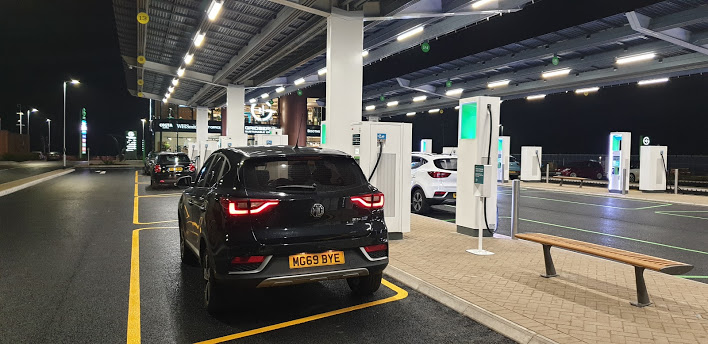
Zapmap says the number of UK charging hubs with eight or more rapid or ultra-rapid chargers in one location has now passed 1,000 for the first time. That is the sort of number that matters far more on a wet bank holiday run up the M6 than a generic national charger count.
At the same time, ultra-rapid chargers of 150kW and above are still growing fastest, up 40% year on year to 13,346 units. In plain English, the part of the network built for quick en-route top-ups is still expanding faster than the rest.
That is important because a lot of the old anti-EV argument in Britain was never really about whether a charger existed somewhere on a map. It was about whether drivers could make longer trips, recharge quickly and avoid turning every motorway stop into a planning exercise. A network with more high-power hubs does more to answer that problem than a raw connector count ever could.
The catch is that not all 120,388 chargers feel the same
This is also where the milestone needs a bit of honesty. A public charging total rolls together on-street units, destination chargers and en-route rapid sites. Those all matter, but they do different jobs.
A 22kW destination charger at a National Trust property is useful if you are parked for hours. It is not the same thing as a busy motorway-adjacent hub that rescues a long trip. Likewise, a kerbside charger is crucial for drivers without off-street parking, but it does not solve the same problem as a high-power stop on the strategic road network.
So yes, 120,000 is a meaningful threshold. But the real measure of progress is whether the extra chargers are appearing in the right places, at the right speeds and with the kind of reliability that makes public charging feel routine rather than brave.
The wider UK market context is getting more interesting
This story lands just as the broader EV market is hitting another official milestone. In an 8 May update, the SMMT said Britain’s two millionth all-electric car was registered in April. Put those two figures together and you get roughly one public charger for every 16.6 battery-electric cars currently on UK roads.
That ratio does not prove everything is solved, and it should not be read too neatly because many EV owners charge mostly at home or at work. But it does suggest the infrastructure story is no longer lagging so badly that it can be dismissed as an obvious blocker in every conversation.
The bigger problem now looks more nuanced. The SMMT says battery-electric cars took 23.1% of the new-car market year to date, still well short of the 33% target baked into the ZEV mandate for 2026. In other words, Britain is adding EVs and adding chargers, but demand is still not moving fast enough to match the policy timetable.
That matters because public charging growth on its own will not close the gap. Drivers also care about price, ease of payment, reliability and whether the network is visible enough to remove anxiety before they buy. A bigger map helps, but a smoother real-world experience helps more.
What UK drivers should take from this
For motorists, this is one of the more credible EV milestones in recent months because it points to something tangible. There are more chargers, more high-power sites and more hubs designed for the sort of journeys people actually worry about.
But the next stage matters more than the applause line. Britain does not just need more public charging. It needs public charging to become dull in the best possible way: easy to find, easy to trust, easy to pay for and fast enough that drivers stop thinking about it.
Passing 120,000 chargers shows the UK is moving in that direction. It does not mean the job is finished, but it does make the old claim that the public network is barely there look increasingly out of date.