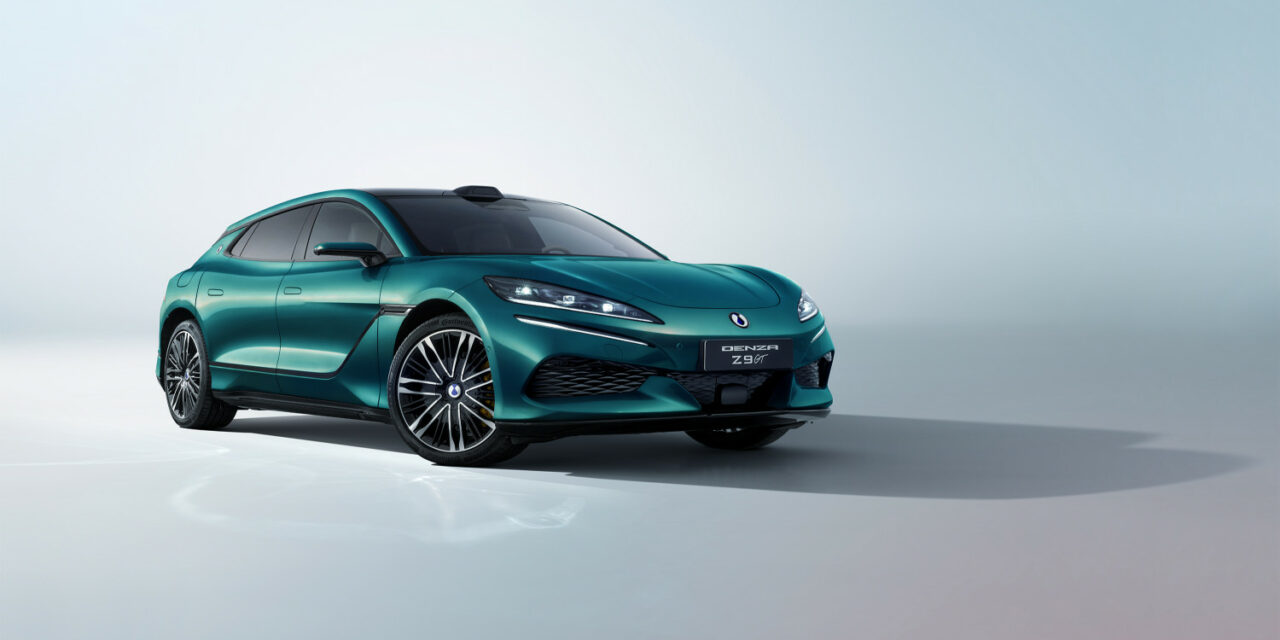
BYD’s ultra-fast charging plans have turned into a proper UK motoring story because several outlets are now circling the same claim: the company says its new 1,500kW Flash chargers are coming here, with the Denza Z9 GT as the first car designed to use them. Auto Express, What Car?, Autocar and RAC have all flagged it, which usually means a headline is spreading faster than the detail underneath it.
The official BYD Europe announcement is certainly big enough to justify the noise. At its Paris launch event on 8 April 2026, BYD’s premium DENZA brand said the Z9 GT would introduce its "Ready in 5, Full in 9, Cold Add 3" charging pitch to Europe. In plain English, that means a claimed 10 to 70% charge in five minutes, 10 to 97% in nine minutes, and 20 to 97% in 12 minutes even at -30°C.

What happened
The key point is that this is not just a battery story and it is not just a charger story. BYD says the performance comes from pairing a new generation of its Blade Battery with a new single-cable charger capable of up to 1,500kW. That is far beyond today’s normal UK public-charging conversation, where 150kW to 350kW still counts as fast and only a small number of cars can go much beyond that.
Autocar reported on 9 April 2026 that BYD plans to install 300 1,500kW chargers in the UK over the next 12 months, amounting to at least 600 charging points in total, and that they will be open to all brands using CCS2. What Car? reported the same day that BYD had confirmed 300 UK chargers this year, while Auto Express had already said in March that the company was targeting a summer UK arrival after the Paris demonstration.
That combination is why the story has traction. It is not simply "look how fast this concept can charge in a lab". It is "BYD says the hardware is coming to Britain too".
Why it matters for UK readers
The obvious attraction is convenience. If a charger really can add several hundred kilometres of range in the time it takes to grab a coffee, it changes the psychology of EV ownership. Long charging stops stop feeling like part of the trip and start feeling more like a petrol-style top-up.
But the more important UK angle is competitive pressure. If BYD gets even part of this rollout right, it raises the bar not just for rival car makers but for charging networks, site hosts and infrastructure investors. UK EV drivers have spent years hearing about better batteries in the future. A network promise makes this more concrete, because it ties battery capability to actual public hardware.
It also matters because BYD is not talking about a closed club in the Tesla Supercharger mould. Autocar says the chargers will be open to other brands, which matters far more to the public than a headline demo tied to one six-figure DENZA.
The details people might miss
This is the part worth slowing down for. A 1,500kW charger does not mean every EV will suddenly charge in five minutes. In fact, almost none of the UK market can use anything close to that today. BYD’s own Z9 GT is the poster car for the system, and even some of the newest high-voltage EVs on sale here sit far below that ceiling. So the charger number is real, but for now it is more of a platform statement than an overnight mass-market benefit.
There is also a difference between an impressive launch claim and a useful national network. BYD Europe’s official statement confirms an initial wave of Flash chargers in Europe, but it does not yet publish a UK site list, a detailed timetable or a map of where British drivers will actually find them. That missing middle matters. Fast charging only changes ownership if the chargers end up in the right places, stay reliable and are easy to pay for.
Then there is the grid question. Autocar reported that BYD says some sites can use on-site battery packs topped up by solar panels rather than relying purely on huge direct grid upgrades. That sounds clever, and it may help deployment, but it also shows how difficult this kind of rollout really is. The technical challenge is not only peak charging speed. It is building a business case and a site model that works in Britain’s patchy real-world infrastructure.
What to watch next
The next meaningful step is not another five-minute headline. It is whether BYD starts naming UK partners, showing live British sites and confirming exactly which cars beyond the Z9 GT will be able to exploit this hardware properly.
If the rollout lands, BYD could end up doing something genuinely important in the UK: turning ultra-fast charging from a show-stand boast into a public-network differentiator. If it does not, this risks becoming another attention-grabbing EV promise that matters more in presentations than in motorway services.
Right now, the smart reading is simple. The charging speed claim is exciting, but the part UK drivers should really watch is the rollout discipline behind it.