
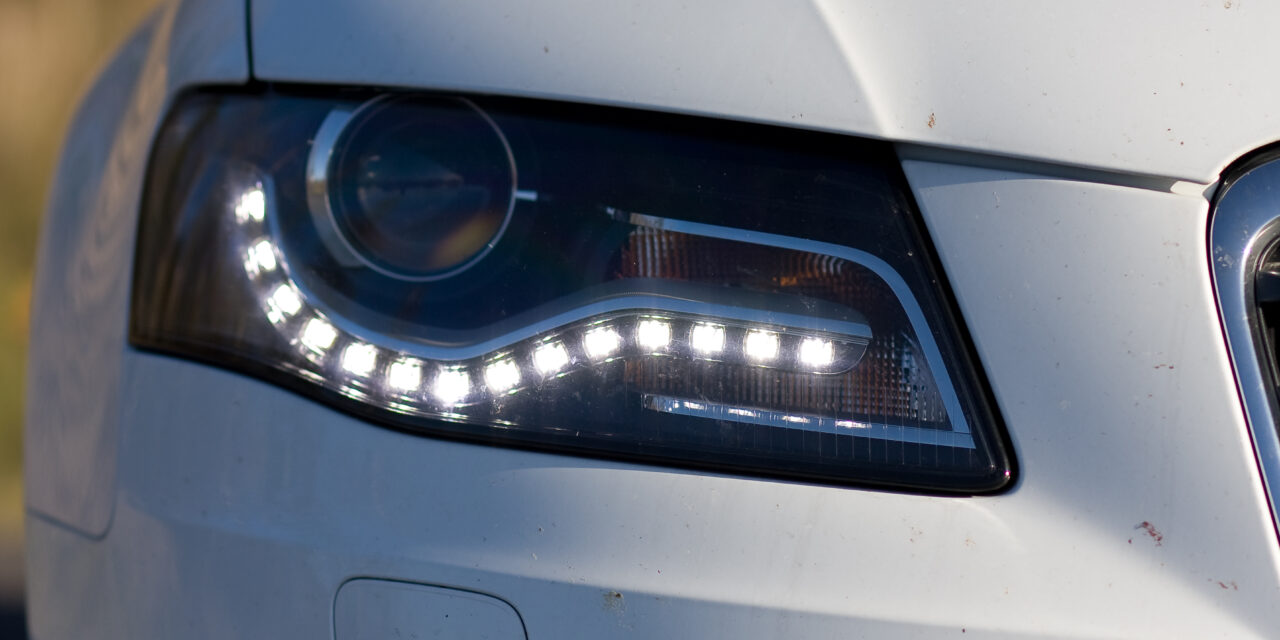
If you have searched for the daytime running lights MOT rules in 2026, the most important thing to know is this: there is not a brand-new blanket DRL rule for every car in 2026.
What matters is the current DVSA MOT inspection manual, updated on 1 April 2026, which says testers only inspect daytime running lamps fitted as original equipment to M1 passenger cars first used on or after 1 March 2018.
So if one DRL has stopped working, the MOT result depends first on what the car is, when it was first used, and whether the DRLs were factory-fitted.
Quick answer
A daytime running light can cause an MOT fail in 2026 if your car is an M1 passenger vehicle first used on or after 1 March 2018 and the DRLs were fitted as original equipment.
For those cars, a DRL can fail for reasons such as:
- the lamp is missing or inoperative
- more than half of the LEDs in a multiple-light-source unit have failed
- the lens is defective
- the lamp is insecure or likely to detach
- the colour or intensity is wrong
- the light is badly affected by another lamp’s operation
If your car is older, or the DRLs are an aftermarket add-on rather than original equipment, the MOT position is often less straightforward than owners expect.
Which cars do the DRL MOT rules actually apply to?
This is where a lot of online advice goes wrong.
Under the current MOT inspection manual for cars and light passenger vehicles, testers only need to inspect DRLs fitted as original equipment to M1 vehicles first used on or after 1 March 2018.
In plain English, that usually means:
- normal passenger cars rather than vans or specialist vehicle classes
- factory-fitted DRLs rather than DIY aftermarket kits
- cars first used from 1 March 2018 onward
That date matters more than the year in the search term. A car registered in 2016 or 2017 may well have DRLs, but the tester does not necessarily inspect them under the same MOT rule.
Is there a new 2026 DRL MOT law?
Not in the sense many drivers mean.
There is no special standalone “2026 DRL law” that suddenly makes every failed daytime running light an MOT fail. The more accurate position is that the DVSA manual in force in 2026 still sets the test standard, and that standard already limits DRL inspection to specific vehicles.
That is why some owners get conflicting answers from forums, garages and social media clips. People are often talking about different cars.
What does the tester actually check?
For cars where DRLs are within scope, the tester checks three main areas: condition, switching and compliance.
Condition and operation
A DRL can pick up a defect if:
- the lamp is missing
- the lamp does not work
- more than half of the LEDs have failed in a multi-LED unit
- the lens is defective
- the lamp is insecure or looks likely to come off
In practice, a single dead LED strip is where owners get caught out. If only a small proportion of LEDs have failed, that may be treated differently from a unit where most of the light source is gone.
Switching behaviour
The manual says DRLs must switch on and off with the engine.
But there are important exceptions. DRLs might not operate when:
- the parking brake is on
- the automatic gearbox is in park
- the system has been manually switched off and the car has not yet moved far enough or fast enough to reactivate them
That means a DRL not lighting up while the car is stationary on the driveway does not automatically mean it has failed.
Compliance points
For vehicles where DRLs are tested, the manual also says:
- there must not be more than two DRLs fitted
- they must emit white light
- they must not be badly affected by the operation of another lamp
A DRL is allowed to switch off when the indicator on the same side is operating. That catches some owners out because they think the lamp is flickering or faulty when it is actually behaving normally.
Will one DRL out fail an MOT?
Usually, yes, if your car falls within the DRL inspection rules and the lamp is clearly inoperative.
If the lamp is a multi-LED unit, the exact extent of the failure matters. The MOT manual distinguishes between:
- up to half of the light sources not working, which can be a minor defect
- more than half not working, or the lamp being missing or fully inoperative, which is a major defect
A major defect means an MOT fail.
What about aftermarket DRLs?
This is where owners need to be careful.
The government’s own DRL guidance says there is no requirement to retrofit DRLs to older vehicles. It also says that if DRLs are retrofitted, they should be properly approved and ideally set up to switch on automatically with the engine and off when headlamps are turned on.
But MOT inspection is not simply “if it is fitted, it must always pass as a DRL”. The current manual specifically points testers toward original-equipment DRLs on eligible M1 cars first used on or after 1 March 2018.
So a cheap aftermarket LED strip on an older car does not automatically create the same MOT situation as a failed factory DRL on a 2021 hatchback. That said, badly installed lighting can still cause problems if it affects other required lamps, shows the wrong colour, or creates an obviously poor or unsafe setup.
Can you drive with a DRL fault before the MOT?
A DRL problem is not always as serious as a failed dipped headlamp or brake light, but it is still worth fixing quickly.
DRLs exist to make the car easier to see in daytime conditions. If one side is out, the front of the car can look uneven or less visible, especially in dull weather, rain or shaded roads. Even when it does not create an immediate legal problem outside the MOT, it is a sensible repair.
Common reasons daytime running lights stop working
The most common causes are:
- failed LED module inside the lamp unit
- moisture getting into the housing
- wiring or connector faults
- control module problems
- bodyshop repairs or bumper removal leaving a poor connection
- coding issues after replacement on some newer cars
On many modern cars, the DRL is built into a full headlamp assembly. That means the fix can be more expensive than replacing a simple bulb.
What should you check before MOT day?
A quick home check can save you a retest fee.
- Start the engine with the car in normal running mode.
- Walk around the front and check both DRLs are lighting evenly.
- Release the parking brake if needed and re-check.
- If the car is automatic, take it out of park if safe to do so and confirm the lights behave normally.
- Switch on the headlamps and indicators to make sure the DRLs dim, switch off or interact normally for your car.
- Look for cracked lenses, moisture or a loose lamp unit.
If you are unsure whether what you are seeing is normal, it is worth asking a garage familiar with your model before the test.
DRLs vs sidelights: do not mix them up
A lot of owners call any front light a “daytime running light”, but DRLs and front position lamps are not exactly the same thing.
Some cars combine functions within the same lamp unit, and some DRLs dim to act as front position lamps when the main lights are switched on. That is one reason the MOT wording looks more technical than most drivers expect.
If your front light issue only appears when sidelights or headlights are switched on, the fault may not be the DRL function itself.
The bottom line on daytime running lights MOT rules in 2026
As of 8 May 2026, the safest reading of the UK MOT rules is this:
- DRLs are not a blanket MOT test item on every car
- they are inspected for original-equipment DRLs on M1 cars first used on or after 1 March 2018
- one failed DRL can be enough for a major defect if the lamp is inoperative or too much of the LED light source has failed
- colour, lens condition, switching behaviour and interaction with other lamps also matter
So if your car is new enough and has factory DRLs, treat a failed daytime running light as an MOT job rather than a cosmetic annoyance.
If you are chasing other lighting-related MOT issues, our guides on Toyota Yaris headlight aim and MOT failure, missing rear reflector MOT failure, registration plate light MOT failure and Renault Captur fog light MOT failure are worth a read too.



Trackbacks/Pingbacks