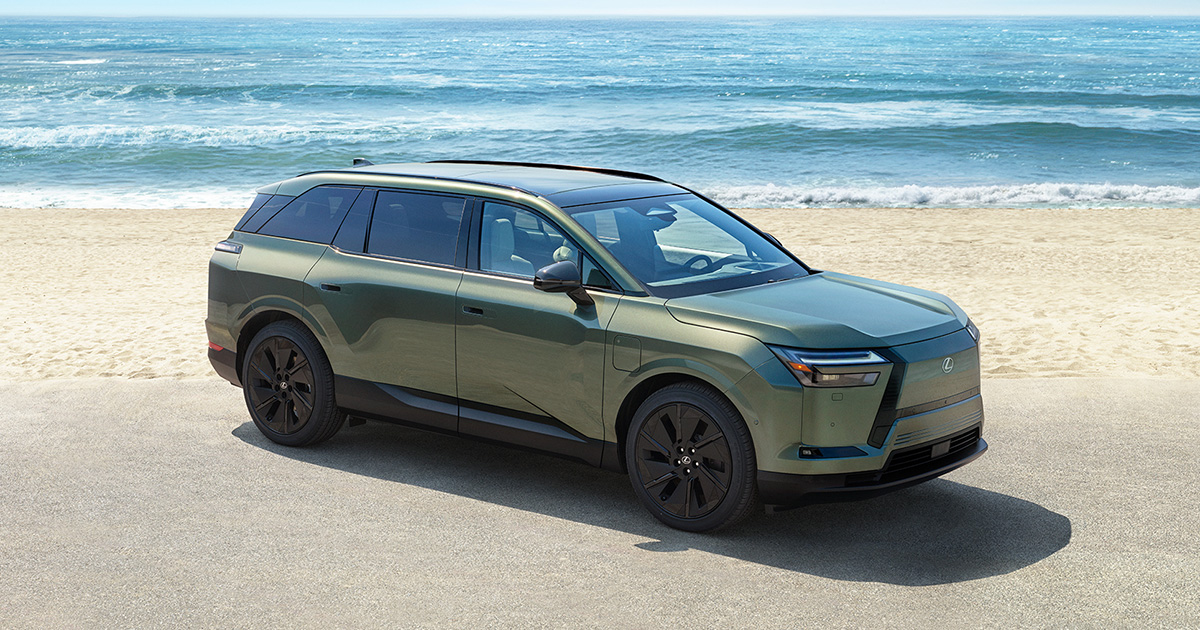
Lexus’s new TZ is coming to the UK, and that is the part worth paying attention to. The novelty headline-grabber is the synthetic V10-style soundtrack some outlets have latched onto, but the more useful detail is far simpler: Lexus has finally decided it needs a proper place in the small but important market for large electric family SUVs.
That matters because the UK still does not have many genuinely premium seven-seat EV choices. The Kia EV9 got there first with real confidence, Volvo’s EX90 sits further up the price ladder, and plenty of brands are still talking a bigger EV game than they are actually selling. Lexus adding the TZ to its UK line-up is a sign that this part of the market is starting to look serious enough to bother chasing.
Officially, the car itself is substantial. Toyota’s global Lexus newsroom says the TZ is a three-row battery-electric SUV measuring 5,100mm long, with a 3,050mm wheelbase, all-wheel drive and a 95.82kWh battery. Lexus is quoting a preliminary WLTP range of 530km for the European version on 20-inch wheels, plus 150kW DC charging that should take it from 10 to 80 per cent in about 35 minutes under the right conditions. System output is listed at 300kW, or 407.8PS, with a 0-100km/h time of 5.4 seconds.
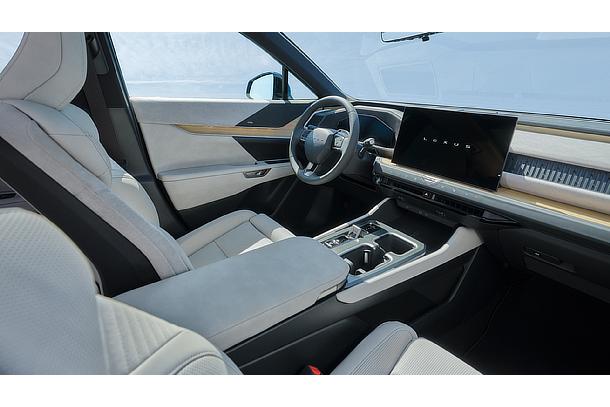
Those are healthy numbers, but they are not really the clever bit. The interesting part is how deliberately Lexus seems to have positioned the TZ. This is not a rugged off-road statement piece in the mould of a GX or a big luxury SUV trying to look traditional. Lexus is talking instead about a "Driving Lounge", rear-seat comfort, quietness and a cabin designed to feel open and restful. In other words, it is chasing families and chauffeured-lifestyle buyers who want electric running with less visual fuss and less theatre than some rivals.
That could work rather well in Britain, where a lot of large SUVs spend more of their lives on motorways, school runs and airport routes than they ever do pretending to be expedition vehicles. Lexus also says the European-spec TZ is set up for 1,500kg of towing, which is useful enough for buyers with bikes, small trailers or lighter leisure kit, even if it does not turn the car into a heavy tow hero. Cargo capacity is quoted at 290 litres with the third row in place and up to 2,017 litres with the rear seats folded, again underlining that this is meant to be a real family bus rather than a design exercise.
There is one catch, and it is an important one: the UK page confirms the all-new TZ is on the way, but it does not yet show a price or a proper local specification. That means the most important commercial question is still unanswered. Lexus can absolutely make a strong case for a large electric SUV with its usual refinement-led approach, but the TZ will live or die here on where it lands between the Kia EV9 and pricier premium alternatives. If it turns up too close to the top end of the segment, it risks becoming an admired curiosity rather than a car buyers genuinely shortlist.
That is why this story has travelled so quickly across the motoring sites. On the surface it is another big EV launch. Underneath, it is really about whether Lexus can carve out a more convincing electric identity beyond the RZ. The RZ has never quite felt like the model that would reset the brand’s EV prospects. The TZ has a better shot, because it goes after a clearer gap in the market and does it with a shape, size and brief that buyers can understand in about ten seconds.
So yes, the fake V10 trick will get attention. But if the TZ does well in the UK, that will not be why. The real test is whether Lexus can turn all that prototype range, space and calm-cabin talk into a price-and-spec package that makes sense for families who were already half-looking at an EV9, EX90 or something not yet announced.
For now, the signal is clear enough: Lexus has spotted that large electric SUVs are moving from niche curiosity to proper battleground, and it does not want to be late to that fight.