If you use the Dartford Crossing often enough, Dart Charge stops feeling like a toll and starts feeling like a trap for the distracted. The crossing itself is easy enough. Paying late is where drivers get stung.
The basic rule is simple. If your vehicle is chargeable, you need to pay by midnight on the day after you cross. Miss that deadline and you could end up with a £70 Penalty Charge Notice, on top of the original crossing charge.
Here is what UK drivers need to know before the next trip.
What is Dart Charge?
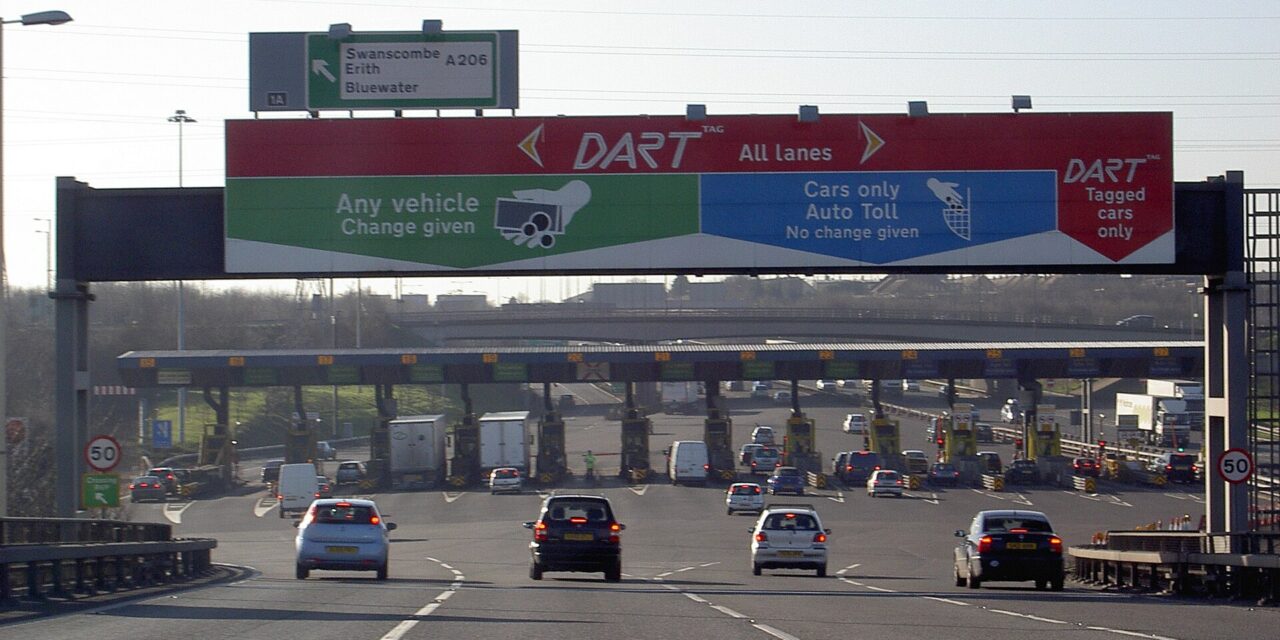
Dart Charge is the payment system for using the Dartford Crossing on the A282, which links Kent and Essex across the Thames. It covers the crossing made up of the Queen Elizabeth II Bridge and the two Dartford tunnels.
You usually need to pay if you use the crossing between 6am and 10pm, including weekends and bank holidays.
If you cross between 10pm and 6am, there is no charge.
Who has to pay?
According to GOV.UK, most chargeable vehicles using the crossing between 6am and 10pm need payment recorded.
You do not need to pay if you are using:
- a motorcycle, moped or quad bike
- a vehicle that gets free UK vehicle tax because of a disability
For disabled tax class vehicles, the system says the vehicle should be checked automatically when it crosses.
Dart Charge cost in 2026
How much you pay depends on the vehicle type and whether you make a one-off payment or use a pre-pay account.
| Vehicle type | One-off payment | Pay as you go account | Pre-pay account |
|---|---|---|---|
| Motorcycles, mopeds and quad bikes | Free | Free | Free |
| Cars, motorhomes and minibuses with 9 seats or fewer | £3.50 | £3.50 | £2.80 |
| Vehicles with 2 axles | £4.20 | £4.20 | £3.60 |
| Vehicles with more than 2 axles | £8.40 | £8.40 | £7.20 |
For larger vehicles, the charging system counts droppable axles whether they are up or down. For articulated vehicles, only trailer axles are counted.
When do you need to pay?
The deadline that matters is the one many drivers get wrong.
If you are making a one-off payment, you must pay by midnight the day after you cross.
That means if you use the crossing on a Tuesday afternoon, you have until 11:59pm on Wednesday to settle it.
You can also pay in advance for a future crossing. GOV.UK says that advance payment stays valid for 12 months and will be used automatically the next time you make a chargeable crossing.
How to pay Dart Charge
There are three main ways to pay.
1. Make a one-off payment
This suits occasional users. You do not need to open an account. You simply pay for the crossing after the trip, as long as it is done by the midnight deadline on the following day.
2. Use a pay as you go account
With this option, you set up a Dart Charge account and add a payment card. The charge is then taken automatically at midnight on the day after you cross.
This is useful if you use the crossing often enough to want automation, but not enough to pre-load money.
3. Use a pre-pay account
With a pre-pay account, you load funds into your Dart Charge account in advance. The crossing charge is then taken automatically from that balance when you travel.
This is the option that brings the discount of up to 20%, which is why regular users often find it the best-value setup.
Can you pay with cash?
Yes, but not in the old toll-booth way many people still expect.
GOV.UK says you can pay with cash at a Payzone store. You can also manage certain payments by post or by phone through the Dart Charge contact centre.
That matters because some drivers still assume they will sort it out at the crossing itself, then realise too late that the payment needs to be handled separately.
What happens if you forget to pay Dart Charge?
This is where a cheap crossing becomes an expensive mistake.
If you do not pay the charge on time, you can get a £70 fine.
Under the current GOV.UK guidance:
- the fine is reduced to £35 if you pay within 14 days
- it rises to £105 if you do not pay within the required period
- you still have to pay the original crossing charge as well
The formal deadline on the notice is 28 days from receiving the PCN.
If you believe the notice has been issued incorrectly, you can also challenge it through the official Dart Charge process.
The local resident discount can make a big difference
If you live within the Dartford or Thurrock council boundaries, there is a local resident discount scheme worth checking.
According to the current GOV.UK resident discount guidance, eligible residents can choose either:
- £25 a year for unlimited crossings
- £12.50 a year for 50 crossings
If you use up the 50-crossing option, you can either:
- pay £6.25 for 25 more crossings
- pay £12.50 to move up to the unlimited annual plan
GOV.UK says the total you pay in a year will not be more than £25.
If you use the crossing regularly and live in the qualifying area, this is one of the easiest motoring savings around.
Common Dart Charge mistakes that lead to penalties
Most problems are not about drivers refusing to pay. They are about drivers assuming the system works differently from how it actually works.
The usual trouble spots are:
Missing the midnight deadline
Many drivers think they have a couple of days, or until the end of the working week. They do not. The deadline is midnight on the day after the crossing.
Assuming an account gives every discount
A standard pay as you go account automates payment, but the pre-pay account is the one that unlocks the lower car charge.
Forgetting a vehicle has changed
If you change the registration attached to an account, or replace a vehicle, details need updating promptly. That matters even more if you use the local resident discount scheme, because GOV.UK says supporting V5C evidence must be sent after a registration change.
Thinking motorcycles and cars are treated the same
Motorcycles are free. Cars are not. If you switch between vehicles, make sure you are not relying on memory.
Assuming the charge applies overnight
The chargeable period is 6am to 10pm. Cross outside those hours and you do not pay.
Is a Dart Charge account worth it?
For occasional users, a one-off payment is fine as long as you are organised.
For regular users, an account usually makes more sense because it removes the risk of forgetting. A pre-pay account is usually the strongest option if you want the lower rate for car-class vehicles.
If you only use the crossing a handful of times a year, convenience may matter more than the discount. If you use it weekly, the arithmetic swings quickly in favour of pre-pay.
Quick answers drivers usually want
Do I pay Dart Charge both ways?
You pay for each chargeable crossing recorded under the scheme. If your journey involves more than one chargeable crossing, make sure both are covered.
Can I pay before I travel?
Yes. GOV.UK says you can make an advance payment for a future crossing, and it remains valid for 12 months.
Is there a grace period after the deadline?
Do not rely on one. The safe rule is still to pay by midnight the day after crossing.
Can I challenge a Dart Charge fine?
Yes. GOV.UK provides an official route to pay or challenge a PCN if you think it has been issued incorrectly.
The bottom line
Dart Charge is not especially expensive when it is handled properly. The real cost comes from inattention.
For most drivers, the smart move is simple: know whether your vehicle is chargeable, pay by midnight the next day, and if you use the crossing often, consider an account before the penalties start doing the maths for you.