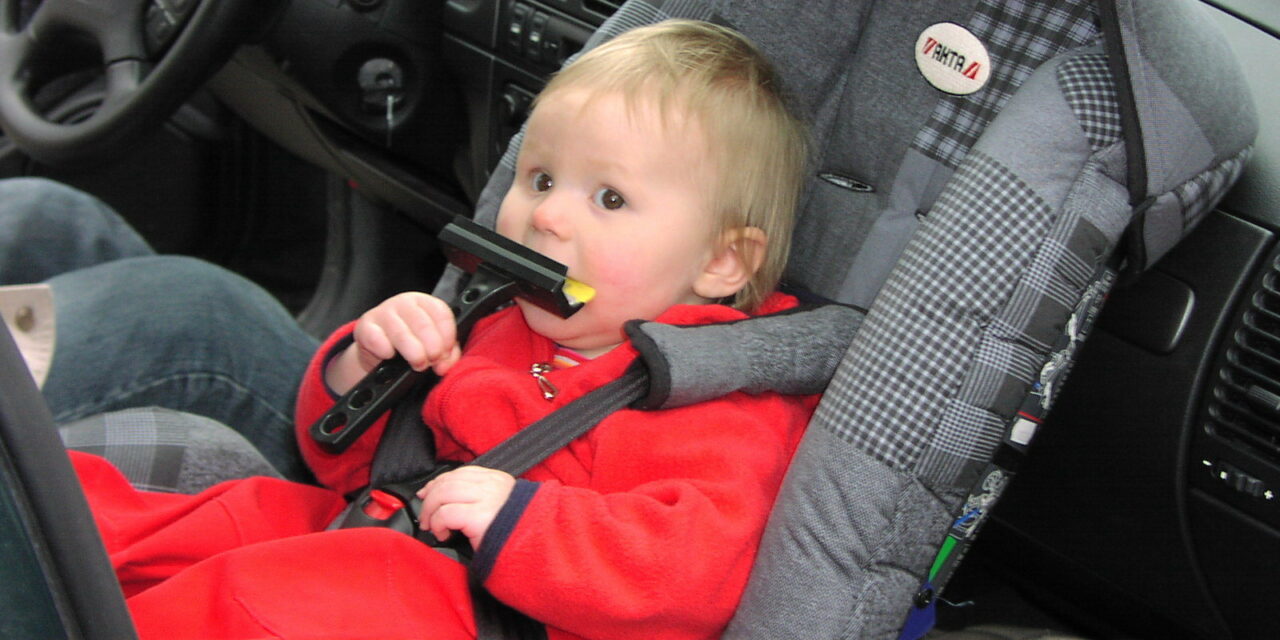
If you are trying to work out when a child can stop using a booster seat in the UK, the rule is simpler than a lot of family WhatsApp advice makes it sound. In normal day to day use, a child must use an appropriate child restraint until they are 12 years old or 135cm tall, whichever comes first. After that, they can use the adult seat belt on its own.
Where parents get tripped up is everything around that basic rule. Booster cushions, high-backed boosters, taxis, short emergency lifts and seats bought years ago all muddy the picture. The legal answer is one thing. The sensible answer for comfort and belt fit can be slightly different.
The main UK rule in one line
According to GOV.UK’s child car seat rules, children must normally use a child car seat until they are 12 years old or 135cm tall, whichever comes first. Once they are over 12, or taller than 135cm, they must wear an adult seat belt if one is fitted.
That means height matters just as much as age. A child who turns 12 but is still under 135cm can legally move to the adult belt alone. Equally, a child who reaches 135cm before their 12th birthday can do the same.
In practice, many parents choose to keep a child in a booster for a bit longer if the adult belt does not sit well yet. That is not about inventing extra law. It is about making sure the lap belt sits low across the pelvis and the diagonal belt runs cleanly across the shoulder rather than the neck or face.
So what counts as a booster seat?
For most families, the booster stage means one of two things:
- a high-backed booster seat that positions the belt and gives side support
- a booster cushion that raises the child so the adult belt sits more safely
GOV.UK still recognises both older weight-based seats and newer height-based seats sold under the R129 approval standard. The same guidance also notes that manufacturers can now only make booster cushions approved as Group 3, but older Group 2 booster cushions already in use can still be used.
That matters because plenty of parents assume every backless booster became illegal overnight. That is not the rule. The market changed, but older approved seats already in family use were not suddenly banned.
Why many families still choose a booster after 135cm
The law sets the minimum. It does not guarantee a perfect belt fit in every car for every child the day they hit 135cm. Seat height, cushion shape and belt geometry vary a lot between vehicles.
A child may technically be allowed to use the adult belt alone but still sit awkwardly, slump forward or end up with the shoulder belt rubbing the neck. A high-backed booster can still help with:
- better belt positioning
- improved side support for sleeping children
- a more stable seating position on longer journeys
- fewer arguments about the belt sitting under the arm
That is one reason the legal minimum and the best real-world answer are not always identical. If the belt fit is poor without a booster, sticking with the booster for longer is often the smarter call.
The taxi exception catches a lot of people out
The law changes when a child is in a licensed taxi or minicab and the driver does not provide the correct child seat. GOV.UK says children can travel without a child car seat in that situation, but only if they travel on a rear seat.
The split is important:
- children aged 3 or over must wear an adult seat belt in the rear
- children under 3 can travel in the rear without a seat belt if the correct child seat is not available
This is an exception, not a best-practice recommendation. If you can bring the right seat, that is still the safer and simpler option. But if you are booking a licensed taxi and no child seat is available, that is the legal fallback.
Short unexpected journeys have their own rule
There is also a narrow exception for unexpected and necessary short journeys. If the correct child seat is not available, a child aged 3 or over can use an adult seat belt if the journey is:
- unexpected
- necessary
- over a short distance
This is aimed at real-life moments, not convenience. Think an unplanned lift because of an emergency or a change of arrangements, not a routine school run because moving the booster seat felt like a hassle.
Children under 3 cannot use this exception in an ordinary car. The GOV.UK guidance only allows that younger child to travel without the correct seat if it is a licensed taxi or minicab, and even then only on a rear seat.
What about minibuses, coaches and vans?
The rules are not identical across every vehicle type. GOV.UK says:
- vans follow the same rules as cars
- coaches do not have to provide child seats, and children can travel without a child seat or seat belt if those restraints are not available
- minibuses do not have to provide child seats either, but children must use one if available, or an adult belt if child seats are not fitted or are unsuitable
For minibuses, children should be in the rear seats if a child seat or adult belt is not fitted.
The practical takeaway is simple. Do not assume the family car rules copy across neatly to every hired or shared vehicle. Check before the trip if you are relying on transport that is not your own car.
Rear seat or front seat?
Booster seat law is not just about the booster. It is also about where the child is sitting and whether the restraint is fitted properly. The Highway Code makes clear that the correct child restraint must be used where required, and that a rear-facing baby seat must not be used in a seat protected by an active frontal airbag.
For booster-age children, the front seat is not automatically illegal. But the rear is often the easier, lower-risk default for younger passengers. If a booster has to go in the front because the rear is full or the car layout leaves no better option, check the seat manufacturer’s instructions and the vehicle handbook so the belt path, head restraint position and seating geometry are all right.
The common mistakes parents make
1. Treating age as the only rule
A lot of people remember the 12th birthday and forget the 135cm part. The law is based on whichever comes first.
2. Assuming every backless booster is banned
Older approved booster cushions can still be used. The rule change was about what can newly be manufactured and approved, not a blanket overnight ban on every existing seat.
3. Using an exception as a routine workaround
Taxi rules and unexpected short-journey rules are limited exceptions. They are not there to justify skipping the proper seat on ordinary trips.
4. Moving too early because the child says the booster is babyish
This is where comfort, belt fit and crash protection matter more than pride. If the adult belt still sits badly, the booster probably still has a job to do.
5. Forgetting who is responsible
The Highway Code places responsibility on the driver for making sure the right restraint is used where the law requires it. If a child is travelling incorrectly, it is not a technicality. It is your problem at the roadside.
A quick booster seat checklist
Before you ditch the booster, check all of the following:
- Is the child already 12 or at least 135cm tall?
- Does the adult belt sit low across the hips rather than the stomach?
- Does the shoulder belt sit across the shoulder rather than the neck?
- Can the child sit back properly without slouching?
- Is this an ordinary car journey, or one of the narrow legal exceptions?
If the answer to the belt-fit questions is no, the booster may still be the better choice even if the child has technically crossed the legal line.
The bottom line
The headline UK rule is clear enough: a child normally needs a suitable child restraint until they are 12 or 135cm tall, whichever comes first. But the useful part is knowing where that rule bends, and where it does not.
Taxis, minibuses and short unexpected journeys create limited exceptions. They do not replace the everyday standard. For most families, the safest way to think about it is this: use the law as the minimum, then use belt fit and common sense as the final check. If the seat belt still does not sit properly without a booster, you are probably not at the right moment to abandon it yet.