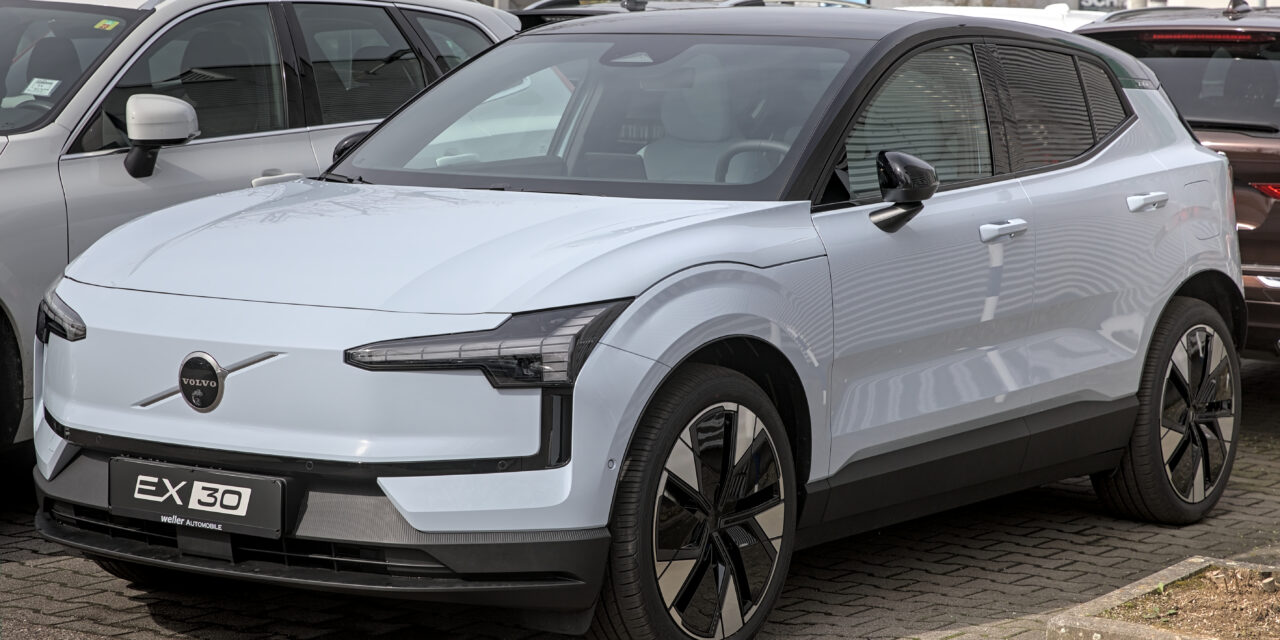
Volvo EX30 recall: why the 70% charging cap matters more than it first looks
A battery-related recall has pushed the Volvo EX30 back into the UK motoring news cycle, with Auto Express, Top Gear and Autocar all flagging the story. The underlying issue is straightforward enough: affected cars may have a high-voltage battery cell that can overheat after charging. But the part UK owners should really pay attention to is the temporary fix, because this is not just a workshop admin job. It changes how you use the car.
According to the UK government’s recall data, Volvo’s EX30 high-voltage battery recall launched on 22 January 2026 under reference R/2025/559. The DVSA dataset says 10,577 UK EX30s are affected, covering cars built from 6 September 2023 to 22 August 2025, plus a single EX30 Cross Country entry listed separately. The official remedy says Volvo is limiting the battery’s maximum state of charge to 70% to eliminate the overheating risk while battery modules are inspected and replaced.
What happened
This is the kind of recall that gets attention for obvious reasons: any mention of fire risk in an EV will travel fast. The defect listed in the official UK recall record says that after charging there is a risk of an overheating high-voltage battery cell that could lead to a fire. Volvo’s interim answer is a mix of software restriction and owner guidance rather than an instant all-clear repair.
That matters, because affected owners are also being told not to leave the car unattended while charging within buildings or covered areas, and to seek assistance if warnings appear in the car or app during or after charging. In other words, the recall does not just ask owners to book a service visit. It asks them to adapt their charging routine in the meantime.
Why it matters for UK drivers
The EX30 is not a niche compliance car. It is one of the most important premium small EVs on sale, and in the UK its appeal rests heavily on ease of use: compact footprint, strong brand pull, and enough range to work as a real everyday family car. Put a 70% charging ceiling on that, and the car’s convenience changes immediately, especially for drivers who bought it specifically because they wanted fewer charging stops.
For homeowners with a driveway and cheap overnight electricity, the inconvenience may be manageable for a while. For flat owners, drivers relying on destination charging, or anyone doing regular motorway mileage, it is a bigger nuisance. A reduced usable charge window means less flexibility and less buffer, which is exactly the opposite of what newer EV buyers have been promised.
There is also a trust issue here. Buyers can usually live with a one-off recall if the remedy is clear and fast. What unsettles people is a recall that lands on a new-generation EV and temporarily changes the ownership experience of a car sold on modern software-led confidence. If you are shopping used, that point matters nearly as much as the defect itself.
The detail people might miss
The easy headline is “fire-risk recall”. The more useful point is that Volvo’s official remedy goes beyond software. The DVSA record says high-voltage battery modules will be inspected and replaced. That suggests the 70% cap is a containment measure, not the final solution.
That distinction matters for three reasons. First, workshop capacity becomes part of the story, because battery inspection and replacement is more involved than a quick over-the-air patch. Second, affected owners need clarity on timescales, not just reassurance. Third, anyone weighing up an EX30 purchase, new or used, should ask whether a specific car has had the recall work fully completed rather than assuming a software update means the issue has gone away.
It is also worth noting the scale. More than 10,500 UK cars is not a token batch. For context, that is large enough to be a real ownership story, not just a technical bulletin buried in a dealer inbox.
What to watch next
The next meaningful update is not another headline about the recall existing. It is hard evidence that affected UK cars are being repaired at pace and returned to normal charging behaviour. Owners should expect clear communication on whether their specific car has had module inspection or replacement completed, and buyers should check recall status before signing anything.
For Volvo, this is also a reputation test. The EX30 has been a big strategic car, and strategic cars do not get judged only on launch reviews. They get judged on how well the manufacturer handles the awkward bits after launch. In this case, the awkward bit is not just the defect. It is the fact that a car sold on everyday usability can, for some owners, become noticeably less usable until the proper fix is done.
If you own an affected EX30, the smart move is simple: follow the charging guidance, make sure the recall action is booked, and do not assume a temporary charging cap is the end of the process. If you are buying one, ask for proof the recall work has been completed, because on this story the difference between “software-limited” and “properly repaired” matters a lot.