
A used car with a clean MOT pass can still be a poor buy. The pass only tells you the car met the minimum legal standard on test day. It does not tell you whether the same issues keep coming back, whether wear items are close to the end, or whether the seller’s story lines up with the record.
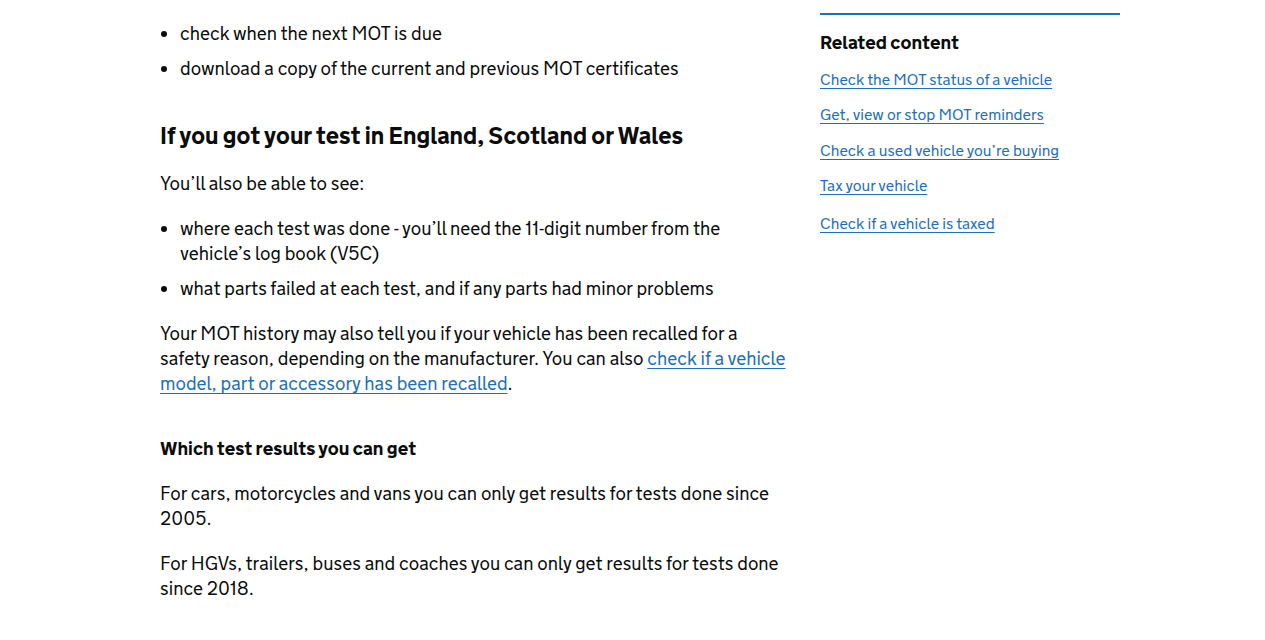
For UK buyers, the MOT history service is one of the quickest free checks you can do before you travel to see a car. It is especially useful because GOV.UK shows pass and fail results, mileage recorded at each test, and, in Great Britain, what parts failed and whether any minor problems were logged. GOV.UK also notes that the record may show if the vehicle has been recalled for a safety reason.
What the MOT history check actually gives you
If you enter the registration number into the GOV.UK MOT history service, you can see:
- whether the car passed or failed each MOT
- the mileage recorded at each test
- when the next MOT is due
- downloadable copies of current and previous MOT certificates
- in England, Scotland and Wales, where each test was done if you have the 11 digit document reference from the V5C, plus the failed items and minor problems logged at each test
That makes it far more useful than a simple pass or fail badge in an advert.
Why a fresh pass can still hide trouble
GOV.UK’s MOT guidance is clear that the test checks whether a vehicle meets road safety and environmental standards. It is not a full condition report. The government also says the MOT does not cover the condition of the engine, clutch or gearbox.
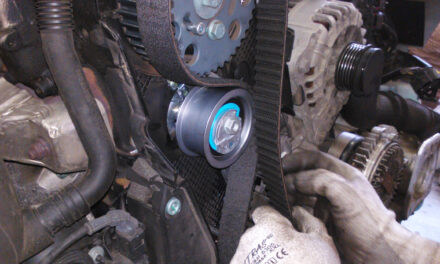
That matters when you are buying used. A car can pass its MOT and still have an expensive clutch nearing the end, a gearbox problem, a tired timing chain, or a coolant leak that has not yet become an MOT issue. Treat the MOT history as one part of the picture, not the whole picture.
The warning signs that deserve a closer look
1. The same advisory appears year after year
One advisory is not automatically a deal-breaker. Repeated advisories are different.
If you see the same note coming back across two or three tests, it often means the owner kept putting the job off. Common examples include tyre wear, brake wear, corrosion, suspension play and fluid leaks. That does not prove neglect on its own, but it is a fair signal that maintenance may have been reactive rather than careful.
Ask what was done between tests and ask for invoices. If the seller says the issue was fixed, the paperwork should be easy to show.
2. A sudden fail after years of clean passes
A fail is not unusual on an older car, and some failures are minor in cost. What matters is what failed.
A car that suddenly fails on several items at once can point to a period of neglected upkeep. If the failure list includes brakes, tyres, suspension and lights all at the same time, it can suggest the car was simply run until test day rather than maintained steadily.
A same-day retest and pass is not always a red flag. GOV.UK allows partial retests in some situations, and simple items can be fixed quickly. The right response is to check what failed and ask for the repair receipt.
3. Mileage that does not move in a believable way
The MOT history service records mileage at each test, which makes it useful for spotting odometer concerns and story mismatches.
Warning signs include:
- the mileage dropping between tests
- an unexpectedly tiny increase over several years on an ordinary daily driver
- a big jump that does not fit the seller’s account of the car’s use
Do not accuse a seller of clocking based on one odd entry alone. GOV.UK has a process for correcting mileage mistakes on an MOT record, so admin errors do happen. But if the pattern looks wrong, ask questions and compare it with service records, old invoices and the dashboard reading.
4. Long gaps in the record
For cars, vans and motorcycles, GOV.UK says MOT history is available for tests since 2005. If an older car has long stretches with no visible test history, you need to understand why.
There may be a harmless explanation, such as the car being off the road, in storage or in Northern Ireland before moving. Equally, long gaps can mean you are missing important context on how the car was used and maintained.
Ask when the car was last taxed, whether it was SORNed, and whether the seller can back up the gap with paperwork.
5. Corrosion, brake pipes and suspension warnings on an ageing car
These are the advisories that deserve more respect than buyers often give them.
Cosmetic notes and a worn wiper blade are one thing. Repeated corrosion advisories, brake pipe corrosion, worn suspension components or structural concerns can turn into a much bigger bill once the car is on your driveway. If these appear in the history, budget for a proper inspection before you commit.
6. Tyre and brake issues that suggest corner-cutting
A single worn tyre can happen. Multiple tyre advisories, poor tyre brands mixed across an axle, repeated brake wear notes and uneven wear patterns can all hint at an owner who spent as little as possible.
That matters because cheap maintenance decisions often show up elsewhere too.
7. A recall marker that nobody seems to have dealt with
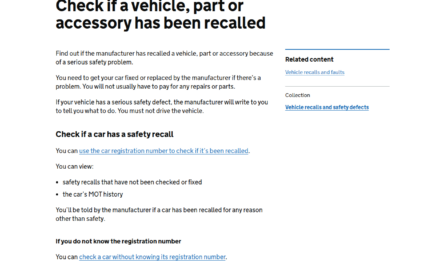
GOV.UK says MOT history may tell you if a vehicle has been recalled for a safety reason, depending on the manufacturer. There is also a separate GOV.UK recall checker that shows unresolved safety recalls.
If a recall is outstanding, ask the seller to sort it before sale or confirm with the manufacturer that the job can be booked immediately after purchase. GOV.UK says you will not usually have to pay for recall repairs or parts, but if the vehicle has a serious safety defect you must not drive it.
8. A history that does not match the advert
This is the simplest check of all. If the advert says "meticulously maintained" or "never had an issue", the MOT history should broadly support that story.
If the record shows repeated failures, recurring advisories, tyre neglect or unexplained mileage questions, believe the pattern rather than the sales pitch.
What a careful buyer should do after checking the MOT history
Once you have read the record, use it to guide the next conversation rather than to make a snap decision.
Run through this short list:
- compare the mileage in the advert with the latest MOT entry
- ask about any repeated advisory or recent fail
- match the MOT history against service invoices and receipts
- check for unresolved recalls
- inspect the exact parts mentioned in recent advisories if you view the car in person
- consider a pre-purchase inspection if the pattern suggests deferred maintenance
When the MOT history should make you walk away
You do not need a perfect history to buy a good used car, especially on an older, cheaper model. But you should be ready to walk if:
- mileage inconsistencies are brushed off with no proof
- structural corrosion or major safety-related items keep appearing
- the seller cannot explain recent fails or repeated advisories
- the advert makes claims the MOT record clearly undermines
- there is an unresolved safety issue and nobody can confirm the remedy
The bottom line
The free MOT history check is one of the best filters a used-car buyer has in the UK, but only if you read the pattern rather than the latest result. A fresh pass is reassuring. A believable, well-maintained history is better.
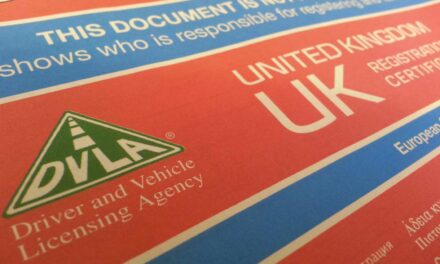
Before you hand over money, use the MOT record alongside the V5C, service history, recall check and a proper in-person inspection. That is how you avoid buying a car that looked fine in the advert but starts costing you money the moment it gets home.


Trackbacks/Pingbacks