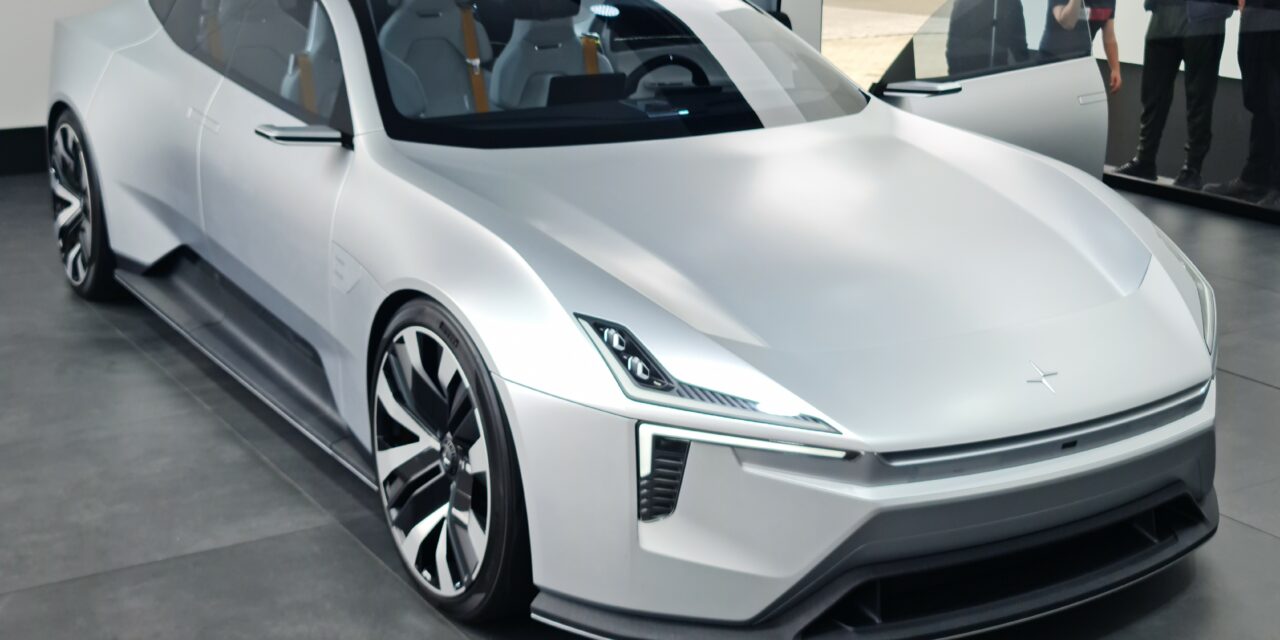
In the rapidly evolving landscape of the automotive world, few brands have managed to pivot as successfully—and stylishly—as Polestar. Once a niche racing outfit and performance tuner for Volvo, Polestar has emerged as a standalone titan in the premium electric vehicle (EV) sector.
For the modern driving enthusiast, Polestar represents more than just zero-emissions; it represents a fusion of Swedish minimalism, racing-bred engineering, and high-tech sustainability.
The Origin Story: Racing to the Future
The journey of Polestar didn’t begin in a corporate boardroom, but on the tarmac of the Scandinavian Touring Car Championship.
1. The Racing Roots (1996)
Polestar’s DNA was forged by Flash Engineering (later renamed Polestar Racing), a team founded in 1996 to race Volvo cars. Their success was legendary, turning the sensible “Volvo brick” image into a dominant force in motorsport.
2. The Official Tuning Era (2009–2015)
Recognizing the team’s engineering prowess, Volvo officially partnered with Polestar in 2009 to create high-performance versions of production cars. These “Polestar Engineered” models, often finished in the iconic Rebel Blue, gave Volvo a much-needed competitive edge against the likes of BMW’s M division and Mercedes-Benz’s AMG.
3. The Standalone Rebirth (2017–Present)
In 2017, under the joint ownership of Volvo Cars and Geely Holding, Polestar was officially relaunched as a standalone electric brand. With Thomas Ingenlath (former Volvo Design Chief) at the helm as CEO, the brand traded its “Performance Blue” for a sophisticated aesthetic and a mission to accelerate the transition to sustainable mobility.
The Current Lineup: Precision and Performance
The Polestar model range follows a simple numerical naming convention, but there is nothing simple about the technology within.
| Model | Segment | Key Highlights |
| Polestar 2 | Compact Executive Fastback | The brand’s first volume seller. Recently refreshed with a rear-wheel-drive bias and enhanced range of up to 406 miles (WLTP). |
| Polestar 3 | Luxury SUV | A mid-size powerhouse with up to 517 hp. It focuses on “aerodynamic performance,” featuring an integrated front wing and aero-blades. |
| Polestar 4 | SUV Coupe | Famous for its lack of a rear window, replaced by a high-def digital camera system to maximize cabin space and structural integrity. |
| Polestar 5 | 4-Door GT | Launching in 2026, this flagship grand tourer is built on a bespoke bonded aluminum platform, aiming for 884 hp. |
Why Polestar is Different
While many brands are playing catch-up in the EV space, Polestar thrives on transparency and design-led innovation.
- Sustainability Reports: Unlike many competitors, Polestar publishes a full Life Cycle Assessment (LCA) for every model, tracking the carbon footprint from raw material extraction to the end of the vehicle’s life.
- Android Automotive OS: Polestar was a pioneer in integrating a native Google infotainment system, ensuring that the car’s interface is as intuitive and up-to-date as a modern smartphone.
- The “Polestar 0” Project: The company has set an audacious goal to create a truly climate-neutral car by 2030, without relying on carbon offsetting.
Looking Ahead: 2026 and Beyond
The next few years are pivotal for Polestar. With the Polestar 5 flagship set for summer 2026 deliveries and the Polestar 6 electric roadster expected by 2028, the brand is moving into the ultra-luxury territory.
Furthermore, the upcoming Polestar 7 (slated for 2028) is expected to target the high-volume compact SUV market in Europe, signaling that the brand is ready to move from a niche player to a global powerhouse.
For us at Motoring Mojo, Polestar isn’t just an alternative to Tesla, it’s a sophisticated, performance-oriented choice for those who value Swedish design and the thrill of the drive.